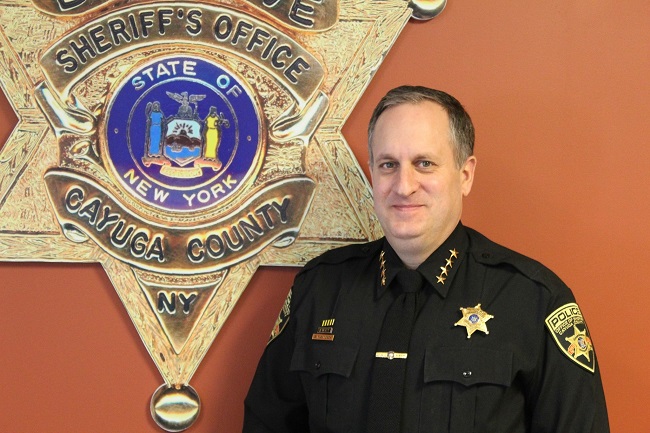
Paul Szmal: Good morning 838, it's FLX Morning, Lawman Thursday edition. We're joined by Cayuga County Sheriff Brian Skank and also Sherry Weiss with the Cayuga Community Health Network. Good morning to you both.
Brian Schenck, Sherry Weiss: Good morning.
Paul Szmal: We're gonna talk about a program that Sherry is working with to help inmates make that transition from jail back to society. Before we do that, we're gonna go through some news and notes.
Sheriff, you're working with the SPCA on an animal abuse registry so that people will have knowledge of people convicted of those offenses and hopefully we don't get repeaters.
Brian Schenck, Sherry Weiss: I am. So this is a project that's just in the preliminary discussion phase, but I have talked with Nick LaPrece with Finger Lakes SPCA and we're exploring the possibility of bringing an animal abuse registry to our community and essentially what that would mean would we would have a public registry that would provide information to the public related to individuals who've been convicted of crimes related to animal abuse. The goal of that would be to make sure that those individuals did not have access to additional pets or animals. As we see oftentimes, unfortunately, you know, individuals that do that type of thing continue to, you know, procure pets and continue to abuse those animals. So there's a few counties throughout the state who've implemented such a registry. I think there could be some advantages here to protecting our pets and our animals in our community and I think that we're going to make this happen. But we are discussing that and I'm excited about the prospect of doing that.
Paul Szmal: You're taking registrations now for the next Deputy Sheriff's Entry-Level Exam for the Custody Division. So tell us about the exam and the duties of these custody officers.
Brian Schenck, Sherry Weiss: We are. We do have open registration right now for Deputy Sheriff's positions within our jail. We do have some vacant positions. So once once we establish an eligible list from this this exam, we will be making some hires. But these are individuals that would be responsible for the custody and care of our incarcerated population here at the jail. We do we do have some great opportunities here coming up in the future. So I would encourage anybody that's looking for an exciting career path to check this out. You can look on our county website under careers and sign up for this training and experience exam. This is a little bit different from our typical civil service exam. This is a new format that we've implemented that's come to us from the State Civil Service Commission. But it's basically a questionnaire that it assesses your training and your job experience. So based on your training and experience they will rate you on an eligible list for for the job. So it's a little bit different. I believe it's a little bit easier than the typical civil service exam process. So if you're interested please check it out and reach out to us if you'd like some more information.
Paul Szmal: School year is here and that means the school buses. And it's sad because normally we talk about these things and we hope to get better. But if there's any indication it seems to me that it's really getting worse. Just we talked I think a month or two ago about just aggressive driving overall and people running stoplights. And even knowing that many if not all buses have cameras on them we see these videos of people just going right by.
Brian Schenck, Sherry Weiss: Unfortunately you're right Ted. We're still we're still seeing a lot of aggressive driving. And you know this is an area that is of most concern of mine when you're dealing with school zones and past stop school buses. You know puts our children in jeopardy. And I you know I think we need to continue to talk about this and remind people to you know give yourself a little extra time. Don't don't be racing through these areas. Don't be speeding. Pay attention to the to the speed limits. You know we do the best that we can to enforce the traffic laws out there. But it's a it's a big county. There's a lot of districts a lot of school zones. We can't be everywhere at once. So we we need people to you know make sure that they're paying attention to that and not breaking the law.
Paul Szmal: And the related piece of course is the slow moving farm implements. We had Frank Clark on from Keuka County Cooperative Extension. They have a share the road initiative going on. Same thing. You just you have to be aware and be ready to slow down when you round a corner and there's one of those tractors or combines or a buggy.
Brian Schenck, Sherry Weiss: Absolutely. And I appreciate you bringing these things up because I think an important part of making this our community safer is to discuss this. It's not just the traffic enforcement and the tickets that we write. It's about prevention. And I think the more we talk about these things as a community the better we do at keeping you know people safe and and dealing with these challenges from another angle. So I appreciate you bringing this up and making that a priority.
Paul Szmal: September is Suicide Prevention Month. Talk about some of the options and resources available to residents in the county.
Brian Schenck, Sherry Weiss: So there are many options many resources available in our community and throughout your entire listening area. I know that there's every community has a lot of resources available. And you know I highlight that somebody that may be having a crisis can always dial 988 to get some some help from a trained professional that can give you immediate help. 9-1-1 is always encouraged if there's a potential emergency. But in our community we have a lot of resources a lot of partners. We put out these resources occasionally on our sheriff's social media sites. You can find them on the Web. But I would just encourage anybody that's struggling out there with September being Suicide Prevention Month. We're highlighting this. But I know Ted you and I have talked about this issue many times. There are many people struggling in our community. Many that that might be in crisis. There is help available. You're not alone. If you know somebody that's struggling you don't make that call. Keep moving forward. If you make a call and you don't exactly get the help you're hoping to get look for another resource. But you're not alone in this in this challenge. There is help out there. We can help you through that. There are many providers in our community that can help you. Just please take advantage of those resources that are here.
Paul Szmal: You're putting together your budget now for 2025. In June you sent out a public letter of concern over some potential cuts. Now with the continuing problems with the County Office Building some resources are going to have to be diverted there. So what's it look like for you putting this budget together for 2025?
Brian Schenck, Sherry Weiss: It's going to be very challenging. We started working through our budget here recently. We will be working closely with the legislature to put a budget in place. But I do know that there's going to be some significant challenges with the strain that's put on our county budget relative to some of the unforeseen issues that we have with the closure of the County Office Building and the cost to address this issue. So there's there's not any department in the county that's going to be immune. And I know our our public safety budget is going to be closely looked at. I'm doing my best to to scrutinize that and try to save money anywhere I can. But it's very difficult because we don't have a lot of extra you know money in our budget. It just isn't there. And any cuts that we make to our budget is going to impact you know services that we provide out here in the community. So I'm hopeful that if we do have to make cuts it's a last resort from a from a countywide budget standpoint that you know I just hate to see us have to make any cuts if there aren't cuts in other areas that that don't impact public safety first. But it's going to be challenging. But we'll be doing our best to continue providing the best services that we can with the financial resources that are available to us.
Paul Szmal: Let's welcome back Sherry Weiss Executive Director of the CUCA Community Health Network. You've been working since April on a transition program for inmates coming out of jail to find housing to get started and then to make a transition into civilian life. Tell us how this program came about and how it's progressed.
Brian Schenck, Sherry Weiss: Thank you. Yes so this program came about as looking at the homeless population and some of the struggles that we've seen in the community. We've worked with the sheriff's office and our community partners for several years doing street outreach and providing some assistance that way. So this program evolved with some assistance from the Community Services Board and the opioid settlement funds that were available. And what this program does it actually serves individuals and families but for individual units these are folks coming directly out of the jail. They've served their time. They're ready to reintegrate back into society. And the program is designed it's about 90 days long and it's designed to help find employment, stable housing, and also the resources needed to maintain that stability. And that includes things like behavioral health, primary health care, food resources, peer supports, and any other resources they might need. The intensive the case manager works very intensively with them speaking with them on a daily basis usually seeing them and doing visits at the unit with them about every every couple of days. And we're able to work with these individuals and help them find employment. We help them secure an income and resources and then they we help them find permanent housing. So far it's been working out pretty well.
Paul Szmal: So as you were surveying the homeless population around Keuka County did you find that a significant number of them were people who had been incarcerated recently and just couldn't get back on their feet again?
Brian Schenck, Sherry Weiss: I think there was a portion of them. It's a pretty diverse population but we do know that when folks come out of jail one of the struggles they have is finding those resources. How do you find employment if you have a record? How do you work with a landlord who might be concerned about your past, your history? So we try to work with folks to get the resources they need and also help them navigate things so that they are hopefully able to remain stably housed and not repeat it.
Paul Szmal: How do you overcome that employment barrier? Do you have employers that you work with that are willing to take a chance and maybe some record of success with some previous inmates that make them more likely to continue hiring them?
Brian Schenck, Sherry Weiss: Yeah we've been really lucky. We have developed over actually and it came out of the street outreach work and I want to give a quick nod to Nicole Gee, our Director of Housing and Street Outreach because she's really been the person who's in the boots on the ground helping make all this happen. And we've developed these relationships just through helping our folks, the folks in the community, find jobs and find housing and through these relationships we've been able to leverage those for these particular individuals and help them get some access to opportunity to demonstrate that they too can become contributing members of society.
Paul Szmal: I know I've heard over the years that in general among the homeless population there's a high incidence of some type of mental illness. Is that what you're seeing and are you able to get some services for those people?
Brian Schenck, Sherry Weiss: So yeah there's definitely, there's trauma, there's a lot of issues that happen to lead to an individual making the choices they make to become and then have the consequences of that. There is among the homeless population there's a lot of mental health challenges. We do connect individuals and everyone we serve with our local behavioral health. We have Cougar County Mental Health, we have Cougar Counseling, we have Nix Ride for Life, East Hill. So we have a lot of community partners that we can connect those individuals with so they can receive the services that they need.
Paul Szmal: When it comes to inmates returning to society, is there anything or a couple of things you've identified as the keys to being able to do that successfully?
Brian Schenck, Sherry Weiss: Honestly I think it's one of the things that I think helps is getting those resources and getting those supports in place. Our program has rules and boundaries and most folks are very respectful of that. I think it's the connection with the case manager and the fact that they see them regularly and talk to them and if they're experiencing a challenge, some anxiety, some uncertainty, they have someone that's there to support them. But I honestly think the key to success is those supports in place. Getting peer supports and getting employment and seeing that there are opportunities that they can have to be successful.
Paul Szmal: Sheriff, I know a lot of crime is committed by repeat offenders. So what does this program mean in terms of hopefully reducing that number of repeat offenders and getting people back into society and successful in doing so?
Brian Schenck, Sherry Weiss: Well that's our primary goal is to reduce recidivism. I think that we can address a lot of crime issues from the jail and these programs are key. We've had a great partnership with the Cougar Community Health Network and Sherry and her team have just been awesome and helping us work on these challenges. And housing is one of the biggest challenges. When individuals come out of the jail, if they don't have a stable place to call home, we're seeing a lot of people you know that go right back to criminal activity. If we if we don't get them that housing and those supports that they need. So it's a challenge right now. There's not enough housing out there. We don't have enough transitional housing. It's one of the biggest challenges we have as we prepare people for re-entry. But that is our primary goal is to take these individuals that might otherwise be repeat offenders, you know spend a little extra time to get them on the right track with the goal. My goal, and I joke with a number of the incarcerated individuals that I have contact with when they're preparing to leave, I tell them no offense I don't want to see you again. I don't want to see you here. And I hope that they're successful and that we never see them again. But these types of programs are key in making that happen.
Paul Szmal: All right. Well Sherry, thanks for sharing this with us. And congratulations on getting this program underway and much future success.
Brian Schenck, Sherry Weiss: Thank you, Ted. I appreciate it.
Paul Szmal: And Sheriff, I love we started doing this a few months back, talking with some of the people that you work with to make your life easier. Thanks for sharing them with us and thanks for what you do as always.
Brian Schenck, Sherry Weiss: Thanks, Ted. I'm very fortunate to have a lot of great partners and staff.