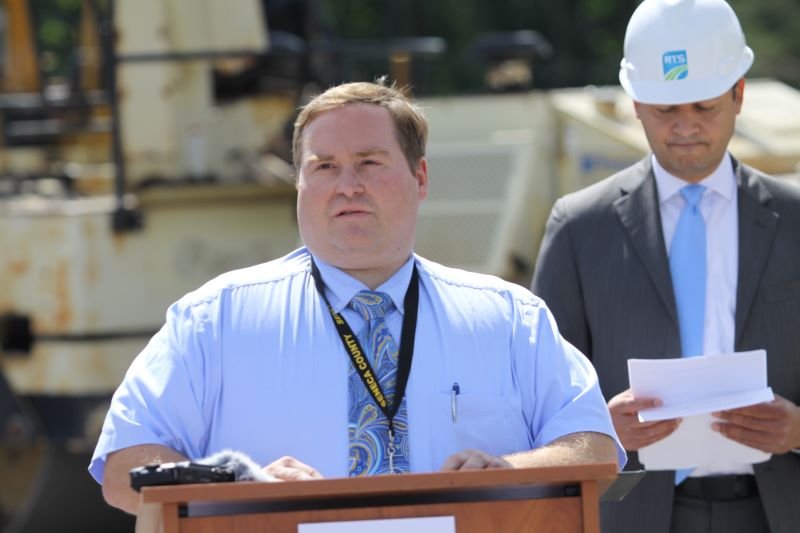
Paul Szmal: We're Zooming with show sponsor and chairman of the Seneca County Board of Supervisors, Mike Enslow. Good morning, happy new year, and welcome back.
Mike Enslow: Good morning, Ted. Great to be here.
Paul Szmal: So, last night was the reorganizational meeting, but you reminded me that as far as chair of the board, that's on a two-year cycle now, so you'll be entering the second year. After having done it for one year, what do you think about this job?
Mike Enslow: Actually, Ted, this will be my third year as chairman of the board.
Paul Szmal: Third year, right.
Mike Enslow: Third year, yeah. You know, it's been an interesting ride. You know, sometimes it's a very difficult road, but I've enjoyed it, and I have good board members that I work with, and I really look forward to keep pushing the county forward for 25. I think we've made great progress, but you know, there's always more work to do. So, we recently kind of had a little strategic meeting where we're talking and setting goals for 25, and I look forward to seeing what we accomplish. You know, we're going to try to track that a little better, and make sure the goals not just get talked about, but they actually get accomplished, because that's something, you know, we've talked about it over the course of our interviews. You talk a lot, you talk a lot, but not always get stuff done, and we're going to we're going to really crank up the heat and try to get that done this year.
Paul Szmal: I know one of the big issues for you, and we've talked about it, is housing. What's on the agenda in terms of making more affordable housing available to county residents?
Mike Enslow: Yeah, you know, we talked about that yesterday, or yeah, in our meeting, that it's just we're going to keep, you know, we're going to keep working with Seneca Housing and different agencies, the land bank, and you know, we have properties and projects in the kiln right now that we're going to try to see what we can do, and turn it up. There's a lot in the works, but you know, one supervisor voiced that, you know, the cost of the housing compared to the incomes in the county is a huge thing to overcome, so you know, but we're going to continue to work on that, and there's some projects, like I said, in the pipeline for some affordable housing as far as, you know, like maybe duplexes and stuff on some properties the land banks have, and I'm excited to see those projects come, and we got some good things in the pipeline.
Paul Szmal: One of the things in the meeting last night was a public hearing on proposed local law for setting salaries for a number of county officials and things. Anything of note there, or was it pretty much routine, same as it's been in the past?
Mike Enslow: Pre-routine, the only thing is the board decided that the board chair, the supervisors, and the election commissioners, that department, those people, us, we did not get any raises. We just kept it flat from what it was. There was a little misrepresentation that I see was in a local paper that, you know, kind of portrayed that maybe we were getting raises, but due to the difficult cycle we went through preparing the budget, we decided as a body that, you know, we were going to forego raises and leave them flat. Then we did some other management, you know, standard increases that we had planned for and promised, so we kept that. It wasn't 100% what we originally tried to do, but we gave them, they still, everybody got, you know, three percent or more raised, so it was, and there was some elected officials that did get raises as far as, like, the sheriff, the county clerk, the treasurer, they did get raises, but, you know, so that other than that, it was pretty standard.
Paul Szmal: The county and its Department of Mental Health works with all kinds of agencies to help provide mental health services. Those contracts were all approved, and I'm just looking at that list, what a great group of agencies that step up and help the county.
Mike Enslow: Yeah, it's awesome, and one thing to note is, you know, last night we voted to accept the $210,000 grant money from the University of Rochester in support to the county's residents, you know, impacted by opioid use and disorder, substance disorder, so that was, it's awesome to see that program growing, you know, and it's, that's a constant, that's a constant work, you know, but our Mental Health Department is strong, and they're doing great work with great partners in the community, and, you know, outside the community, so it's awesome.
Paul Szmal: There was a resolution concerning Cargill and their salt mining operations, which I didn't realize were anywhere. Is there anything actually in Seneca County, or is it just because it affects Cayuga Lake?
Mike Enslow: Because it affects the lake, you know, our Environmental Affairs Committee was, you know, worked on that and brought that forward, and, you know, that's kind of a, it's, it's a, the lakes, the lakes, Ted, I don't know, I'm, I'm kind of, I don't know what we're going to be able to do to turn up, turn up the heat on that. There's a lot of frustration we're hearing, and we're really concerned that it will affect tourism, because, you know, we're known for the lakes, and if the lakes keep on going the way they are, it's going to be harder to get people to want to come and visit here and stay at a lakefront property. So, we're going to push harder, we're going to, we're going to try to see if we can seek some federal help, we're going to see what we can do, because that's a grow, it's just, it doesn't seem to be getting better, Ted, and I don't know what we're going to be able to do to help get support we need for the lake problems we have.
Paul Szmal: I know there was some discussion last night about public comment. You want the public to be able to be heard, but sometimes it gets a little out of hand, and you get yelling and screaming, and 20 million people want to talk, and it drags the meeting on forever. So, was anything changed in terms of the length or the procedures for comment at the meetings?
Mike Enslow: There was a discussion, a little bit of debate on, there was a, it was, the idea was to, do we go from five minutes to three minutes, and after a little bit debate, everybody decided that they wanted to stay with the five minutes. You know, it was just, it's tough, because sometimes, you know, five minutes is, you know, you give people a chance, but sometimes it's not enough. Three minutes might have been a little dicey, but the problem is, when you get a lot of people on a big topic, you know, it could, it could take a long time for everybody to speak, but the board decided we're just going to leave it at five, and, you know, sometimes I still have a hard time getting people to stop there. It's hard, because I want to hear what people have to say, and so does the board, but when you have 30 people that want to talk, it's, it takes a while, you know.
Paul Szmal: Now, one of the things, when the supervisors vote, the Seneca County Board of Supervisors uses a weighted vote based on population. Does that formula change when the census changes, or how's that determined from year to year?
Mike Enslow: Yeah, sometimes there is a little change based off population, but right now, it's, it has not, there has been no change.
Paul Szmal: So, anything else that you have for the constituents and listeners before next time? Any economic development news, or anything you want people to know?
Mike Enslow: Just a couple things. You know, last night, we did also vote on the contracts for the affiliate organization, so, you know, those, we, from Beverly's Animal Shelter, we'll get funding, the county library system, Cornell Cooperative Extension, Soil and Water, Seneca County Fair, Pathway House, Memorial Day Committee, Seneca County IDA, so we did approve those last night. Economic development, we are continuing to work with the state on Willard, and trying to see what we can do, you know, that's constantly working on in the background, but that is a slow process, and it's going to continue to be slow. You know, we're just, it's an active project, I don't want people to lose hope, but it's just going to take a long time. You know, learning and going to these meetings that we have about that project, it's, a lot of these developments I've found, you know, it's a five, ten year plan just to get started. It's not, you know, it's not like you're breaking ground, you know, it closes, and then you break ground the next year, or the next month, that doesn't happen like that, and there's a little bit of conversation that DOCS is still working on the official closure and their stuff, which they anticipate could take another two years, so that could put us a little bit farther off from breaking ground, but that's still an active thing. We have a lot of little things in the pipeline, some projects that are proposed, but it just depends on funding and stuff, so, but other than that, you know, just looking forward to a new year, and we've set the goals, and we're going to see what we can accomplish, and we're going to take a really hard look at everything in the organization. Been a lot of conversations, you know, is the county, you know, should we be expanding anything, or should we be not expanding, you know, so there's some active conversations that we need to really take a hard look, and see how to control the spending, and not be in the position we were in for the 25 budget cycle, but, you know, it's just, it's a constant thing, but, you know, Ted, I wanted to say, I'm not sure if this is our last interview together, but I just, you know, I know you're going to be retiring, and I just wanted to say that I really enjoyed working with you, and talking with you in our interviews, and, you know, I know you get beat up from Greg a little bit, but I really think you do a great job, and I will miss our interview, so.
Paul Szmal: Well, thank you so much. I appreciate that, and thank you for your advertising on our program. We appreciate that tremendously, and thanks again for your time today.
Mike Enslow: Thanks, Ted. Have a great day.