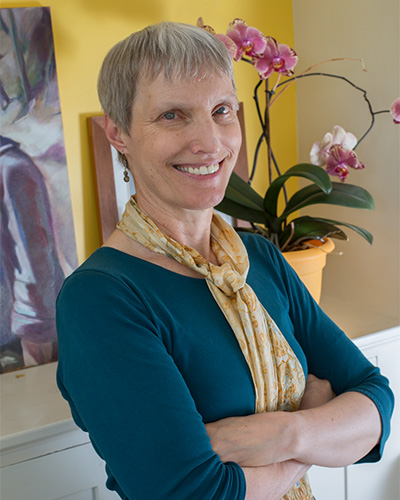
Paul Szmal: It's time for our monthly visit with Seneca County Cooperative Extension. Actually, we've moved a bunch of people around because we don't have any show on the 4th or the 5th, and we're joined on Zoom by Rachel Williams, 4-H educator. Good morning.
Rachel Williams: Good morning, Ted.
Paul Szmal: It's July, county fair time, just a couple of weeks away, so let's start with the opening night reception held by Cooperative Extension.
Rachel Williams: For sure, yes. We celebrate Seneca County agriculture at the opening night reception from 5 to 7 p.m. It's in Floral Hall, which is the long building at the west end of the fairgrounds. So, we'll be highlighting products by sampling tasting items, as well as beverages that evening. We'll also be holding our annual Produced in New York State contest, where 4-H youth will be presenting recipes that include New York State products, and that'll all be happening simultaneously. And to find out about all of these things we're going to talk about and a whole bunch more, you can go to SenecaCountyCCE.org or to the fair site, that's SenecaCountyFairNY.com.
Paul Szmal: So, start wherever you'd like in terms of what 4-H is going to be doing at the fair, a whole bunch going on.
Rachel Williams: Yeah, definitely. You know, I guess, Todd, I'd like to start with a little bit of the prep pieces, which include accessing volunteers. So, this is a great opportunity to connect with your community and to work with and help youth, as well as if you are a teen, if you know any teens who are looking for volunteer hours, we definitely can. We have lots available. So, that would include everything from our setup preparations, which we start doing more so next week. We actually have that right on our website when we're having our get-togethers for preparing the fairgrounds. And we'll actually be doing those, I want to give you the exact dates, Wednesday the 10th and Thursday the 11th of July. And again, there's connections for signing up to register to volunteer.
Additionally, we're always looking for evaluators, specifically for our youth building exhibit. So, that includes everything from foods. If you like to taste foods, this is the time to jump in and volunteer. Also, fine arts, photography, which includes photography, painting, etc., fiber arts, all kinds of things. We are definitely always seeking volunteers. In that case, people should email me at rrw33 at cornell.edu. And then, we're also seeking volunteers for during fair week. So, things that are happening during fair week is right on Monday, July 15th. We start with our evaluations. That's not actually the official beginning of the fair, but we get everything evaluated so we can get it out on display. And that runs from 12 p.m. to 7 30 p.m. on that day.
And then, we'll be busy setting up our dairy bar. That's a fun experience. Our ice cream comes from the Cornell dairy. So, we actually go and pick it up on July 16th. We've ordered our flavors. They're so fantastic. We had some sampling of them while we were at Cornell Queer Explorations this past week. And they're very popular and tasty, local, and something you don't get everywhere. So, the big thing is our dairy bar is a complete volunteer-run experience, mostly by youth and adult 4-H volunteers. And it's a fundraiser for us. It's how we make 4-H experiences happen for youth in the community throughout the year. So, we appreciate anyone who decides to stop on by. Even if you're driving by and you feel like you need an ice cream, stop and get our dairy bar. We're open from 2 p.m., even though the fair itself is not typically open that time during the week, until 10 p.m. every evening.
Paul Szmal: So, you go ahead, Ted. Yeah, I was just going to say the actual dates of the fair are Wednesday, July 17th, 4-7, or that's when 4-H is doing things. Thursday, July 18th, 9-5. Friday, July 19th, 10-2. Saturday, July 20th, 9-30 to 1. And again, all the fair schedule at SenecaCountyFairNY.com.
I see that the 4-Hers that are showing off poultry, it says something about polorum testing. Is that the same thing as the bird flu?
Rachel Williams: It's not, but it's a blood test for the birds. So, there's a number of things that can be identified ahead of time, but it is required, exactly. So, some youth have large flocks at home, so they have a vet that comes in and does that for them, or we did offer the test as well. So, yes, in order to show at any fair, including the state fair, youth have to have had their birds tested. So, but we do want to show. Definitely for the bird flu, for sure.
Paul Szmal: Let's talk a little bit about raising animals for show, whether it be poultry or larger livestock. What do the 4-Hers go through in terms of raising the animal, and then what are the judges looking for in a show?
Rachel Williams: For sure. So, a big part of showing, raising, and showing, especially in 4-H, is the showmanship piece, and showmanship really has to do with knowledge, for one thing. You know, like, what do I feed my animal? How much do I need to feed my animal? How do I monitor and take care of my animal's health and things assorted with that, as well as, you know, basic things like caretaking, you know, washing, brushing, maintaining their health records, their shots, etc. And then also, what is my general knowledge of my animal? So, based on what I expect of my animal at a certain age, the breed that my animal is, what I expect of my animal, and full out knowledge. And then, as youth get older, we actually expect them to have knowledge of additional breeds, perhaps other types of livestock. So, we look at that, just their overall knowledge of raising animals. So, that's a huge part of that, because, you know, when you see open shows, a lot of that is the highest quality animal, and it's not that 4-Hers don't have high quality animals, but highest quality animals can be quite expensive. Right. And we're really looking at their knowledge and experience and their growth over time. And so, we look at 4-Hers, I know you've heard us talk about this before, Ted, but 4-Hers are evaluated based on their own individual age and experience, specifically when it comes to things like showmanship and other entries. When it comes to an animal and how it looks when it comes to a class that doesn't have to do with showmanship, you know, there's only so much we can control, right? So, you get what you get, and you take good care of them, but those are just kind of factors that come into play with breeding and genetics.
Paul Szmal: We've been talking over the last couple of years about the STEAM aspect of 4-H. Will there be some science and technology-type displays at the fair?
Rachel Williams: Most definitely. In our youth building, we have youth that enter projects that are associated with circuitry, electronics, robotics, all sorts of technology projects. General STEM is, you know, animal science, for sure, and food and nutrition. All of those things can fit under General STEM, and then engineering would be more of your building and planning projects, and math is associated with all of those pieces. So, you will definitely see projects like that throughout the fairgrounds.
Paul Szmal: And by the way, at the site, senecacountyfairny.com, there's a PDF brochure of the entire schedule that you can download. You could print that out, stick it in your car, or take it with you, whatever, just to know everything that's going on.
After the fair, what's... I mean, the state fair, obviously, is a big thing, but what else are you planning for the summer for 4-H?
Rachel Williams: We have a lot going on, actually, prior to the fair, during the fair, after the fair. We have library... I know, right? We have library programs throughout the summer. We'll be working with some of the summer recreation programs. Typically, this year's library theme has to do with adventures. We're actually focusing on adventures in foods, and we'll actually be at each one of the libraries, some more than once, and then the recreation programs as well. There, we'll be highlighting our dairy, agriculture, and the classroom program, which I know we've spoken about in the past as well, and then prepping for state fair, and a number of little pieces here and there, workshops, etc., things we're prepping for for the new year as well. There's a lot of time we take in the summer to do that, but state fair takes up a lot of our time. We're working on that right now as well.
Paul Szmal: We've told you about the fair website. Don't forget the Seneca County Cooperative Extension website, senecacountycce.org, and Rachel's been talking about the volunteer opportunities. If you click on the Seneca County Fair link, you'll see there are links to sign up for the dairy bar, for general volunteer work, for helping in floral hall, and then cleaning up and setting up and taking down before and after. Everybody can use that help, and again, rrw33 at cornell.edu is Rachel's email if you can help out, and congratulations on everything the kids do, and best of luck for a great county fair and state fair this year.
Rachel Williams: Thank you, Ted.