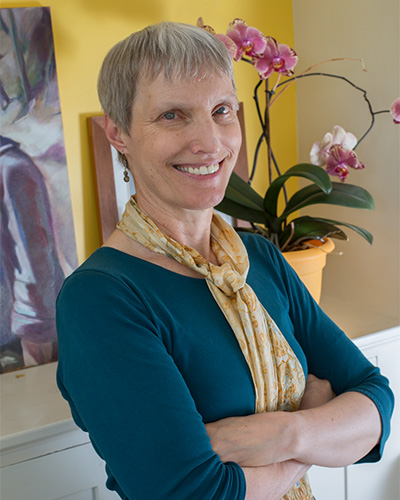
Paul Szmal: Good morning, it's 741. It's F. Alex Morning, the Tuesday edition. We've been talking with a lot of our lawmakers here as the session begins this week. And we have 46th District State Senator, Rachel May, who represents Sequoia County and points east in our listing area. Good morning, welcome back.
Rachel May: Good morning, Ted. So, first thing I want to talk about, some of the things that you're planning on doing in this legislative session. The state of New York has a number of different revolving loan funds for various purposes. And you have written, or co-written, an op-ed piece on a website called CityandStateNY.com talking about a revolving loan fund for housing to help meet the housing demand by giving developers incentives to borrow money at low interest. Tell us how that would work.
Yeah, revolving loan funds are a proven good way to use taxpayer money to bring interest rates down for projects that we believe are necessary. And right now, housing is so scarce in New York, it's driving the cost of buying a home or renting up really fast. And so, one of the ways to bring those costs down is to build more housing. But the cost of financing right now is extremely high, and so builders aren't building. If we provide a revolving fund, though, we can set a low interest rate, they can get the project started or even completed, and then refinance with a private bank and put the money back into the revolving fund so it can be loaned again. So it's a good, simple solution, and we hope that our colleagues and the Governor will bite on this idea.
Paul Szmal: Well, and like I said, it's not unprecedented at all because the state has a number of similar funds for a lot of different purposes, so there's a history of this idea working.
Rachel May: Exactly. And we're actually proposing a second revolving fund for big energy projects because this is also a moment where we need to build out the energy grid much more. And again, because interest rates are high, the construction is slow or not happening at all.
Paul Szmal: I want to back up and talk about housing for a moment again and some of the causes for the housing crunch. Are you seeing in your district the impact of Airbnbs? It seems like a lot of rentals are now being converted to these Airbnbs and coming off of the permanent rental market.
Rachel May: That has been a problem for a long time. It really accelerated in the pandemic. People just taking their rental properties off the regular housing market, and you can make more money with Airbnb if you can rent it out enough days a year. But yeah, it is a problem, and it's one of those things where we've created a rental registry so that communities can know how many units are off the market that way, so that they can do planning for building more housing as well for the permanent housing that people need.
Paul Szmal: We're getting closer to Micron. They just got some more funding recently. Are you seeing a Micron-related increase in demand for housing in the district?
Rachel May: Oh, absolutely. We're definitely seeing prices go up, whether that's directly people who are working or planning to work at Micron, or it's anticipatory or speculation. We don't know, but there's definitely much more demand for housing right now than there has been before.
Paul Szmal: There's been a lot of discussion. I haven't heard a lot of it in New York State, but a lot of it nationwide on banning certain books, and librarians are being caught in the middle. Are you seeing any of that kind of discussion going on in New York?
Rachel May: Yes, there has been some. Some school boards around the state have had those discussions. There are definitely other states where it's happening, and other states that have passed good legislation to protect librarians so that they can make the decisions that they feel are best for their libraries. The Library Association here in New York is working with us. They're very eager for us to have legislation that protects them from these kinds of pushes. We've got one that's for school libraries. It's called the Freedom to Read Act, and a second one called the Open Shelves Act that is for public libraries.
Paul Szmal: Talking with State Senator Rachel May this morning, the bottle bill changes didn't go anywhere in the last session, doubling the deposit from five to ten cents, expanding the types of containers that are covered. What are the prospects in this session?
Rachel May: I think they're good in this session. I really do. All the players, the bottlers, and the distributors, and the small businesses that would have to collect the bottles are starting to come to the table and recognize that we have to do this. Connecticut raised their deposit to ten cents, and it's already having a major impact on the number of bottles and cans they're able to collect. And we want to see the same thing happen.
Paul Szmal: You had one of your bills signed by the governor, the SCI Act, S-I-G-H. It concerns building schools close to big highways. There was a school in Syracuse that you went to that was right next to I-81, and noise and fumes and everything really disrupted the school day. So tell us about the SCI Act.
Rachel May: Yeah, this was something we did in conjunction with the New York Civil Liberties Union because this is an environmental justice problem. A lot of the schools that are located right next to highways are also in some of the poorest neighborhoods in the state, as is true of the Martin Luther King School in Syracuse. And it is literally right next to the highway. You can almost reach out and touch the highway from the schoolyard. And so what the SCI Act says is we're not going to build future schools in that kind of proximity to a major highway because of the asthma issues, because of the noise issues, because of the just dangers. Things fly off of highways and can be really hazardous. So I'm proud that the governor signed that. It was a real fight because New York City, you know, there aren't that many parcels of land where they can build housing or build schools. And some of them are near highways. And so we negotiated with the city and got them some exemptions so that if they can't find any other place, they can still build a school. But we want to make sure that people are taking this into account before they build a school.
Paul Szmal: The first priority when the legislative session opens, of course, is the budget. Do you think we're going to have an on-time budget? And are we making any progress on a more inclusive process? I know especially our lawmakers who are in the minority say that they don't get heard and it's still the three people in a room.
Rachel May: Well, I mean, I think three people in a room is always going to be true at the end of the negotiations. There's definitely a time when decisions have to be made. And that's how we do it in New York. We have tried for a lot more transparency. We have hundreds of hours of budget hearings after the governor issues her budget proposal. And we do try to take into account all the voices that we hear. I'm pleased that she's making some good proposals initially, like the one for an expanded child tax credit. In Syracuse, we have the highest child poverty in the country. And this is one of the proven ways to address child poverty. So I'm hoping that we're going to be on the same page with the governor this year. And we won't have to fight over a lot of things.
Paul Szmal: I'm sorry, I was going to say, one of the things that cities and towns were very happy about last year was the increase in the AIM funding. And they'd like to see that continue. Have you heard any speculation about where that funding might go this year?
Rachel May: I have heard nothing about that yet. But that was something we in the majority fought for extremely hard. I'm proud that it was partly here in Central New York, our advocacy that made that happen. I'm hopeful that that is part of a trend and we will start to see increases every year. But I can't predict what's going to happen there. That was a huge fight last year. And I'm proud of the result.
Paul Szmal: Yeah, and of course, those proposals and the state of the state proposals will come out a little bit at a time. And we'll know more about those when we talk next month.
State Senator Rachel May, thanks for bringing us the information to your constituents each month. We're happy to be able to do that.
Rachel May: Oh, I appreciate it, Ted.