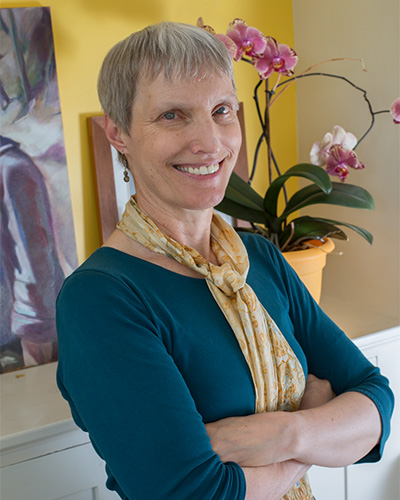
Paul Szmal: FLX Morning continues, it is 8.16, there is a winter weather advisory in effect for all of the Finger Lakes region and that stretches back into central New York and into the Mohawk Valley as well. That won't expire until later this evening, about 6 or 7 o'clock depending on what county you're in. It's snowing right now outside our studios here in Geneva and the temperature is at 27. And watching the snow fall out her window is State Senator Rachel May who joins us now. Good morning Senator, how are you?
Rachel May: Good morning Paul, I'm fine but I haven't been out to shovel yet so all bets are off for now. Yeah and I think it's probably snowing a little bit more intensively where you are versus where we are.
Paul Szmal: Yeah, it's coming down hard in Syracuse. Yes, yes.
Paul Szmal: Well, let's get down to some business here and talk about some of the stuff that you've been working on. One of them is an AI regulations letter.
Rachel May: Yeah, so I chair the committee on consumer protection and I'm very concerned about some of the impacts of artificial intelligence on business behavior and that kind of thing as well as in our elections. And the federal government is talking about trying to prevent states from passing any regulations about artificial intelligence and I just think that's backwards of how things should work. States are where we test out policies that then can rise to the level of federal policies but states are much more nimble. We can really kind of tailor policies to specific situations and I think they should let the states continue to do that. For example, in elections, you know, I care deeply about fair elections and if there are AI deepfakes of candidates saying things that those candidates would never say, how can voters make good decisions? So I think we need ways of reining some of that in.
Paul Szmal: Do you feel like, Senator, do you feel like we're behind the curve in terms of any type of regulation of AI?
Rachel May: Oh yes, we definitely are. The New York Times has a wonderful video about dynamic pricing, which is something that is coming to stores near you, where corporations can access a lot of information about us and then they can set prices very specifically for the time of day or the weather situation but also targeted to you individually. If they think you can pay more, they may charge you more than they would charge your neighbor or your coworker and I think that's discriminatory and it has really dangerous implications and that we need to be able to look at that and see if there are ways to put guardrails on that. You know, I can see on a day like today, if that thing comes to fruition, where all of a sudden the cost of snow shovels and ice melt would go up.
Paul Szmal: Right, exactly. Capitalizing on emergencies, on real needs that people have. I mean, they can even apparently tell how expensive the device is you're using to shop online and then, you know, charge you more if you're using a nice device. Didn't we call this price gouging back in the day?
Rachel May: We used to call it price gouging, yes, absolutely. We still do and yeah, I was just yesterday with the Attorney General because she got a big settlement about price gouging on infant formula, which is another thing where, you know, people really need it and when there's a shortage, it's a real hardship for families and she got a settlement in a price gouging suit and used it to buy a lot of infant formula to give to food banks and it was a great thing. And a lot of what you're talking about is powered by AI and the data that is created by that. So, Will, do you think New York State will take the lead in the country in introducing and passing some type of regulatory legislation and what happens beyond that if the federal government tries to stamp it out?
Rachel May: Well, I think the answer is in your question, actually, yes, I think New York can be a leader in this. We have a lot of, you know, the tech companies based here. We do a lot of work in this space and my colleague, Kristen Gonzalez, who chairs the Internet Committee, she's done a lot, but I'm working with the Attorney General's Office on the dynamic pricing issue and we did with some other issues as well. We did require some transparency about dynamic pricing in the budget last year, but I'm hoping that we'll be able to do more than that.
Paul Szmal: We're talking with State Senator Rachel May here on FLX Morning. You mentioned data companies that are in the area. Let's talk about the Lysander Data Center.
Rachel May: Right, yeah, so this is a proposal. It's not, it's really in the early stages at this point, but to build a big data center in Lysander and data centers, you know, we, the more we're using things like AI, the more energy is required to power those cloud technologies, but they use a huge amount of energy. There's talking about, I think it said two-thirds as much energy as one of the micron chip fabs, which the thing about data centers is that they don't really create a lot of jobs. They just create a lot of heat, basically. You're running a bunch of supercomputers 24-7, and it gets very, very hot, and they need a lot of water for cooling, and then they put the water back in the lake or the ocean much hotter than it was before, so that can damage the ecosystems. And they require a ton of energy, and this is one of the main factors that's pushing up our utility costs right now, or at least our electricity costs. And so several of us are working on legislation to try to make sure that this is done responsibly. So if they're just doing it to make a profit for someone in Saudi Arabia or something like that, I don't think that utility customers here in New York should be paying the price for additional power that they need. Or if they're creating all this waste energy, I think we talked about this last month. I'm working on a bill with one of my colleagues. We toured some thermal energy networks that were taking waste heat from wastewater and using it to heat a whole bunch of buildings, and I think we can do the same with data centers. Just grab that heat, all that waste heat, and use it for heating and cooling in buildings instead of just sending it out into the atmosphere or into our lakes and streams. So I do think there are things that we can do to coexist with this demand for more and more and more high-tech energy, but I think we have to be careful about it.
Paul Szmal: I wonder if there might be a point where these data centers might be requested, strongly encouraged to, or even required to have their own self-sufficient alternate means of energy like solar panels, things of that nature, to take some of the pressure off the existing grid.
Rachel May: Yes, and there are definitely proposals for that. One of the concerns is that they'll just fire up old gas-fired power plants, and that's not what we want to see happen. We would like to see them use green energy. The problem is, right now, there's kind of a finite amount of green energy we can use, and we're seeing communities not wanting solar panels, not wanting the generating capacity in their vicinity, and so figuring out how you get that energy is yet another problem. It's all part of one big piece, but you're thinking along the right terms there.
Paul Szmal: I want to make sure we get this in, talking about the Schweinfurth Arts Center and a neat little program that they have going on.
Rachel May: Oh, yes. The Schweinfurth is one of my favorite museums, and I think Auburn is so lucky to have several great museums, but the Schweinfurth in particular, because it's one of the very few museums in the world that really focuses on textile arts. Every year, they do a fabulous exhibit of quilts from all around the world, art quilts that are just brilliantly designed. I will say my favorite, I have been to the show, and my favorite is a quilt. It's a red background with just a comfy couch quilted on it that looks like you could go sit on it, but you can't because it's two-dimensional, but it really makes you think about how fabric kind of structures all our lives, and it's got that cozy vibe that is really lovely to look at.
Paul Szmal: As always, it is a pleasure to talk to you, Senator, and we will talk to you again after the turn of the new year, so I wish you a Merry Christmas and a Happy New Year, and we look forward to speaking with you in 2026.
Rachel May: Oh, the same to you, Paul. Happy New Year, and see you soon. Bye-bye.
Paul Szmal: It is 826 on FLX Morning.