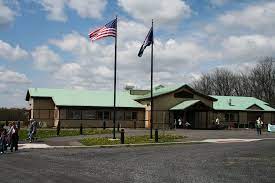
Paul Szmal: Good morning, it's 8.39, it's FLX Morning Tuesday guest-o-rama, our fourth and final guest of the day, Chris Lajeski at the Montezuma Audubon Center, Route 89 in Savannah. Good morning and welcome back.
Chris Lajewski: Good morning, Ted, great to be with you.
Paul Szmal: The fall migration is still going on, so who is headed south these days through the wetlands?
Chris Lajewski: We're pretty much at the peak of the waterfowl migration right now at Montezuma and across the Finger Lakes region. We're seeing ducks, geese, swans are starting to come in as well. About three dozen species of waterfowl are on the move right now, heading south, going down to at least the mid-Atlantic states. Some of these birds are going to head all the way down to the southeast U.S. to spend the winter. Montezuma is one of those critically important stopover sites for these birds as they're making this long and arduous journey. We've got the food, we've got water, we've got shelter for them all.
In addition to that, we're also seeing a big uptick in the number of sandhill cranes. Right now, we've been spotting about 200 sandhill cranes at one of the marshes at the National Wildlife Refuge in Montezuma, and that's called the Knox-Marcellus Marsh. Viewing of this marsh is along East Road in Savannah. It's a public road, you're able to get out along the road at any point and enjoy the sandhill cranes, and there's a great waterfowl there as well. I think that this number that we're seeing is going to increase as we go deeper into November. I would expect this year we're probably going to peak somewhere around 400 or 500 sandhill cranes.
Just over the last several years, we keep seeing an uptick in the number of cranes stopping at Montezuma. They're in this Knox-Marcellus Marsh in particular because of all the food and abundant habitat. Now, if folks go to this marsh and they don't see that number of sandhill cranes, it could be that the cranes are in the agricultural fields nearby. The farmers are getting out and harvesting the last of the corn, and sandhill cranes love to eat the waste grain that the farmers leave behind. So, a great time to be out at the Montezuma Wetlands Complex.
Paul Szmal: Have the migration patterns changed at all over the years, or are they pretty much defined by the geography?
Chris Lajewski: The timing of migration seems to be changing slightly, and that's because of our warming climate. We're seeing birds lingering north a little bit longer, deeper into the fall season. They're not heading south as early. Same thing during the springtime. They're actually heading northward earlier than in the past. This has been changing over the last, really, 30 years. We're now seeing these sandhill cranes in particular. Some of them will stay in the Finger Lakes region, in Montezuma in particular, if it's mild enough. We've been having more mild winters and less snow, so they're able to eat the corn and the soybean waste grain. They're also able to eat the natural food that's in marshes at Montezuma. Things are changing, and it's really important that we have folks out monitoring birds. We have a lot of community science opportunities coming up, which I know we'll talk about here in a bit, for people to get out and help us collect the data that helps us understand where birds are and how many there are out there.
Paul Szmal: What about Canada geese? Is the non-migratory population growing?
Chris Lajewski: The resident Canada goose continues to be a species that is very large. It's increasing, and that is why the New York State DEC has an extended season to harvest Canada geese in September. At that point in the year, we don't see the migrant Canada geese coming south quite yet. It's only the resident, the year-round Canada goose. We're still trying to bring down that population while at the same time trying to increase the number of migratory Canada geese that we have. It's complex, but it is an issue. We know that some people don't appreciate the droppings of the resident Canada goose. It's a problem, and DEC is trying to manage that.
Paul Szmal: You mentioned hunting. We're getting into a number of hunting seasons. Give us some tips on places where you can still hike and watch wildlife safely during the hunting season.
Chris Lajewski: We know that some people are concerned about hunting. They don't want to be around hunters when they're birding or enjoying hiking opportunities at Montezuma Wetlands Complex. A few areas that they can enjoy right now are Montezuma Audubon Center. We have 200 acres, 2 miles of trails. There is no hunting at the Audubon Center right now. That's a great place to enjoy forest and grassland habitats. We have a lot of songbirds that are migrating through right now. We have the year-round resident songbirds as well. Out on the marshes, we're still seeing a lot of ducks and geese stopping during migration. Some shorebirds have even been lingering a little bit longer because of our very mild fall season so far. The yellowlegs in particular have been out there in great abundance.
A couple other areas that people can go without the thought of running into hunters would be the wildlife drive down at the Montezuma National Wildlife Refuge. That will remain open until December 1st, and then it will close for some deer hunting. This is a great opportunity to see a lot of ducks. Both diving ducks and dabbler ducks can all be viewed safely from the roadway from the comfort of folks' vehicles.
Lastly, the Seneca Meadows Wetlands Preserve, which is a partnership between Seneca Meadows and the National Audubon Society. This is a great conservation project that's several hundred acres in size. There are seven miles of designated trails there through forest, grassland, and marsh habitats. There can be a lot of ducks and geese in there. We're starting to see some of the northern birds coming down, like northern harrier songbirds can be found in there. Other birds of prey, bald eagles, now nest on that property. And there is no hunting there at that wetlands preserve as well. So ample opportunities for folks still to get outside, enjoy the season, and enjoy the migratory birds safely.
Paul Szmal: You mentioned our species of the month, the northern harrier. Tell us a little bit about this bird of prey. How do they compare in size to, say, a red-tailed hawk?
Chris Lajewski: A little bit smaller than a red-tailed hawk. The wingspan of a northern harrier is more like three and a half feet. A red-tailed hawk, closer to five feet. The northern harrier is a bird of prey, and it will stand from head to tail about a foot and a half to two feet.
The really interesting thing about this species, I think, is its appearance. So it's a decent-sized bird, and it's a hawk species technically. But the face of this bird almost looks like an owl to me. And it has large, yellow eyes, a very sharp, long bill. Or, well, long for a bird of prey. A very pointy bird beak. And then it will hunt very low over grassland and marsh habitats. So it's probably utilizing not only its great sense of sight, but also its sense of hearing. And the feathers of this species will funnel sounds from small mammals, and even reptiles and amphibians that are still around and active this time of year, up through the face and then back towards its ear openings on the side of its head, helping it to hunt.
Montezuma has a lot of marsh and grassland habitats. So we're seeing an uptick in the number of northern harriers all around Montezuma right now. This is probably the best time of year, late fall and then into the winter season. A great time to see northern harrier hunting low over those types of habitats at Montezuma. We do have a few of them that stay through the spring and summer season. So they're breeding out in the marshes. But we're more likely to be a stopover for migrants heading south and then also birds that are spending the winter with us, as long as the snow doesn't get too deep and we don't freeze over entirely in terms of the marshes and other waterways.
So northern harrier, it's a state species on the threatened species list in New York State. And pretty cool, pretty cool looking bird for sure.
Paul Szmal: So the advent of citizen science has really helped with gathering data and giving us some of these trends that we've been talking about. And your chance to do that's coming up with the Project Feeder Watch.
Chris Lajewski: Yeah, this is a citizen science project developed by Cornell Lab of Ornithology in partnership with National Audubon Society back in the 1970s. And it was developed as a way for people to keep track of birds primarily in their yards at their bird feeders. However, it has expanded beyond just backyards and feeders. So now we're welcoming folks to keep track of birds from now in November right on into April. Yes, in their yards, in their backyards, front yards, from their balconies, but also in community areas and nature centers and other locales all across North America. And folks don't even need a bird feeder anymore.
And the great thing is this is a really flexible citizen science project. People can be out counting birds, documenting birds once or maybe just a few times during the winter season. Or they can be counting birds and submitting that data on a very regular basis, maybe even once or twice a week. Information is provided by Cornell Lab of Ornithology on the Feeder Watch website, which is feederwatch.org. Now is a great time to think about counting birds. Coming up on the holidays, we're going to be gathering with family and friends. And it's a fun activity to be doing with friends and family. And if folks want to just stay inside drinking a nice cup of coffee or hot cocoa or tea and look out their window and enjoy the birds, document the birds. A very simple way to enter that data through the Feeder Watch website.
Also, if people are new to birding and not really familiar with backyard birds, there's a lot of information that is sent to participants by Cornell Lab of Ornithology. Not only mobile apps, but also posters that help the folks document and identify birds that are coming to their yards. So, feederwatch.org, a great opportunity to take action for birds, count birds, and that helps scientists understand where birds are, their population size, and it helps lead to conservation work on the ground.
And then a related note, the 124th Christmas Bird Count begins December 14th.
Paul Szmal: Yeah, we're looking for participants to come out to Montezuma Audubon Center and the surrounding Montezuma Wetlands Complex.
Chris Lajewski: The project is going to be going on over the course of about a week's time. The actual count day for Montezuma is Monday, December 16th. We know during a work week doesn't work for everybody, and so three days prior and three days after December 16th, we're welcoming people to come out, count birds at the Montezuma Wetlands Complex. And if folks can come out on the 16th and help count birds, that's great. If people are new to birding, we can pair them up with experienced birders. It's a great opportunity to celebrate this season.
Contrary to the name, this doesn't take place on Christmas Day. It did 124 years ago, but now it's an expanded season basically from December 14th all the way through January 5th. We're counting birds all around the Finger Lakes region. So, there are what we call count circles or count areas that take place all around the Finger Lakes region. So, if Montezuma doesn't work for folks, they can go to Syracuse, Skinny Atlas, Geneva, Rochester, some other. Ithaca is also having a count, and they're all on different days during this three-week period coming up during the holidays.
So, Audubon.org, Community Science Christmas Bird Count is where folks can go to find out more information. If they're interested in participating in our Montezuma Christmas Bird Count, we'd love to hear from them. They can email us Montezuma at Audubon.org. And the website ny.audubon.org slash Montezuma for these programs and many more.
Paul Szmal: Chris, always great to talk. I still have my Carolina Wren around, at least as of a few days ago.
Chris Lajewski: Well, you're probably going to be enjoying that throughout the fall and winter season. Hopefully, it's a year-round bird for you.
Paul Szmal: All right. Thanks as always. Appreciate it.
Chris Lajewski: Thank you, Ted.