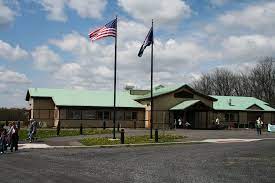
Paul Szmal: Good morning, it's 8.37, it's FLX Morning, the Tuesday edition, and we're Zooming with Chris Lajewski at the Montezuma Audubon Center, Route 89 in Savannah. Good morning.
Chris Lajewski: Good morning, Ted, it's great to be with you. It's always good to talk wildlife with you. I still have my very active and very musical Carolina wren around my house.
Paul Szmal: Not surprising that Carolina wren, one of our smaller songbird species, is still around here. It's a year-round resident for many areas of the Finger Lakes region, especially if you've got some bird feeders up, or you've got some native wildflowers that are holding on to seed this time of year. Carolina wren, other year-round resident birds like black-capped chickadees and woodpeckers can be found, and it's really a great time of year to be out birding. We've got so many birds on the move, fall migration is certainly underway. Not only do we have year-round resident birds like the wrens, but also some newbies coming back into the Finger Lakes region right now. We have a rare bird alert we'll talk about in a moment, but first off, just give us a general update on the fall migration southward.
Chris Lajewski: We're seeing waterfowl starting to pick up at the Montezuma Wetlands Complex. These are ducks, geese, swans species. We're going to have about three dozen of these species coming through the Montezuma Wetlands Complex in many areas of the Finger Lakes region over the next month to month and a half. You can go to shallow water areas like marshes down at the National Wildlife Refuge at Montezuma. We have 10,000 acres of state land up in Savannah, including Montezuma Audubon Center, where many of these waterfowl species are being found. Also deeper water areas, the Finger Lakes, north end of Cayuga Lake, Seneca Lake are great places to see some diving ducks, mergansers, redhead, canvasback, and so many others. We're starting to see some swan species coming in as well.
And then, interestingly, and I think this species is just going to be increasing in terms of population here in Montezuma over the next month, but the Sandhill Cranes continue to migrate back into the area. Every summer we have about seven pair that breed around Montezuma in the marshes, down at the refuge, as well as state land. And those birds that went even further north to breed are starting to flock up and they are beginning to make their way south and stopping at Montezuma for resting and refueling. I would expect that when we reach the peak of Sandhill Crane migration, which is probably going to be later on in October, early November, we're going to have about 500 individual cranes in the flock that will be sticking around for about 10 days, two weeks or so, feeding, resting, refueling. And then they're going to leave eventually, head down to warmer climates of the southeast United States and Florida for the winter.
Paul Szmal: I've driven through the wetlands on the thruway a couple of times recently. What's the all-white bird that's roughly the size of a great blue heron?
Chris Lajewski: I believe you're talking about the great egret. That is a common wading bird this time of year. It's a bird species that typically breeds in the southeastern United States and southern Mississippi River Valley area. But they have an interesting migratory path and kind of a dispersal pattern that they undertake late summer, early fall, where those birds that were a good thousand miles to the south of us during breeding season actually migrate northward in order to find more food, more habitat, incredible journey. But then they just turn right around mid to late fall and head back south to coastal Florida, Gulf Coast states or coastal Carolina areas where they spend the winter. So yeah, we've been enjoying about, gosh, three or four dozen great egrets down at the National Wildlife Refuge, along the Erie Canal and the Clyde River areas have also been great places to see this large white bird.
Paul Szmal: Rare bird alert in the area. Tell us about the glossy ibis.
Chris Lajewski: Yeah, this is an exciting bird, again, more of a coastal bird. During the breeding season, it can be regularly found along the coastal New England areas and Massachusetts down to Long Island Sound and then also down by the Virginia Beach area down in the mid-Atlantic states. But every once in a while, maybe one or two of these large wading birds makes its way westward. And this early winter, excuse me, fall season is what we're seeing once again, where this glossy ibis, a large, fairly large, dark bird overall, is found in Montezuma. It's been found at Mays Point, which is part of the Montezuma National Wildlife Refuge, just north of the thruway on Route 89.
And this is a bird that is really unmistakable. It's mostly dark overall, has a long, down-curved bill. When the light hits it just right, you may notice some chestnut colors on it, some green and even some glossy purple colors, really spectacular. Now, it's in this Mays Point marsh because of this very shallow water that is found there right now. So glossy ibis is able to find the insects and the crustaceans and the larvae that are in the muck, as well as in the water of that area. Not sure exactly how long it's going to be there. I would expect probably for at least until we get some some colder air coming in, some more northerly winds coming in, and then it's going to pack its bags and head back to the coastal Carolinas and Florida coast where it's going to spend the winter.
Paul Szmal: We've talked several times about how the classic American lawn isn't really the greatest thing environmentally. And that comes to birds as well. If you're thinking about whether you should mow your lawn one last time, maybe you shouldn't.
Chris Lajewski: Yeah, there are a lot of things that people can do this time of year in preparation for the late fall and winter season and with birds in mind, really. So it's more of a relaxed and laissez-faire approach to to yard work this time of year. Less is more when it comes to birds. And actually a messy yard or a messy lawn is actually going to improve the chances that birds are going to be able to find food and find shelter during our harsh, cold winter months that are going to be coming up.
A couple ideas that that I wanted to present today and something that I implement at my house, as well as what we do really across the Montezuma Wetlands Complex, one of those being letting the purple coneflower and black-eyed Susan and other native wildflowers be. Don't cut them down. Don't deadhead them, because right now those species of wildflowers have quite a bit of seed on them. The birds that are now coming back into the area in the Finger Lakes region are going to be feeding on those seeds. And if left throughout the fall season and into the winter months, it's going to sustain the songbirds like black-capped chickadees and woodpeckers and American goldfinch during the winter months.
If you decide to do some some mowing during this time of year, we encourage people to mow the leaves, but leave the leaves down on the ground. That can not only help your lawn and fertilize your lawn. You won't have to use as many fertilizers and hopefully no pesticides. But then the leaves there, the chopped up leaves, mowed leaves, will provide habitat for insects, caterpillars, which are going to be a food source for birds during the winter months.
Last thing I'd recommend is building brush piles. These are great bird habitats, down branches, down sticks and twigs that might fall into a yard. Instead of just distributing them randomly in your yard, you can build a little pile and that shelter will be a critical spot for songbirds like American tree sparrows and dark-eyed juncos and black-capped chickadees and others. They can get out of the wind of the winter months, get out of the cold and the snowy conditions and find shelter as well as find a food source there in those areas. So really less is more as we're thinking about yard work this time of year. That's going to be better for humans. We can enjoy more of this beautiful autumn weather that we have, less work in the yard and at the same time improving bird habitat.
Paul Szmal: Talking with Chris Lajewski from the Montezuma Audubon Center. One of the things that the volunteer group known as Marsh does is rip up invasive species. One of the others is to collect seeds from native plants. And you've got that opportunity tomorrow morning. This is going to be our last Marsh event of the year and still looking for volunteers to come out and work side by side with Audubon staff, with state DEC, as well as our colleagues down at the Montezuma National Wildlife Refuge.
Chris Lajewski: So one final seed collecting event tomorrow morning. That's Wednesday, October 9th at 9 a.m. We're going to meet at the Seneca Meadows Wetlands Preserve, which is on Black Brook Road in Seneca Falls. Really proud to partner with Seneca Meadows Landfill on this project. They've created this incredible 600 acre preserve that has seven miles of trails. And the native vegetation that thrives in this area that is an important bird area can be collected this time of year with the help of volunteers. And then the seed is dried out and we sow it back into similar habitats in the Montezuma Wetlands Complex later on this fall or we might hold on to it until the following spring.
This is a really important activity that we implement every year. Every time we're out there with volunteers, we'll collect five pounds to as much as 10 pounds of seed. And when you think of each pound being able to restore about a half acre of habitat, this is really valuable work that we're doing. And it's also saving conservation organizations like Audubon a lot of money so that the money that we raise can stay with bird conservation work. We don't have to spend as much money in buying seed. So we're asking folks to go to our website, ny.audubon.org slash Montezuma. Go ahead and register for this event. After a morning of work, we're going to have lunch provided by our friends of the Montezuma Wetlands Complex. Vegetarian options are always available for folks and a great way to give back, to get involved, to enjoy the season and help birds and the places that they need.
Paul Szmal: You have a paid internship position for someone to help run educational environmental programs, both with you, with U.S. Fish and Wildlife and State DEC and have a lot of fun while doing it.
Chris Lajewski: This is a really exciting time for Montezuma Audubon Center. We've been offering volunteer opportunities for high school students and college students for several years now. And thanks to grants from the Central New York Community Foundation, the Columbian Foundation and the Stanley Metcalf Foundation, we can offer these now paid internship opportunities for high school and college age students.
For young people who are interested in potentially a career in the conservation field or STEM, natural resource management, ornithology, these paid internships are a great opportunity for them. They can learn about, you know, what it really means to have a career in this field. They're going to learn from Audubon staff as well as our DEC colleagues, U.S. Fish and Wildlife Service colleagues and other nonprofits like Ducks Unlimited, Nature Conservancy. We all work together within the Montezuma Wetlands Complex. And so these young people over this coming school year, we've got about 70 hours for five different internship positions. So this can be spread out over the entire rest of this school year. We can work with students when they are available. We recognize that, you know, students are busy. And so there might be just a few hours after school and they can come out with us and get some solid work done, maybe during a school break, like winter break or February break, spring break might be at times for them to come out as well. And weekends, of course, are available to these young people as well.
So we encourage people to go to our website. We've got all these internships posted. They can apply right there online. And if there are any questions, they can give us a call at the center or send us an email, montezumaataudubon.org.
Paul Szmal: Very popular program. Your free bird walks. There's a few more of those left for the fall at various locations.
Chris Lajewski: Yeah, really proud to work once again with the New York State Canal Corporation through the On the Canals adventures. These are free guided birding excursions that we've been taking all across the Finger Lakes region. So far this year, we've already been in Syracuse and Seneca Falls. This coming Saturday, we're going to be in Geneva going on a one mile stroll along the flat paved section of trail right at the Finger Lakes Visitor Center at the north end of Seneca Lake, enjoying songbirds, birds of prey and the waterfowl that are migrating through the Finger Lakes region right now.
Later on, we're going to be out in Rochester leading similar walks along the Genesee River Trail. And again, these are accessible, inclusive, fun for the whole family. They're free. Space is limited. So we are asking people to again, go to our website, click on the programs and events button to register for this coming weekend, for any of the upcoming excursions that we've got going on right on into early November.
Paul Szmal: This Saturday is the Dorough Memorial Youth Pheasant Hunt, and you still have a couple of openings.
Chris Lajewski: Yeah, this is part of our 17th annual Robert F. Dorough Memorial Youth Hunt Initiative. We've had a very successful and safe, fun waterfowl hunt a couple weekends ago. And so now this coming Saturday, we're going to be offering a youth pheasant hunt. These are guided excursions for young hunters, ages 12 to 15. They can come with an adult mentor as well. Our guides will have dogs that will flush the pheasants out of the grasslands.
Prior to going out to the field, we're going to have some clay target shooting for our young people here, just so they can get used to that motion of shooting a shotgun in an upward trajectory as the bird is lifting off of the grassland. This is a great partnership that we have with DEC, as well as our friends at the Wayne County Federation of Sportsmen Clubs. We're going to kick things off at seven o'clock on Saturday morning with a light breakfast. We'll have a local environmental conservation officer there to give kind of a safety talk and make sure everyone's on the same page and everyone has an ethical, fun, and safe experience with us, as we always do. And then following the hunt, we're going to have lunch provided by our Federation of Sportsmen's Club. So a great way to get introduced into conservation through hunting and really proud of this youth pheasant hunt that we've got going on.
Paul Szmal: All right. Paul, it's a great time at Montezuma. Chris, thanks as always. Appreciate it.
Chris Lajewski: It's always a pleasure, Ted. Thank you.