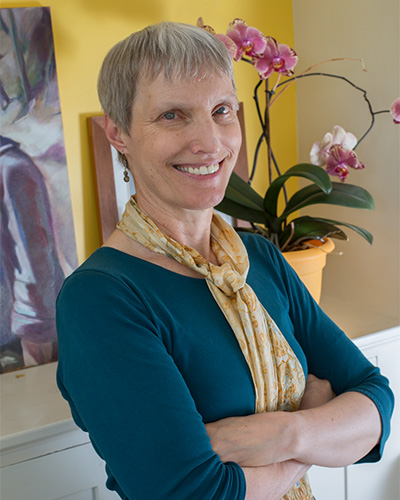
Paul Szmal: FLX Morning continues. It is 816 sunny skies, temperature at 44. We're joined at this time by State Senator Rachel May. Rachel, good morning. How are you this morning?
Rachel May: Good morning, Paul. I'm fine, thanks, on this sunny election day.
Paul Szmal: Yeah, it's better weather than we had last night when those thunderstorms rolled through unexpectedly. We had some pretty intense hail on my street. Turned the street white.
Rachel May: Oh my goodness. Wow. No damage, I hope.
Paul Szmal: I haven't been outside to check yet, but I don't think so.
Rachel May: Okay.
Paul Szmal: Well, let's get right to one of the topics that's hard for a lot of people right now, which is the SNAP benefits, access to food. The president has indicated that he is going to use some of the emergency fund that's available. That's only going to cover about half of the SNAP benefits. It's going to take a couple of weeks for cards to reload. What is the state doing and what are you doing to try to help in the interim?
Rachel May: Right. So first, let me just say this is a manufactured crisis and it's a shame, but the state attorneys general, Democrats from around the country had to sue to force the president to use that money that was already allocated by Congress. So this didn't have to happen, but since it is happening, we in New York are stepping up. The governor has allocated considerable funding, but an additional 65 million just a couple of days ago, on top of at least 11 million she had allocated earlier to beef up our food banks and our wonderful nourish New York program, which pays for buying food from our New York farmers to go to our food banks. So it supports our farms as well as the people in need of food. So that's a really important thing that's happening. We also are trying, I have been trying for years to increase the minimum SNAP benefit from $23 a month to $100 a month. That would take legislation, so it wouldn't happen till next year if we can make it happen. But I also have a bill to allow schools to send food home with kids if they have leftover food in the cafeterias and that kind of thing, make sure that they can send meals home. So no kid is going to bed hungry in New York. So we're trying to move all the levers that we can to make sure that people are fed.
Paul Szmal: If the governor is going to allocate money toward food banks, why would that money not be allocated directly to SNAP benefits? Is that a legal question or?
Rachel May: Yeah, so SNAP is a federal program and I've run into this as I've tried to increase the minimum SNAP benefit in New York because it would have to be a parallel program. So yeah, we can't just directly intervene in SNAP. And that's an unfortunate situation.
Paul Szmal: Is there bipartisan support for this amongst your colleagues? For which?
Rachel May: For the governor's allocation of the money, has that met with bipartisan approval for helping members of the state? And what about the legislation that you've proposed?
Paul Szmal: Right.
Rachel May: So the governor can do that action unilaterally. It didn't require legislative approval because we have given her some leeway for emergency actions. In terms of my bills, I just introduced the school lunch bill, but I expect that a lot of my colleagues on both sides of the aisle will support it because we all have kids who face food insecurity. Every district, doesn't matter if it's red or blue, rural or urban, there are kids who are going hungry.
Paul Szmal: I know some of your counterparts went to a public hearing that was conducted in Albany talking about electricity and energy costs. Did you get a chance to participate in that?
Rachel May: I wasn't at that one, but I was at the hearing in Auburn that the PSC held about the NYSEG rate hikes. And I've been advocating strenuously behind the scenes to try to make sure that we're not getting big rate hikes.
Paul Szmal: Yes. And I know that's another thing that is top of mind for a lot of folks. Not only the rising food prices at the grocery store, but the rising cost for the energy, whether it be the electricity or whatever it is that they happen to use to provide heat and light and things of that nature. I know you've also been working a little bit on housing and you have some legislation that kind of dovetails with an acceleration fund that the governor has.
Rachel May: Yeah. So I'm excited about this housing acceleration fund. This was originally my idea and I'm really happy she picked it up. It's a revolving fund. So the state provides the initial capital funding at a low interest rate, allows developers to get started on a project. And then once the project's underway and the risk is minimal, they can go get funding from a bank and return the money to the revolving fund, which can then be loaned to another developer. So it's a way of taking taxpayer dollars, using them over and over and over again, multiplying their impact because we need more housing in New York state. We just need to build more single family homes, more apartment buildings. We need more housing because as long as housing is as scarce as it is, the prices can just keep going up and up and up. And people are priced out of the market and people are having to move in with relatives or, you know, even become homeless because the cost of housing is so high. So the more we can build housing, the better for bringing costs down.
Paul Szmal: One of the things that both contractors and the energy companies have been talking about is the governor's electric mandate on housing that all new houses built after a certain point will have to have all electric appliances. There's been a lot of conversation about the grid not being able to handle that. Have you been hearing any of those conversations and do you think the governor will react to those?
Rachel May: Yeah, so I've been working a lot on grid modernization and various ways that we can make the grid more efficient because right now it's not really used in the most efficient way. It is also the case that we need to build out more and we need to find new sources of energy as well. I was out in Vancouver this summer on a fact-finding tour about thermal energy networks, which was a way of pulling energy from wastewater, which has a lot of heat in it, pulling that heat out and using it to heat and cool apartments and grocery stores and that kind of thing. So I think we need to be looking at all the options here and getting all of the energy that we can from, there are a lot of real innovative sources now. I do think the all electric buildings, I think in the long run, it's the absolute best way to go. And we're seeing new buildings with heat pumps, new buildings with really super efficient systems are much better, much healthier buildings and much more kind of buildings of the future for people, the kinds of buildings that people are going to want to live in, in coming decades. But I also recognize that there are hiccups in trying to implement that legislation. And I do think we'll be sensitive to that with any kind of, you know, if there are supply chain issues and that kind of thing, trying to make sure that developers can still build buildings that are affordable for people to live in.
Paul Szmal: And today is election day. There are not any major state races per se, except for some Supreme Court judge races that are happening. But there are a lot of local and regional races that are happening. And we would encourage folks to get out and vote today.
Rachel May: Absolutely. I'm going to head out and vote right after this. I know a lot of people are feeling kind of helpless right now with all the chaos going on in the country. And this is the people's day to express our opinions and make our voices heard. And I hope everybody will get out, vote their conscience today.
Paul Szmal: All right. Senator May, thank you so much for joining us as always.
Rachel May: My pleasure. Thanks, Paul. It is 825 on FLX Morning.