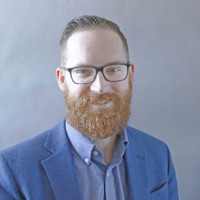
Paul Szmal: Good morning, it's 8.16. Again, Paul Small is out sick today, but fortunately he left me good notes behind. Joining us in the studio is the Director of Economic Development with Ontario County, Ryan Davis. Good morning, it's good to be here.
Ryan Davis: Good morning, thanks for giving me the opportunity.
Paul Szmal: So, we've got a couple of new programs that we're going to talk about. The first is called VRIP, a vacant rental program, and there are actually a couple of public information sessions. Two have been held. There are two more coming. One is tomorrow night at the former school building, 8 Banta Street in Phelps. And then the following day, the Richmond Town Hall on Main Street, Richmond-Honey Oys.
So, we were talking off air before we started. How much is the rental market still affected by the upheaval of COVID?
Ryan Davis: Yeah, it seems like in Ontario County and really across the state and the region, it's still affecting it. You know, we had the Board of Supervisors commission the housing needs assessment in 2022, and what we found out was exactly what we thought. There is a very low availability for rental, for purchase. It seems like our housing market across the county is just locked up. Seniors can't find a place to downsize to, so they stay in place. Anybody trying to break into the housing market or leave mom and dad can't find a place to rent to start the journey. And now we're just trying to, and kudos to the state for coming up with this program, trying to figure out ways to help unlock some of the housing across the county.
Paul Szmal: And I know we've heard people saying that the Airbnb and Vrbo market is taking a significant number of units off the market, but you said it's hard to really tell because no one's done an actual study with hard numbers.
Ryan Davis: Yeah, we touched on it a little bit in the needs assessment, but that's a study all for itself. Tom Harvey, the Director of Planning, and I have been going municipality by municipality, explaining some of the findings and some of the things that our Housing Ad Hoc Committee are working on over the past year and a half or so, and what we're hearing. So there's a lot of anecdotal evidence, community by community, that they're afraid that the short-term rental is taking away from the housing market. So I think with that amount of smoke, there must be fire there, but we really would have to dig into that much further.
Paul Szmal: So the state has designed this vacant rental program to encourage small landlords, and particularly those who live in the area, because that's one of the problems people always talk about in housing, is absentee owners. So how does this program work? Who can get the money, and how do they get it?
Ryan Davis: Yeah, and I'm glad you brought up the fact that it's local ownership. That's a requirement. Small is also a requirement. They're looking for places that have five or less units. What they'd like is, well, it's a requirement for the program, and they have to be vacant right now and uninhabitable or unmarketable. So, you know, if you're sitting on a house that you've got gutted or wondering what to do with it or even store frontage, we're really looking to try to provide second- and third-story housing on our main streets. I think the Phelps open house tomorrow night is critical. You know, there's a community that's got a $4.5 million investment from the state, and I think they can take that money even further for places like the Phelps Hotel and their main street businesses with second- and third-floor that they just have not used for anything for years and years and years. This program fits really nicely with it.
Paul Szmal: I know small landlords were especially affected when some tenants were allowed not to pay rent for a period of time. Did some landlords just kind of give up the small ones that said, okay, I can't do this anymore, I can't have a duplex that I'm not taking any income from, but I still have a mortgage on it?
Ryan Davis: Haven't heard that yet in our open houses, but it wouldn't surprise me. What we're doing in our explanation of the program is really trying to drill down on the availability and to try to make sure that their rental unit matches up with the program. So that's where we're trying to keep it.
Paul Szmal: So how much money can an owner get, and then what are the requirements in terms of what they do with it, in terms of rehab and things?
Ryan Davis: The major requirement and the one that we stress the most when we're talking to property owners at the end of this two-year timeframe, that the unit has to be back on the market. So it has to be rentable by the time it's over. They will get up to $50,000 if they keep their rent at 80% of the area median. That's using the county data. So that's usually where most of the homeowners are trying to fit, which is perfect for a guy like me in economic development, because that's your workforce housing. That's what's going to keep our 20-year-olds here working. So that's where we see most of the interest. There is an advanced vacant rental, which is $75,000 for the unit, and that would be 60% of the area median.
Paul Szmal: Do you have a target number of how many units you'd like to see or think that this program might open up in the county?
Ryan Davis: So we figure it'll be about 30 to 35. We got $2 million from the state, and we have two years to turn it around. And then the landlord has a 10-year commitment to the rental price, right? So they can't just get the money and then two years later jack up the rent. So I think it's going to be a really strong program. We're looking forward to going and starting to look at some of these places over the course of the next four or six weeks and then making some awards hopefully by end of June-ish.
Paul Szmal: So again, the two information sessions, there have been two held already. There is one tomorrow night at the former school on Banta Street in Phelps and then the Richmond Town Hall the following night. They're free and open to landlords, developers, non-profits, or any other property owners who might qualify.
Now here's a second program, and this is a loan program for small businesses. It's in conjunction with Canandaigua National Bank & Trust called the Eagle Fund. This looks pretty exciting.
Ryan Davis: Yeah, we started this in November, or launched it in November. We worked with Canandaigua National Bank over last fall-ish trying to come up with a way to get into the small business market, which is something that my department hasn't done historically. We thought that this would be a good way to break into it, and the response has been unbelievable. Since late November, early December when we first started doing this program, the Small Business Committee has approved $203,000 worth of loans, and it's touching all corners of the county, which I think is really exciting. You're looking at a pizza shop, Sykes Pizza in Bloomfield, Charlie's Canine in Phelps. The places that really weren't looking for the $100,000 loan, which is what our revolving loan fund had historically done, but needed. Sykes Pizza was a perfect example. He had a pizza oven that didn't work anymore. Pretty tough to do business that way, so we were able to help him out. And Canandaigua National Bank has been a great partner. They do a lot of the behind-the-scenes work. You can pick up your loan application at any branch, ask for the Eagle Loan Fund, and they'll walk you through the process, and we've been getting the money out on the street pretty quickly. Two-and-a-half percent interest for a one-to-five-year term, loans between $5,000 and $25,000.
Paul Szmal: And this really interests me because I've always, in my talks about economic development in the past, I say the problem for people in your position is 100 businesses adding two jobs apiece isn't a headline. One business coming in with 200 jobs is. So it's hard. You don't get credit, and you don't get enough publicity for little, small, kind of grassroots growth.
Ryan Davis: Yeah, I joke with County Administrator Chris DeBolt quite frequently, and I told him, you know, I'm probably not going to make the Economic Development Hall of Fame, but I'd like to make an all-star game every once in a while. So, you know, singles and doubles. We'll be happy with that. Of course, we're not going to ignore any big one that might want to come our way, but while we're looking for that, it's great to be able to invest in really our communities too. I mean, these are Main Street businesses. This is where all of us do business all the time.
Paul Szmal: And their eligible businesses, I should say, are any legal business in the county, manufacturing, retail, service, tourism, ag. I mean, that pretty much, that's the economy in the Finger Lakes.
Ryan Davis: Yeah, we cast a wide net, and, you know, we stacked it high and priced it low, and the response has been unbelievable. This week, actually, I'm going to the Board of Supervisors to look for some of the federal dollars that we have left over to re-up and grow this fund to about a half a million dollars. And then, you know, who knows after that.
Paul Szmal: Now, I hate to drag politics into things, but it's almost impossible not to sometimes. With the uncertainty right now around tariffs, is that affecting what you do at all?
Ryan Davis: Yes, the conversation has changed, right? Affecting, that's hard to say. We haven't seen enough to know how, but it's definitely part of the everyday conversation. You know, we've had a couple businesses over the course of the last few months that have decided that they're going to leave, but they're not telling us if it was part of their conversation prior to, right? So, we're learning. I know the state and us here locally are talking about it, and our regional partners are all aware and making sure that we have the conversation. Hey, what are you seeing in Livingston County? You know, so we're paying attention to it, and the more time goes on, I think the more we'll know the impact.
Paul Szmal: All right, these are two great programs. Again, one more time on the vacant rental grant program. Tomorrow night in Phelps, 8 Manta Street, and the following night at the Richmond Town Hall. And I think, you know, for the vacant rental, I should mention, sometime within the next 30 days, we'll have another open house geared towards contractors.
Ryan Davis: Ah, okay. So, we're going to look for an open call for contractors, which would be great for them.
Paul Szmal: Oh, perfect. We're hoping to see, you know, the work on these houses probably more winter work, which would be good for their crews to give them something to do in the downtime.
Now, what's great about this is anytime you open up more rental units, it benefits the whole rental market because it eases price pressure.
Ryan Davis: Absolutely. Absolutely. And that's one thing that the housing needs assessment definitely showed us. So, we're looking forward to getting this thing going and hope we can, you know, really make a difference in some of the, you know, some of the need. You know, the needs assessment said there were 1,700 of these. They called them kind of zombie house type places.
Paul Szmal: Yeah. So, you know, 30 doesn't sound like a lot, but you got to start somewhere. Singles and doubles, like you said.
Ryan Davis: That's right. That's perfect.
Paul Szmal: Ryan, thanks. We appreciate it. It was good to talk to you today.
Ryan Davis: No, thank you.
Paul Szmal: All right. It's 827 now. It's FLX morning.