Paul Szmal: Good morning 839. It's FLX Morning Tuesday. We're Zooming with Chris Lajewski at the Montezuma Audubon Center. Good morning and welcome back.
Chris Lajewski: Good morning, Ted. Great to be with you.
Paul Szmal: And we begin with the recent survey of the bald eagle population in the Montezuma wetlands. How are the eagles doing?
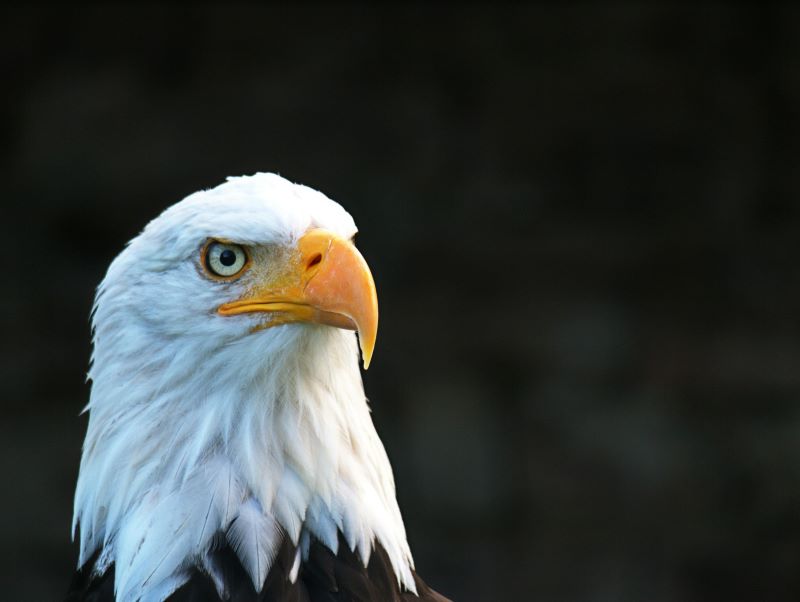
Chris Lajewski: Very well. We counted 64 bald eagles last Friday morning all across the Montezuma wetlands complex and some of the surveyors went up to the south shore of Lake Ontario, surveyed some of the state land up there as well. That 64 bird count that we had was higher than our long-term average of about 57 birds. So really a good number of birds.
We weren't sure exactly how many birds we'd see this year given the harsh snowy cold conditions that we've had over, especially over the last three weeks or so, but bald eagles are still around. This is a great time to see bald eagles tending to their nests. They reuse their nests every year and January is typically a time when we see nesting material brought up to enhance the existing nest. So both male and female of the pair will tend to the nest in preparation for egg laying, which is going to be, oh, sometime later on this month, maybe early February. And then typically by March we have eaglets in the nests already.
And all across Montezuma there are 15 active bald eagle nests and many of the 64 birds that we counted last week's part of the survey were on or very close to one of those nests. So Montezuma and really the broader Finger Lakes region continues to be a stronghold for our national bird.
Paul Szmal: Is the biggest key the availability of open water as far as the winter?
Chris Lajewski: Bald eagles typically will eat fish. However, they are also scavengers and they will eat carrion or dead wildlife, maybe roadkill or just a wild animal that may have perished out in the forest or a field somewhere. So typically because of their interest in eating fish, they will tend to be near water, could be large lakes like Lake Ontario or Cayuga Lake, but they can also be found around marsh habitats and smaller bodies of water.
Paul Szmal: Is there a practical limit to how many bald eagles the Montezuma wetlands area can support?
Chris Lajewski: That's a great question and we're starting to see bald eagles nests near roadways and human-developed areas, which makes us think that the top tier prime nesting locations have already been secured by bald eagle pairs. And if bald eagles want to nest in the Montezuma wetlands complex, they're having to go to second tier areas, which are typically closer to human-developed areas where there might be more traffic, might be residential residences. So we're seeing more nests being built each and every year.
Great places to see them right now are down along State Route 89, actually all up and down Cayuga Lake and right up through the Montezuma National Wildlife Refuge. The northern Montezuma Wildlife Management Area up in Savannah, where the Audubon Center is located, is also a great place to see bald eagle nests and active bald eagles. We do have a bald eagle nest at the Audubon Center and we typically see them flying around in the air, sitting perched in trees, and also sitting out on the frozen marshes. So ample opportunities for people to see bald eagles during the wintertime and really all throughout the year.
Paul Szmal: I'll put in a plug for a great book. I read it and had a chance to interview the author, Tina Morris, Return to the Sky. She was the one that helped start the restoration of the population back in the seventies.
Chris Lajewski: That's right. You know, conservation efforts and banning of DDT, restoring habitats, really jump-started the bald eagles population here in this country and turned things around. But here in New York, with the help of Tina Morris, certainly we got bald eagles back here in New York because of a hacking program or a reintroduction program that Tina Morris was very active involved with. And so because of her efforts and the efforts of many folks over the last 50 years, our national bird continues to thrive.
Paul Szmal: Another classic bird of winter is the snowy owl, and we've had a few come around lately.
Chris Lajewski: Yeah, the snowy owls typically, during the wintertime, will stay up along the U.S.-Canada border. This is a large, mostly white bird. It's actually our heaviest owl species. And it's mostly white, but we're seeing some snowy owls that are fairly spotted. They've got a lot of black barring on them, big yellow eyes, really charismatic-looking creatures.
And these birds naturally nest in wide-open Arctic tundra habitat with void of trees. And so when they come down to northern parts of the United States, including the Finger Lakes region, you typically find them around airports. And so we've been seeing them fairly recently, actually over the last couple weeks, at the Finger Lakes Regional Airport just on the south side of Seneca Falls. Up to three snowy owls have been spotted there. And the folks at the Finger Lakes Regional Airport are very welcoming to birders and folks that are curious about the snowy owl and seeing them. You're welcome to go inside the facility at the airport and look out through the windows, and you're probably going to see at least one snowy owl.
Sometimes they're sitting on the ground and feeding on small mammals, but sometimes they sit on the posts and the poles around the runway. We do not want people going out on the runway. There's no reason to go out on the runway. Just stay inside that facility, inside that building, and look out the windows, and you're probably going to see snowy owls.
Now the other place that we've seen snowy owls recently is over in Syracuse, at the Syracuse Hancock International Airport, it's called. And there's an observation parking lot area where you can also see snowy owls occasionally sitting on posts or out in the flat terrain adjacent to the runways. So another year when snowy owls have been coming down well into the Finger Lakes region. In fact, some of these snowy owls have been found as far south as the Delmarva Peninsula, so down around Chesapeake Bay and Delaware Bay areas.
Paul Szmal: Talking with Chris Lojewski at the Montezuma Audubon Center, you've got two new openings. Tell us about the duties and qualifications for Community Conservation Manager and Community Conservation Program Senior Associate.
Chris Lajewski: Yeah, really excited to announce that we are bringing on two new staff at Montezuma Audubon Center. We're really excited that these two new positions are going to allow us to do more conservation work at the Montezuma Wetlands Complex and really throughout the Finger Lakes region.
First of all, the Community Conservation Manager, looking at someone who can help us build partnership, engage our Audubon network, and implement conservation projects like invasive species removal activities, community science projects like our bald eagle surveys and waterfowl surveys that'll be coming up. They also are going to be managing our program staff and volunteers and interns. We're looking for a mid-level staff person to come on board, hit the ground running, and really excited about this manager position, as well as our Community Conservation Program Senior Associate position, which is going to be doing more of the programmatic environmental education and interpretation programs. They will be getting involved in bird conservation projects, habitat restoration activities, and also at the community science programs all across the Finger Lakes region.
We're looking to move pretty quickly with both of these positions. We are getting very close to the field season and the very busy program season coming up this spring, so we're looking to do some interviewing here over the next couple of weeks. We definitely encourage people that are interested in these positions to go to our website ny.audubon.org slash Montezuma and write in our news section of the website. They'll see links to both of these positions and to apply.
Paul Szmal: So I guess one of the things that made this possible is you went past your annual fundraising goal. Congratulations!
Chris Lajewski: Yeah, thanks. This was a great year for us in 2024. Great conservation successes. We launched our first ever paid internship program. We had had two individuals from the North Rose-Wilkett School District interning with us over the last year. These have been paid internship positions and they've been helping us get involved in habitat restoration projects. They've been monitoring Purple Martin boxes for us and also helping with various projects and tasks right around the facility inside the Audubon Center. And that can only happen because of the great support of our Audubon network and our members and donors and people that love birds and care about the places that they need.
Our goal this year going into the end of the year campaign was to raise $20,000 to do even more conservation work and engage more young people in our internship program. We blew that out of the water and raised $23,000. So a great way to cap a successful 2024 and setting us up well for 2025.
Paul Szmal: Well this run of below freezing days has kept our snow cover on the ground so we're go for snowshoeing. People better sign up quickly though some of these are already sold out and they do fill up quickly.
Chris Lajewski: Yeah really excited to be offering these free snowshoeing adventures at Montezuma Audubon Center every Saturday in January and February. These are free family-friendly adventures that are funded by our friends at New York State Canal Corporation. We provide all of the gear, the snowshoes if folks need a little extra support. We have hiking poles to go along with the snowshoes. We typically are outside for about an hour or so and enjoying a leisurely one-mile stroll around the flat terrain of the Audubon Center going through forest habitats adjacent to some marsh habitats and through grassland as well.
We're seeing a lot of birds. A lot of our typical winter songbirds have been at the Montezuma Audubon Center and occasionally we'll see the bald eagles that nest at the center, red-tailed hawks, northern harriers as well. It's also fun to read the the stories that mammals leave for us in the snow by reading the tracks. We see a lot of rabbit and squirrel, fox, coyote, deer tracks. So a lot to explore through this snowshoeing excursions that we're doing every Saturday.
They do fill up, like you said, and we do have some spots available for this coming Saturday. It's looking like another fairly mild weekend for us, so good to have the cold and the snow during the work week, setting us up well for fun snowshoeing on Saturdays. Folks can go to our website audubon.org slash montezuma, click on that programs and events button, get to the registration links.
Paul Szmal: And if you want to potentially see a whole bunch of bald eagles in one place, you're doing the Onondaga Lake bald eagle excursion Sunday, February 2nd, 10 a.m. and noon. I'm looking at the picture on the site with about 20 or 25 eagles in one tree.
Chris Lajewski: Yeah, the Onondaga Lake is now the largest roost for bald eagles anywhere in New York State. It's because of conservation efforts and because that lake doesn't freeze over completely, so bald eagles and many other bird species can still access fish and other food sources during the winter months. So we've been seeing several, you know, at least a dozen bald eagles currently at the shoreline of Onondaga Lake. I would expect as the colder conditions even come in, probably in the next week or so, that more of the Northeast United States is going to freeze over. That's going to cause the bald eagles to look for open bodies of water. One of the few areas that doesn't freeze over is right in downtown Syracuse, down on Onondaga Lake. And so we're going to be taking folks out to see these birds.
Now the 12 p.m. excursion is nearly full. There's only a couple of spots left, so if you want to join us for 12 o'clock on February 2nd, sign up today. We do have a few more spots available for the 10 a.m. session. That too is going to fill up, no doubt about it. All the information is on the Onondaga Lake Conservation Corps website, ny.audubon.org slash O-L-C-C.
Paul Szmal: All right, congratulations on the fundraising and taking on new staff, and thanks for the conversation as always.
Chris Lajewski: Appreciate it. It's always a pleasure, Ted. Thank you.