Paul Szmal: It's 8.38 on FLX Morning here on Finger Lakes News Radio, Chris from the Montezuma Audubon Center joins us now, good morning sir, how are you?
Chris Lajewski: Good morning Paul, I'm great, how about you?
Paul Szmal: Doing well, doing well.
So tell me, what kind of birds have we been seeing around the refuge as of late? I imagine there's probably been some sandhill cranes floating around, right?
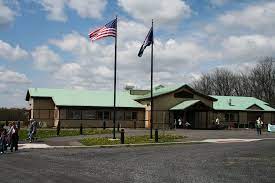
Chris Lajewski: Yeah, it was another very impressive fall migration season across the Montezuma wetlands complex. Sandhill cranes did not disappoint once again this season. We had well over 400 individual sandhill cranes sighted, mostly down at the Montezuma National Wildlife Refuge Visitor Center, so it was very convenient for visitors to see several hundred of these very large gray birds as they were stopping at Montezuma in preparation for the next leg of their journey down towards Florida and the Gulf Coast states.
In addition to the cranes, we've enjoyed a great number of waterfowl. Thousands and thousands of ducks, geese, and swans have been spotted around Montezuma and This happened all across the wetlands complex, the National Wildlife Refuge down in the southern end as well as up on the New York State Department of Environmental Conservation areas up in Savannah, the north end where the Audubon Center is.
Now though that we have transitioned certainly into the winter season here with the cold and the snow that we had much of last week, most of the waterfowl and almost all the cranes have migrated south out of the area. And so we're transitioning to winter birds. I've been noticing more snow buntings and horned larks. These are small, you think of them as songbirds, about the size of a robin. And they've been spotted along the roadsides and in agricultural fields.
The other interesting sightings that we've been having are the great horned owls and bald eagles. We've been seeing and hearing these birds as they are preparing for breeding season. So the owls have been hooting it up around 4.30, 5 o'clock in the afternoon. Bald eagles have been active more around sunrise and sunset. Both are preparing for breeding. So they're being active. They're a little bit more vocal and they're preparing to raise chicks as we get into January and February.
Paul Szmal: Now, Chris, we've found a day or so of mild weather and sometimes we'll get those stretches where we get a few days where the temperatures are above freezing in the wintertime. Does that play havoc with the bird population and their migration practices?
Chris Lajewski: Well, now that we're getting back into some milder conditions, we might see fewer birds migrating south here into Montezuma. We certainly are going to still have some waterfowl and a few sandhill cranes. And with the melting that we're seeing of our marshes and the flooded agricultural fields, there might be greater opportunities for people to see these birds if they come out to Montezuma. The National Wildlife Refuge Visitor Center and Wildlife Drive are closed. However, the Audubon Center remains open. Our regular hours are Tuesday through Saturday, 10 to 4. And folks are welcome to join us up at the center, learn about where they can go and spot some of these birds that are late migrants or these winter birds that are going to be spending the winter here in the Montezuma Wetlands Complex.
Paul Szmal: Yeah. Chris from the Montezuma Audubon Center joining us here on FLX Morning. Speaking of birds, we are coming to that point in the calendar on December the 16th for the annual Christmas Bird Count. Right.
Chris Lajewski: National Audubon Society has been leading the Christmas Bird Count now for 125 years. This is the longest running community science bird survey in this country. It started back in 1900 as conservationists began to see a decline in bird populations. And it started off with just a couple of dozen individuals down in the New York City area who recognized this decline and thought it was important to actually document the number of birds, where these birds were spotted, and the species that they were seeing. And since 1900, the Christmas Bird Count has expanded across this country. And now, because of our efforts across the Western Hemisphere, Audubon has taken this beyond our borders and we're working with individuals and organizations and Audubon offices in Canada, throughout Central America, Caribbean, as well as down in South America.
Now, the Christmas Bird Count name doesn't necessarily, though, mean that the event takes place on Christmas Day. In fact, most of these counts don't take place on Christmas. It's just during the Christmas season. And at Montezuma, we're offering our Christmas Bird Count to folks who want to join us, participate, on Monday, December 16th. That's coming up in just under a week. It's a great day. It's a great day. We get out, we bird throughout most of the day, and then after we're birding, we come back to the Audubon Center, enjoy a potluck meal together, and we have the compilation where we tally up all the numbers of birds that we see and the variety of species. It's a great way to add to the science, help us understand where birds are during this early winter season.
Paul Szmal: And there's no cost to participate in that, right?
Chris Lajewski: That's right. This is a free event. We have a kind of a core group of birders that participate with us every year. And I, as the compiler, put birders out throughout the Montezuma Wetlands Complex. But we're always looking for new birders. Maybe there are folks out there, family members, that are looking to get more familiar with how to identify birds. And our volunteers and staff that participate love to bring in new birders and volunteers into this very important bird survey.
And once we get into January and February, hopefully there'll be some snow on the ground so that the snowshoeing activities can begin. Well, we're hoping this year, fingers crossed, that we'll have snow every Saturday in January and February for our On the Canals snowshoeing adventures. This is a fantastic series of programs that we've been offering for several years now out of the Montezuma Audubon Center. I like to think of this event like as the kickoff, really, to the winter season. And it's a great way to come out with family members and friends and like-minded individuals and enjoy the winter season.
Typically, we'll have six inches to maybe over a foot of snow on the ground at the Audubon Center. And that's a great way to explore not only the birds, the songbirds, the birds of prey that are at the Audubon Center, but also the mammal activity. We can read the tracks and the other signs that these mammals leave in the snow for us. We go out for a very leisurely one-mile stroll. These are inclusive and accessible adventures for folks. We have all the snowshoes for adults and children alike. And we even have hiking poles if folks need a little bit more assistance. These are free, family-friendly adventures. And it's made possible by the support of the New York State Canal Corporation.
So again, every Saturday, January and February, 10 o'clock in the morning and 1 o'clock in the afternoon. Space is limited, so we do ask folks to go to our website, ny.audubon.org, click on Programs and Events, and then they can select the day and time that they'd like to join us.
Paul Szmal: Now, I have a confession here. My dad has turned into a bit of a closet birder. He has probably around four or five different bird houses in the backyard at my parents' house, and they get to see a variety of birds on a daily basis. When it comes time for wintertime, if you've got bird houses out, do you need to change the type of food that you're putting out, or do you need to change the type of bird houses that are out to ensure the birds are not only being well-fed, but are safe during the course of the winter months if they're planning on paying a visit to your backyard?
Chris Lajewski: Yeah, it's a good time of year to think about spring and think about the next generation of birds that will be raised in those boxes. Now that we're completely out of the breeding season for birds like black-capped chickadees, woodpeckers, tree swallows, and eastern bluebirds, it's a good idea to clean out those boxes. Make sure all the nesting material has been removed. We don't want to encourage any disease or fungus or pathogens to grow in the boxes during this off-breeding season. So clean out those boxes, give them a good scrape. No need to take them down at this point in the year. And then as we get closer to breeding season, so March would be a good time to take one more look at those boxes, make sure they're in good working order, maybe add a few nails or improve the roof or sides if needed in preparation for those songbirds to breed.
In terms of bird feeders, it's very important to continue feeding birds this time of year, especially if we get a harsh, long, cold winter. Birds' food sources, their natural food sources, may decline. And so putting out black oil sunflower seed and thistle seed is a good way to make sure that birds have the appropriate nutrients, the fat, the carbs, the protein that they're going to need in order to survive a harsh winter. And then also remember to clean bird feeders regularly. It can be as simple as some hot, soapy water every week or two weeks after the birds have eaten all the bird seed out of the feeder. Make sure the feeders are dry before seed is then reapplied and you install that bird feeder once again. But birds will continue to come to feeders, especially during the wintertime, and it's a great way to stay connected to birds, see what species are in your yard, and they just bring so much joy and color to our world, I think, especially during the winter months.
Paul Szmal: My favorite that my dad has set up is he has a feeder for hummingbirds set up right by the dining room window, which is actually a sliding glass door. And being able to sit there and watch those hummingbirds just kind of float while they're sipping on their sugar water is pretty cool.
Chris Lajewski: Oh yeah, and in terms of hummingbird feeders, yeah, it'd be a good idea to take those down. Right now, no reason to have them up. We don't have hummingbirds this time of year. Get those hummingbirds cleaned out, store it away during the winter months. And then as we get into March and April, in particular April, would be a good time to get those back up. We may start to see hummingbirds returning in very early May.
Paul Szmal: One thing I want to point out, Chris, is that the Montezuma Audubon Center and the Audubon Societies around the country, they not only survive, but they thrive on donations. And donations could be the key to unlocking something even bigger for Montezuma in this case.
Chris Lajewski: Yeah, we're into our end-of-year campaign here, and being a nonprofit organization affiliated with National Audubon Society, the leading conservation organization in this country, we rely on the generous support of our donors and sponsors. We couldn't do all of the management, the habitat enhancement, the community programming that we offer without their support. We had a very successful 2024, full of accomplishments, habitat conservation projects, community science bird surveys, school field trips, inclusive birding tours, and really so much more. And it's thanks to our donors that we were able to accomplish so much, including working with over 200 high school and college students through our Next Generation of Conservationists program. These are new budding conservationists who have an interest in this field of natural resource management ornithology. And we want to encourage even more individuals to come out and get involved in our projects at Montezuma Audubon Center.
And I'm proud to announce today, Paul, that we have a very generous donor who has pledged a $10,000 matching gift for our end-of-the-year campaign that will allow us to work with even more of these conservationists and restore additional acreage across the Montezuma wetlands complex. We're asking folks to donate during this season of giving. They can go to our website, ny.audubon.org slash montezuma, and then click on the support our work button right underneath our large bald eagle image there to help us unlock this matching gift of $10,000 that will ensure that birds have a place to breed and adopt during migration across the Montezuma wetlands complex.
Paul Szmal: I love the fact that we're wrapping things up for the year on a high note. Congratulations on that, Chris, and happy holidays to you and everyone at the Montezuma Audubon Center. We'll talk to you in the new year.
Chris Lajewski: Thanks Paul. Look forward to it.
Paul Szmal: It's 8.53 on FLX Morning.