Paul Szmal: Welcome back to FLX Morning, it is 8.36, happy to be joined by Chris Lejewski from the Montezuma Audubon Center here for a chat this morning. Good morning Chris.
Chris Lajewski: Good morning Paul, great to be with you.
Paul Szmal: Yes, and this is the time of year when I think we get to see a lot of winter based birds at the Montezuma Audubon Center. What have people been spawning around the area recently?
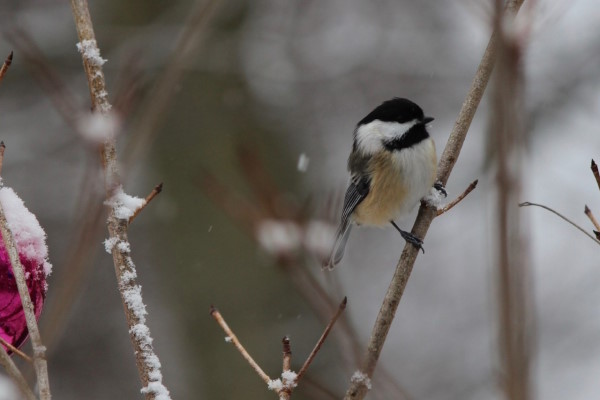
Chris Lajewski: Yeah, a lot of snow on the ground still up here in Savannah at the Audubon Center. 200 acres and two miles of trails, a lot of opportunities for people to get out and see all the birds that are spending the winter with us. We've been enjoying quite a few songbirds at our bird feeders. We typically put out black-oiled sunflower seeds, sometimes some thistle seed as well, and there's well over a dozen species of songbirds that feed on those seeds throughout the year, but in particular during the winter months when food can be a little bit harder to find.
So we've been enjoying the red-bellied woodpeckers coming to the feeders, a lot of morning doves, blue jays as well. On the ground we've been enjoying the dark-eyed juncos and American tree sparrows. They're the ones that don't feed on the feeders themselves. They will eat the seed that other birds have displaced out of the feeder and they can find on the ground.
Now in addition to the songbirds, and because of the songbirds, we've been seeing some birds of prey hanging around our feeders. Red-tailed hawks nest nearby and they occasionally will swoop down by the feeders looking for some easy prey, one of our songbirds. And the Cooper's hawk is another bird of prey that can be found around bird feeders. So a couple extra bird sightings at the Audubon Center and even though we're stuck in this winter wonderland, birds are still around, plentiful, and quite active.
Paul Szmal: We're talking with Chris Lejewski from the Montezuma Audubon Center here on FLX Morning. I would imagine too that there are probably some winter nesting birds like possibly the bald eagles that you might see flying around once in a while too.
Chris Lajewski: Yeah we've got about 15 active bald eagle nests around the Montezuma wetlands complex. So that includes all the properties down at Montezuma National Wildlife Refuge as well as up in the northern Montezuma Wildlife Management Area.
And this is the time of year when bald eagles start to breed and then by late February and early March they will start laying eggs. Typically bald eagles lay two eggs. They will stay paired up for life. The adults stay paired up for life. They reuse the nest year after year. They might add a few extra sticks and twigs and branches to the nest and the nest can be quite sizable. If the nest is 15-20 years old that nest could be four to five feet diameter, three to four feet deep, and weigh hundreds of pounds. Very impressive.
So bald eagles are still around. They're active and feeding in open water areas, areas that are not completely iced over, which is a little bit harder to find this winter. So the open areas of the Finger Lakes, kind of mid-lake areas, would be good spots. Sometimes along the canal, Erie Canal, Cayuga Seneca Canal, there's some open water. And then up along the South Shore Lake Ontario as well.
Paul Szmal: And I would imagine we probably have a fair amount of owls that are around as well since those animals, traditionally, those birds liked some winter type of environment.
Chris Lajewski: There are three owl species that are year-round residents here in the Finger Lakes and one of those, the great horned owl, actually breeds during this time of year also, just like bald eagle. Now the interesting thing about great horned owls is that they will not make their own nests. They will use other birds nests or even squirrel nests, but the other birds nests that they might take over could be red-tailed hawks, American crows, common ravens, even great blue herons nests.
Now the great horned owls may also use cavities in trees or holes in trees to make their nests. Typically there are two eggs laid, but their nests might be anywhere from one egg to as many as five eggs. And we're seeing and hearing great horned owls this time of year. They typically are hooting the traditional great horned owl hoot right around sunset, so about between 5 30 and 6 30 or so you can hear the hooting of the great horned owl out in the swamps around Montezuma. And then they stay active throughout the night. They are nocturnal critters. They will go after small mammals, meadow voles and shrews, field mice, even cottontail rabbits for food.
So yes, cold winter, harsh winter, yes, but birds are still active and two species in particular, the great horned owl and bald eagles are actually nesting this time of year.
Paul Szmal: Well speaking of the fact that there's snow on the ground, that means that the snowshoeing conditions are excellent right now.
Chris Lajewski: No doubt about it. We've been enjoying a lot of snowshoeing adventures at the Montezuma Audubon Center all winter. Every Saturday we've been leading free guided snowshoeing adventures, about a half mile trail that we go around through forests and grasslands and wetlands. But all those have sold out for the rest of the winter. But there are still opportunities for people to come out, bring the family, come out with friends and enjoy snowshoeing on their own.
The Audubon Center is open Tuesdays through Saturdays from 10 a.m to 4 p.m. People don't have to have their own snowshoes or although they're welcome to bring their own snowshoes out, but we've got snowshoes available to rent. We just charged three dollars for a child and five dollars for adults snowshoes. Maximum you would pay is fifteen dollars for the whole family to come out and snowshoe for as long as you like out on the property.
We've been seeing quite a few mammal tracks in the snow. Signs that you know mammals are still active this time of year. Red tail or the red fox has been active. Coyote tracks and in the snow squirrel and cottontail rabbit as well. Not to mention all the the birds that we're still enjoying. All those songbirds around our feeders and in the woods and and the hawks and sometimes even eagles flying overhead. Snowshoeing opportunities are plentiful. We still have a great amount of snow. Sounds like we're going to be getting even more snow here in the coming week.
Paul Szmal: We're talking with Chris Lajewski from the Montezuma Audubon Center here on FLX morning. Gearing up for the grand activity that happens every year, the Great Backyard Bird Count.
Chris Lajewski: That's right. That's going to be coming up this coming long weekend, February 14th through the 17th. This is a project that started way back in 1998. Partnership between the National Audubon Society and the Cornell Lab of Ornithology. Great Backyard Bird Count was the first online community science project to collect data on wild birds and display those results in near real time.
Participating is really fun with family members, friends. You could do it on your own as well and it's really important. It's data that people collect that help us understand where birds are. The population size and distribution of our winter birds anywhere now on the planet. It's really three easy steps that people can take to participate. One is decide where you want to watch birds. It could be in your backyard or front yard or from your balcony or you could come out to places like Montezuma. You can go to one of our state parks in the Finger Lakes and count birds there. It doesn't have to be in the backyard.
Next, you can count for as little as 15 minutes or more if you want during that four-day period. Last thing to do very simply is to enter those results of the birds that you see and hear to birdcount.org. There are some resources out there that can help new birders, beginning birders identify birds and there's this great app called the Merlin Bird ID. Merlin will listen to bird songs around you and identify those bird songs for you and then you can add them to your list and enter that into your results.
Another great resource is eBird. eBird is a great way to keep track of the birds that you see while you're out during great backyard bird count and if you enter your bird tallies into eBird that automatically goes up into the birdcount.org database. So, really important data collected during great backyard bird count and a lot of fun as well.
Paul Szmal: Now, we mentioned bald eagles earlier and great horned owls being part of the population in the wintertime here in the Montezuma Audubon Center, but there are other places here in the area where bald eagles are at and there's an excursion to one of those places that is coming up on March the 2nd.
Chris Lajewski: Yeah, that's going to be over at Onondaga Lake which is in downtown Syracuse. Coming up on Sunday, March 2nd, we're leading two adventures down to see the largest bald eagle roost anywhere in New York State at 10 o'clock in the morning and then again at 12 o'clock in the afternoon. We're leading these guided excursions. It's about a quarter mile walk down from the parking lot at Destiny USA right downtown Syracuse.
We're going to be walking on a paved flat trail. Could be a little bit of snow covered given the wintry conditions that we've been experiencing this year. And so, easy quarter mile walk down. We'll have spotting scopes, binoculars, field guides, Audubon staff and volunteers will explain why all the birds are down there along the south shore of Onondaga Lake. We're going to identify birds for you. We can even identify the age of the bald eagles based on their plumage.
Now, the reason for these two adventures coming up Sunday, March 2nd is because we did another adventure just earlier this month and there was so much interest that the program sold out very quickly and there were a lot of people that couldn't participate in that because we just didn't have enough room. So, we decided to offer these two other adventures here coming up in early March to give people an additional opportunity to learn about Onondaga Lake, the cleanup efforts there, the restoration of the habitats and to see potentially three dozen or more bald eagles there along the south shore of Lake Ontario or excuse me Onondaga Lake.
Database is important to keep up with so we monitor bald eagle sightings there at Onondaga Lake. We keep track of the numbers and we've been seeing at least three dozen there in the trees, soaring overhead and out on the ice. So, folks can go to our website there ny.audubon.org slash olcc which is our Onondaga Lake Conservation Corps website to register for this upcoming event.
Paul Szmal: And once again, Chris, can you recap the hours that the Montezuma Audubon Center is open here in our area?
Chris Lajewski: Oh, sure. The Audubon Center up here, Route 89 in Savannah, our hours are Tuesday through Saturday from 10 a.m to 4 p.m. Trails are open daily from sunrise to sunset. So, you know, now with extended daylight hours, you know, it's light now until about 5 30. So, opportunities to get out, maybe see bald eagles, hear great horned owls, see a plethora of songbirds and a lot of mammal activity as well.
Paul Szmal: All right. Thank you so much, Chris, for jumping in and joining us here this morning. Much appreciated as always.
Chris Lajewski: It's always a pleasure, Paul. Thank you very much.