Paul Szmal: Good morning, it's 8.17, it's FLX Morning Monday, and we are Zooming with Donna Kraus and Alan Bishop, President and Owner of this company, FLX Local Media, from Literacy Volunteers of Ontario Yates, LVOY.org. Good morning to you both.
Donna Crouse, Alan Bishop: Good morning. Good morning.
Paul Szmal: It's good to have you both here. I want to start with you, Alan, because I know of your involvement with the organization. In fact, you were the one that helped set this up as a monthly conversation. How long have you been involved, and what have you been doing?
Donna Crouse, Alan Bishop: Well, I'd say probably about three years I've been a tutor, and a lot of people think that being a tutor, you have to have some sort of teaching background or education background and that kind of stuff, and I just decided to walk into the office in Canandaigua one day and find out more about it, and I've tutored probably seven or eight different people in those three years, and it's been a phenomenal experience, and I had no experience starting.
Paul Szmal: Wow. We're going to talk more about that, because that's one of the reasons we're visiting here today is the need for tutors, but I wanted to ask you, Donna, just explain a little bit about the background for people. We've only been doing these conversations for a couple of months now. What Literacy Volunteers does and why some people need to learn to speak English or speak it better?
Donna Crouse, Alan Bishop: Okay. Well, Literacy Volunteers of Ontario Yates, we serve two different groups of people. We serve people who have come here to this country from another country and do not speak English as their first language, and of course, we want to help them acclimate to society, learn how to speak with their children's teachers, be better citizens, whatever their goals may be. The other group that we help are people that were born and raised here in the United States. They may or may not have gotten their high school equivalency. We can help them with that, and maybe they did graduate from high school, but they're still struggling with reading and writing, and we can help them with that.
What Literacy Volunteers is known for is working individually with people seeking our help on their individual goals. Like I mentioned, it could be something as simple as learning how to read their children's homework, or they want to prepare to go to college. Maybe they want to become a citizen, and we have resources and materials to help them prepare for that.
Paul Szmal: I think we talked about this in last month's conversation, but of course, in the Finger Lakes, we have a number of migratory agriculture workers who might not speak English as a first language. I think some of them have been customers, right?
Donna Crouse, Alan Bishop: Exactly. We currently have two different tutors, oh, excuse me, three, working with six learners at a local farm, and two of our tutors actually go right to the farm because that's easiest for them. They get done working, and then there's a meeting place right at the farm where they sit down and tutor. The other two live locally in Geneva so that they meet their tutor out in the community.
Paul Szmal: And I know one of the things about literacy is that it's a hidden problem. People go to elaborate coping skills to hide the fact that they can't read. They'll ask someone else to read something for them, and it's very kind of a hidden behind-the-scenes problem.
Donna Crouse, Alan Bishop: It is. And we want to encourage people to not be embarrassed or afraid about this. We're a confidential agency. We're not going to share their information with anyone else, and we'll meet you where you're at, and we will help you obtain any goals you want to achieve. And while it does matter your age, we serve people 18 years and older. But what I'm saying is if you're 30, if you're 60, if you're 80, and you just want help learning to speak, read, or write English, we'll be glad to help you.
Paul Szmal: From the website LVOY.org, there were a hundred tutors teaching in the last fiscal year. Over 5,000 hours of volunteer time, over 130 learners. And Alan, so tell us about the process, the training you went through, and the orientation, and the first time you tutored somebody, what that was like.
Donna Crouse, Alan Bishop: Well, like I said, I went into the office in Canandaigua just to find out more. I was just very intrigued, not knowing that, yes, you help people with their GEDs as well, not just language skills. So there's online training to teach you about not only, you know, dealing with or how to teach, you know, kind of like the X's and O's of teaching, but really a lot of techniques for making sure that you get the best out of a learner. And so I was originally hooked up with somebody who was trying to get their GED due to family circumstances. She had quit high school and she ended up moving to Florida. But I think the next one was most interesting, that I had a couple from Ukraine that came here because of the war. And they spoke English relatively well, but they really wanted to Americanize themselves and really learn a lot of the idioms. And it's interesting, all the words that we say through the day, that a lot of the, what we call learners, they just don't understand the phrases. It's fascinating and it's, I urge anyone who even thinks about this to call or check out the website.
Paul Szmal: We talked to a tutor recently and one of the things I talked about is how you kind of figure out how to reach each person. I mean, you can get the technical training and you know what you're doing, but everybody's different. How do you figure out a learner's needs and then adapt what you're doing to those needs?
Donna Crouse, Alan Bishop: So there is assessments done before the tutor gets to the person. So they are everything from how to write an envelope to how to write a check and that kind of stuff. And then they assess where they're at and then the staff of LVOY puts a learning plan together for you and then you follow along with that. In my experience, now that I've had a few more, I get a sense from just talking to them the first time what they're trying to accomplish, but we need to obviously do what LVOY is trying to accomplish to make sure that they get the full experience.
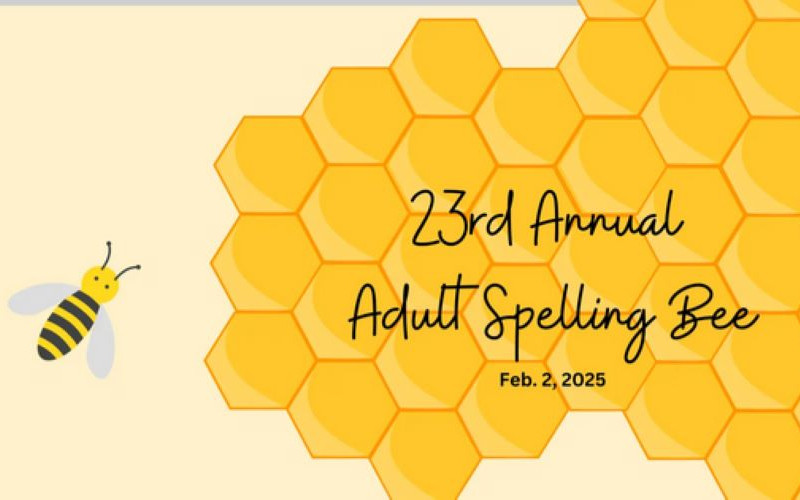
Paul Szmal: Dawn, I want to ask you about one of the major events for the year. It's the 23rd Annual Adult Spelling Bee. It's set for February 2nd. Tell us about the bee.
Donna Crouse, Alan Bishop: Yes, it's coming up. As you said, on February 2nd, we are a nonprofit. We do get some funding from the state and grants, but this is one of our major fundraisers. There's still room for teams who want to register and sponsorships are available. Two generous donors will match all event contributions up to $10,000. The teams are made up of two to three people. Once given a word, they have one minute to confer and decide on their final spelling. Winning teams from each round advance to the championship round. The spelling bee is conducted via Zoom, so teams can compete from their homes. It's a fun afternoon of friendly competition and it puts a spotlight on literacy. There are more details on our website, which is www.lvoy.org. This will be Sunday, February 2nd from 1 to 5 p.m. It's on Zoom and you can even watch in. There's a Literacy Volunteers YouTube channel, so if you want to cheer on your favorite team.
Paul Szmal: People have found that they like that opportunity. It's the same thing with these interviews. We're doing this one on Zoom. Before the pandemic, we did most of our interviews in person and people just love that convenience of Zoom.
Donna Crouse, Alan Bishop: Yes, it really is a great tool. We even use it for tutoring at times as well.
Paul Szmal: I wanted to ask you again, Alan, because what you said about the idioms really fascinates me because there's so many things that we say in English. Friday you say TGIF and someone's going to go, what? What does that mean?
Donna Crouse, Alan Bishop: One of the first things that a couple from Ukraine asked me, they said, well, we know about have a good day and have a good night, but when people say have a good one, what does that mean?
Paul Szmal: Yeah. For us, it's like we say that all the time, but they didn't understand it. I explained it was an easier way to say those and that people say it all the time. Especially in the app and TikTok and Facebook era and everything, there's all that kind of stuff flying around when people type messages.
Donna Crouse, Alan Bishop: Oh, absolutely. I actually have the LVOY provides me with a book of idioms that explains what they all are and I go through those with the people because I've had a gentleman from Brazil, a gentleman from Italy, and then obviously the people from Ukraine. They speak English relatively well, but when it comes to idioms, they are lost. So I try to help them with that.
Paul Szmal: That's fascinating. That's great. LVOY.org is the website. The 23rd annual Spelling Bee is Sunday, February 2nd from 1 to 5. Go to the website and sign up. All on Zoom. You don't even have to take out your jammies or go anyplace. You can just do it right from home. There's also a need for tutors all the time. It's easy. Everyone's done it and you can do it. Thank you both for your time. Appreciate it and hope we find some more good people to help teach.
Donna Crouse, Alan Bishop: Thank you.