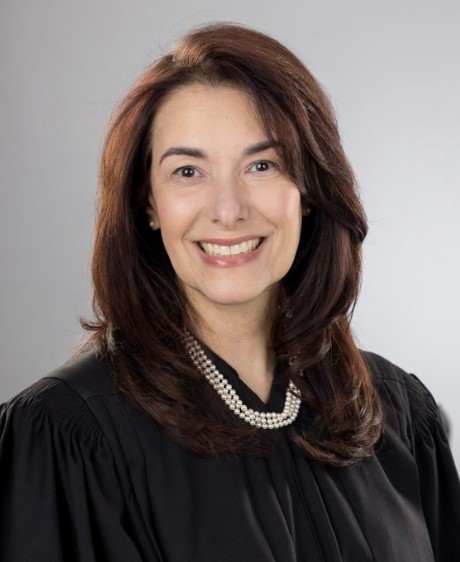
Paul Szmal: I'm joined on Zoom by Stacey Romeo, who is running for Supreme Court in the 7th Judicial District, which covers eight counties, including pretty much all of our listening area. Judge Romeo, welcome. Good morning. It's great to have you here. So I always start with this question when we talk about Supreme Court because the New York structure is a little different than many places where the Supreme Court is the highest court and hears appeals. So what is the function of the Supreme Court in the New York system?
Stacey Romeo: So Supreme Court is a trial level court. We are actually considered one of the lower level courts, the highest in our area. Then it's the appellate division and then the court of appeals above us. So they're the ones who actually hear those appeals. But we're a trial level court in Supreme Court.
Paul Szmal: Now, you've been a family court judge in Monroe County since 2017. You've been Monroe County Youth Park judge and you've been an acting Supreme Court justice since 2019. So most people running for office say, I can do this job. You can say, I have done this job. I can say I am doing this job.
Stacey Romeo: Correct. So I have such a wide breadth of experience and all kinds of things leading up to me taking the bench as well that make me probably the most well-rounded candidate that's running.
Paul Szmal: Now, one of the things you've talked about, the website, by the way, is electjudgeromeo.org. You talk about finding solutions to help parties who appear in the courtroom. I would think in family court, you have a little more leeway to do that. How can you bring that family court sort of attitude and mentality to the Supreme Court?
Stacey Romeo: Well, I've been very lucky to work in our area. New York State really has been pushing more of a collaborative effort on the part of the judges. So I have a lot of training in that area as well. But people come into the court system and they're upset about something. Either they've been arrested or they're angry about something that's happened in their lives, and they just wanna be heard. So part of my secret is I let them be heard. And then I try to mediate the case almost. It's a higher level of mediation when you come to the judge, but I listen to both sides. And then we try to come up with a solution. If I can't come up with a solution, then I'm ready to take testimony at any time. I think I take testimony every single day. But mediation, so to speak, again, it's a higher level when you're a judge. But you really try to solve problems and not create more problems. And I would bring that to the Supreme Court level.
Paul Szmal: And you've been a member of a number of groups working in that regard. Talk about some of these mediation and dispute resolution groups that you've been part of over the years.
Stacey Romeo: Well, as part of my duties as a supervising judge for all of the family courts in the 7th Judicial District, I've been implementing since I took over that position, trying to come up with some collaborative efforts to help families in crisis. So we have a child welfare collaborative that I chair here in Monroe County, and then I implemented it in all of the other counties in our 7th Judicial District. So I work with a liaison from the state that actually works in my building. And we work together to teach other judges and stakeholders in child welfare cases on how to help best serve our families. So those could be anyone from mental health providers to attorneys who are prosecuting cases, attorneys who are defending cases, attorneys who are representing children in those cases, chemical dependency stakeholders, anyone who touches a case. And when I say child welfare, I talk about abuse and neglect cases. So anyone who touches any part of those cases, we come to the table together, and we try to best serve our families and achieve what we call permanency, essentially putting your family back together after you've been in crisis. And so I've implemented that in all of our eight counties. I also work on the Center for Dispute Settlement Program here in Monroe County. I oversee that and I handle the cases. You come in, we think your case is appropriate for mediation, I send you to a mediator, and then those cases come back to me personally to make sure that all the T's have been crossed and all the I's have been dotted and people understand the agreement that they're entering into voluntarily without the aid of the court, essentially. So those are some of the very important programs that we do to try to help families in our communities.
Paul Szmal: You're part of a work group called Reducing Disproportionate Minority Representation in Child Welfare. I would guess that most people of color think that they are disproportionately represented in the criminal court system as well. Is there something that we can do about that?
Stacey Romeo: Well, I think having these work groups and having these discussions just to bring it to everyone's forefront when they're talking about these cases and when they're working in these cases, give them training, give them reminders. Because sometimes, and I'm not saying this is everyone, and this is not necessarily for my community working in the judicial system, but everyone's community, sometimes you're immunized a little bit. You do the same thing every day. And so it doesn't affect you the same way it might affect your neighbor who has never been in that particular role. So we try to remind judges, we try to remind attorneys, and even court deputies, as well as court clerks, anyone who touches a case on how to be mindful that there are people who don't look like us, perhaps weren't raised in the same faith as us, just how they might approach a case and how we can treat them differently to make sure that our goals are achieved to, again, reuniting that family, healing that family. And that's a very, very important push from our court system from the top down. So I try to implement that as supervising judge and make sure that everyone that works in the Seventh J.D., at least under the family court system, understands that and is mindful of that. And we're all working towards that same goal.
Paul Szmal: We're talking with Judge Romeo, running for Supreme Court in the Seventh Judicial District. electjudgeromeo.org is the website. Let's talk a little bit about giving back, because you're a member of a number of mentoring groups within the court system and also community groups outside. How do you find the time to do that in between everything else?
Stacey Romeo: Well, I think it's really important to give back. I'm very blessed. I have a wonderful husband and three wonderful children. And I'm able to give them a lot of things. My husband and I are able to give them a lot of things that a lot of families aren't. And it's very important to us to give back. I was raised in a faith-based family, and my children have always been raised in a faith-based family. And so that's kind of our inner belief, our core system is giving back to our community. So at a very young age, that was instilled in me. And literally, since my child, my children have all been born, they've come to me to different groups and different meetings and volunteered. And they have numerous volunteer hours and have won awards for it within their own school communities. And I think it's really important for people to understand that we don't just preach to you, we practice what we preach. I'm not worth my weight in anything if I don't understand the community that I'm serving and understand that not everyone looks like me and is as blessed as I am. And I want to make sure that I give back and hopefully can touch a few lives outside of the court system. And it is important to make time for that. My day is full of all kinds of things, good and bad. But when you give back to your community, those are the really good things. Those are the feel-good moments that I make sure that families understand that there are people out there that care about them.
Paul Szmal: The general election, of course, is Tuesday, November 5th. You might have heard about one of those other races that's on the ballot that day. Early voting is available from October 26th to November 3rd. So now give us your bumper sticker speech. Elect Stacey Romeo to Supreme Court because...
Stacey Romeo: Because I am the most well-versed candidate on the bench. I'm actually the only judge who is running for that position. I've been in the legal system for almost 30 years, eight of which I've been sitting on the bench. I've been a domestic violence referee, a court attorney referee for matrimonials, for foreclosures, small claims hearing officer. I've worked in both family court and in Supreme Court extensively, not only in the court system, but in my private career. But for the past eight years, serving our community, not only in the youth part system, which touches families who have youth who are accused of major criminal felonies, 17 and younger, but all types of cases in family court and supervising all of the judges and staff in eight counties. And I sit currently as an acting Supreme Court judge. So I'm already doing the job. And I'd like to remind folks that Supreme Court is a very high level court, although we're a lower level court than the Appellate Division or the Court of Appeals. We're one of the higher levels in our system here at each courthouse. It's not the time for on the job training. You want someone who knows how to do the job, who will follow the law and be effective and not be afraid to make tough decisions. And that's what I do every single day. And I'd be honored to have anyone's vote who's listening to us today. And I hope they really think long and hard about who they're voting for. And I hope that I'm one of the two candidates that they choose.
Paul Szmal: All right, learn more at electjudgeromeo.org. Judge, thanks so much for your time. We appreciate it. And good luck with the campaign.
Stacey Romeo: Thank you so much, Chad. Have a good day. All right, you too.