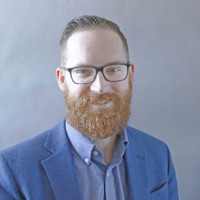
Paul Szmal: Good morning, it's 8.38, it's FALX Morning Monday, we're joined in studio for a monthly visit with David West, City of Geneva Planning and Economic Development Director, welcome back.
David West: Good morning Ted, I'm glad to be here.
Paul Szmal: So you've got a chance, a couple of chances coming up, starting on Thursday night at the library to let the public in on the draft economic development plan. We talked about it the first time you came on, just talk about the process of putting this plan together.
David West: That's right Ted, so we started a few months ago working with community revitalization and rejuvenation consultants, and we had a big meeting down at the Bizzuto Center, had a great turnout, really great conversations. From there we did a survey of over 200 residents, and also one-on-one interviews with 20 business and industry leaders around the city, and then worked through several meetings with the IDA, the local development corporation, and the Department of Planning and Economic Development with that consultant to get to where we are now, which is a draft plan. So we'll be rolling that out on Thursday night at 6, 6-7 at the library, and it's a draft, so there's still chances to get your feedback in there, make adjustments, and it's also going to be a living document. It's really the work plan for these organizations and what they're going to do moving forward.
Paul Szmal: How specific is this plan? How much of it is general guidelines? How much of it is, we want a grocery store in Ward 6?
David West: So there is a fair amount of specifics. It doesn't get to, we want a particular business in a particular place, mostly because we don't have a catalog to order a particular business from. It certainly looks at the kinds of work that the IDA, the Business Improvement District, and the local development corporation can do to get both the kinds of businesses and also the kinds of other development that we need, because a big goal is growing the community, growing the tax base for the future.
Paul Szmal: How do you feel Geneva is in terms of being poised for future economic growth? You think the pieces are in place for this plan to make a difference and for the city to move forward with development?
David West: I do. I think this city has a lot of really great assets, and we've been shrinking a little bit over the last 40, 60 years, but that has slowed. We're seeing the rebirth happen, both with the investments downtown, also with people being interested in downtowns again. People want to live in urban places where they can have the things that they need close at hand, and we see people from all over the country moving to Geneva because of its combination of particular assets, because of the lake, because of the architecture, because of the small community feel that they enjoy and want to be a part of, and also because it's affordable.
Paul Szmal: Of course, one of the challenges I guess we'll say that Geneva faces is a high percentage of the property is non-taxable. You have Hobart and William Smith, you have UR Medicine, Finger Lakes Health, and others. So part of this plan is to get more tax-paying properties on the rolls so that the tax burden is spread out more evenly.
David West: Absolutely. The more hands we have carrying the basic services of government, the better off we'll be. And we do have a lot of property that's off the tax rolls. A lot of it's also the city, the parks, the beautiful things that we have, our infrastructure, all of that, like any place, is off the tax rolls. But what we need to do is make the best investment and get the greatest value out of the property that we do have. So we really have to think about those limited acres. We don't have any more, but we can change how they're developed and change the value of them and invite more people here to share in the great things about Geneva and also to help carry the load.
Paul Szmal: So does this report look at human resources? Was there any sort of labor survey of potential workers for potential new industries?
David West: So it looks at the capacity of the organizations that are involved and what they can do. When we zoom out and look at our larger industry perspective, I'll say what we're hearing a lot from businesses, big and small, is that they're having a hard time hiring. And that one of the reasons for that is it's really hard for their workers to find housing close by. And then also that it's hard to find childcare. So business after business, what we heard is we need housing for our workers. We need people who can live close enough to take advantage of the community and work here. And then we also need to address families. If we want to have families here, childcare is a big barrier to being fully employed.
Paul Szmal: One potential resource is the former OEO site on Exchange Street. You put out a request for proposals for that. Tell us a little bit about that site and what it might be suitable for.
David West: Yeah, so this is the site at the end of Exchange Street. I know the city has had plans, desires to get the site developed. It's a great site with a lot of street frontage and also great views of the lake right downtown, right adjacent to what I would say is the kind of heart of downtown. And we're looking for a developer to work with the city in a collaborative way. So what we've put out is a request for qualifications to choose a lead developer. Sometimes in a situation like this, a municipality would choose a project. They would have a bunch of people submit. This is the project you're going to do. In this case, I think it's a complicated enough site that it's better to actually find a developer and then we're going to develop the project together.
Paul Szmal: I want to go back for a second to the housing piece that you talked about. How do you encourage developers to build more housing? How do they decide where is a good place to put in housing?
David West: It's a combination of things. So the first thing that developers want is to know that they're going to have a clear path, right? That you have a process in place that they're not going to be mired in controversy for months and months and months. We've made some strides there with the new zoning that was adopted at the beginning of the year, the end of last year. That made a big difference. There's still some little tweaks as projects start to come forward and run through. We're going to continue making adjustments there, but also signaling to the development community that we're open for business, that we want them to do their projects. After that, we run into the market, right? The rents are what they are. The cost of construction is what it is. We can try to use sites that we own, the assets that we have to get a discount involved there. I'm really trying to think about what is the taxes we're going to get when the project is done is way more important than what's the sale price of the property, because we're going to get the taxes for 50, 100 years versus one upfront cost. Whatever we can do on the front end, I want it to be fair, it needs to be clear. What helps developers the most is having a streamlined process more than giving away a ton of incentives.
Paul Szmal: What I've heard over the years is, at least at the business level, I'm not sure so much about the housing level, but that a lot of the impediments are on the state end. Is there anyone like NICOM lobbying the state to make it easier for developers to do what they do? I remember when Brian Kolb was in the assembly, we talked one time about a bank or something wanted to get a curb cut for a parking space, and it was just this multi-month convoluted process.
David West: Absolutely. I think there is effort being put in there. One thing that the city of Geneva just did is became a pro-housing community, which is a state-level program where you track information, work with the state, it opens us up to different grants that they have available, but it's also helping our state lawmakers see how things are going. They have a goal to grow housing across the state. We're going to be tracking that, and it's going to allow them to see what's working, what's not working in different communities around the state. It's a real priority. It can be difficult. There's honestly a lot more local legislation that makes a difference in how easy or difficult it is to do development than state-level stuff, but I think we're working at multiple levels.
Paul Szmal: We're in budget season right now. I talked about this with Councilor Lavin at one of his recent appearances. A lot of people don't seem to fully understand how their tax bill has arrived at, the role of assessment and tax rate, and then your final tax bill, so explain a little bit about how that works.
David West: Yeah, I think what's really interesting about it is that it's very separate processes. So we have one department that assesses property. Their job is they're watching sales all the time. They're comparing your property to other properties, and every once in a while they do a big update. So we just did that. That department could not care less how much taxes we get. Their job is 100% figure out what the fair value of every property is. The next step is we know what every property is. We know which ones are taxable, which ones aren't. We have the budget. The budget decides what are we going to spend, what income do we have that's not taxes, what expenses do we have, and what's left over after that is the levy. And the levy is how much we're spending, and then that gets spread among the assessed value to create the rate.
Paul Szmal: So I was going to say, it sounds like one of the real misunderstandings is, for example, if somebody's assessment goes way up, if their assessment doubles, they go, oh my god, my taxes are going to double. But that's not necessarily the case. If the entire town's assessment doubles, then you can cut the rate in half and raise the same amount of taxes.
David West: Exactly. And it wouldn't be a one-for-one, you wouldn't cut the rate directly in half. But yes, you could have all the assessments go up, the rate could go down, you're spending the same amount. Each individual house wouldn't change. But what often happens is there's a lot more messiness in it. Some houses were under-assessed. So those people were getting a really great deal for a few years. And then the correct value comes along, and it can be a shock. And then other properties were being over-assessed, and some have gone down, some have gone up less quickly than average. What we do know is that with the city manager's proposed budget, the median-priced house would have their actual tax bill go down $17 for the year, even though the assessed value went up significantly.
Paul Szmal: Right. So it's basically assessment times rate equals tax levy.
David West: Exactly.
Paul Szmal: All right. David West, City of Geneva Planning and Economic Development Director, we're learning some good stuff here. I'm glad to have you in our rotation each month, and thanks for coming in once again.
David West: Thanks for having me.
Paul Szmal: All right. And what time at the library Thursday?
David West: 6 p.m. to 7 p.m.
Paul Szmal: Okay, to take a look at the draft economic development plan. And it is still a draft, as David said. It's a work in progress. It's 8.49.