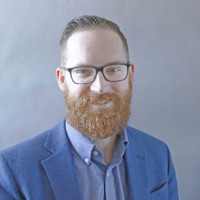
Paul Szmal: Good morning 838, FLX Morning Monday. It's our monthly Zoom with David West, Director of Planning and Economic Development with the City of Geneva. Good morning, welcome back.
David West: Hi Ted, it's great to be here, thank you.
Paul Szmal: We're gonna start with one of the things the city does each quarter is review offers made on city properties. When we talk about property, are we talking about primarily real estate or does that include surplus equipment and that type of thing?
David West: This is all our property, real estate property land that the city owns, yep, and we adopted last year a new policy to be clear about what it is we're looking for in offers and how how we review them. It used to be that we would get an offer just randomly out of the blue and have to review it against, you know, no other offers. Now we're trying to, every quarter, group all the offers we've got together and review them and see if any of them are in the best interest of the city.
Paul Szmal: Are these mostly tax foreclosures?
David West: So a lot of, some of these may have been tax foreclosures quite a while ago. With tax foreclosures in the year that we take them, we run an auction, so that's a once-a-year thing, but there's other properties that the city has owned for a longer period of time, maybe we got them through tax foreclosure, maybe through another process. You know, one example is the foundry site, which was taken for environmental cleanup, which is all done now just off of Exchange Street, and that's a parcel the city's owned for several years and is now looking to sell. We're looking at a longer process down the road if we don't get offers on it, but we have this opportunity every quarter for people who want to make the city better and want to invest in property that the city owns to bring that offer forward.
Paul Szmal: How do people find out about those properties and make an offer?
David West: That's a great question. We've got on the city's webpage, cityofgenevany.com, we have a news item related to this and also a page specifically that lists both our table of parcels that we've identified as parcels we don't really want. You could technically make an offer on anything. If somebody wants to make an offer on City Hall, they could do that. We would review it and see if it makes sense for the city, but any city-owned property you can make an offer on, but we have a list of the ones that we're really considering as surplus property that we don't want to own in the long term. On that page, you can also find the offer form, which lays out the criteria that we have.
Paul Szmal: So we're not just reviewing these based on whoever puts in the highest offer, we're going to sell it to them. We're only going to sell it if it makes economic sense for the city, if it's going to bring in more tax dollars in the future, meet an important neighborhood need, save us money in maintenance, and also follow what our comp plan says. So we have a direction that the city is going and we want to make sure that when we sell city property that it's taking us in that direction. And we're going to talk about the comprehensive plan in a moment. What should the public know about it? Is that something the public can do, make offers on these properties? I mean, I know they can, but I take it you probably have to some level of knowledge about what you're doing.
David West: Yeah, we want to see a plan for what someone's going to do with the property. Our goal with these properties is really to have them developed. So it wouldn't be in the city's interest to sell land just so somebody has a slightly bigger backyard. You know, that doesn't really increase the value at all. We might be getting a few extra dollars a year in taxes, but not nearly the difference that if we can get someone to put a new home on a property, a new business. That's what we want to see happen with these parcels. So it makes sense for someone making a real credible offer to be someone with experience and development with the ability to move a project forward in a reasonable amount of time. And that's some of the criteria that we would evaluate those offers by.
Paul Szmal: So you mentioned a moment ago the comprehensive plan and any offers tying in and fitting with that. So remind us about the comprehensive plan, what's in it, and how it's developed.
David West: Yeah, so comprehensive plans are a really important part of state land use law. Our last comprehensive plan was developed in 2016 and involved a huge amount of community involvement. It's normal to update these plans every 10 years, so we're getting towards the end of the life of that current plan. And these plans are important in state law because any zoning changes you make have to follow the comprehensive plan. If any grants that you apply for are really going to be helped if they're forwarding a piece of the comprehensive plan. It's really the guide for where the community is going and for that reason it's supposed to be developed with a whole lot of community participation.
So when we last did it, we had lots of neighborhood meetings, community walks, surveys, a really large process getting people involved, getting people to understand kind of the data behind it, where we are, where we've been, where we could go, what it would take to do the things that people want, and also their involvement in what's a priority. So the current plan focuses on four or five key areas. It really looks at strengthening downtown, looking at corridors that come into downtown, so Exchange Street, Castle Street, and the 5 and 20 corridor, Hamilton Street, as areas that could use additional investment. It also focuses on the waterfront as one of our key amenities for both tourism and locals enjoying nature, and also calls for a careful improvement of the neighborhoods that need it most and ways that we can really intervene gently there.
Paul Szmal: I was just going to say that Council has been looking at updating this comprehensive plan and some money has been set aside for work starting this year, and it's really important that the way that plays out is involving a lot of people and really deep community involvement. So how detailed is the comprehensive plan versus being sort of just an overall vision statement?
David West: Yeah, I would say that generally comprehensive plans are big on the vision and then have some implementation projects that would have greater detail. Because it's meant to last a long time, it can't be you can't be a hundred percent on exactly how any project is going to lay out. The City of Geneva's comprehensive plan is actually more detailed and more specific than most in listing out for in each chapter there's a variety of projects that were identified at the time that could be done, and they're pretty specific.
And part of I think updating that plan is going back looking at what's been done. In 2019 a report was done on what comprehensive plan projects have been completed and a lot of work has been completed and there's been a lot of progress because of that plan. And then the next step is to see you know are all of the things in there things that we still want to do in the way that they were described have you know conditions on the ground changed are there new things new priorities that we would want to incorporate. But overall I would say that the plan is a general direction and then the work that we do every year is supposed to fit within the theme of that. But we may find you know a better way to do something that we knew about when the comprehensive plan was written.
Paul Szmal: One of the interesting things about putting a plan like this together is unexpected change. If you'd put a plan together ten years ago nobody ever heard of short-term rentals which are now suddenly a big thing in planning and communities everywhere.
David West: Exactly so as as significant changes come along it makes sense to look at comprehensive plans. Sometimes that can be an update the addition of a new chapter the editing of small parts and sometimes eventually it becomes time to look at the whole document.
Paul Szmal: Is there are there any input events or hearings or anything coming up in the near future?
David West: Not at this time so we put some money in the budget for this year and our City Council has been having some discussions about how they would like to see that go. It was part of the mayor's budget to invest in this. Usually a comprehensive plan update is something that takes a significant amount of time so I would think it's likely that it could take you know six nine maybe twelve months so that we can really get that diverse involvement of the community really make sure what's important is you don't want to be changing the comprehensive plan all the time you want to set a vision that enough people believe in and will stand behind that it can stand the test of time so that every time you change councils which you can have new counselors coming in with different visions that you have an underlying framework that stays the same and is supported by the community.
Paul Szmal: The city's just received a grant for a home rehabilitation funds. You're about to launch the application process so who's eligible and how that process look and tell us more about the grant.
David West: Yeah so we won a grant through the CDBG program through New York State and this grant is going to fund rehabilitation of seven homes owned by moderate income households in the community so whether or not someone qualifies they have to own their home that they live in and they have to meet an income threshold and the income threshold is different for different size families so for a four-person family the max income would be seventy seven thousand six hundred dollars for a one-person household the maximum income would be fifty four thousand three hundred and fifty dollars and in order to get that grant we had to do a kind of expression of interest application so we have a lot of people who have given us their information and applied that allowed us to create a waiting list and be competitive for winning the grant now that we've won it we'll be reaching out to those households as well as posting on the city's social media and web page an application in the next six weeks I would say where people can apply to get into this program what it will cover is repairs to important structural and health and safety aspects of a home so this isn't just you'd like a nicer kitchen this is fixing roofs foundations mechanical systems things that are really important for the long-term sustainability of the house.
Paul Szmal: One last thing this is the time of year everyone turns their eyes towards Albany and watches the governor for clues as to what might be or not be in the upcoming state budget is there anything in particular you're watching in terms of your department?
David West: Yeah, you know we are watching the funding that set aside for what the governor has called housing friendly communities so that's a certification that we have received and the governor has promised every year to set aside a certain amount of money that goes to communities that have gone through the process that we have that can be used for upgrades so city staff is very on top of looking at new funding that becomes available from the governor's office we'll be looking at funding for the marina funding for our Geneva Enterprise Development Center and also for larger neighborhood projects that we want to see moving forward.
Paul Szmal: David West has been with us today director of planning and economic development with the city of Geneva we also always appreciate the update thanks again thanks dad I'm always happy to be here.