Paul Szmal: Good morning, it's 816, it's FLX Morning, brought to you by Enstec Automotive and Trailer, your go-to destination for hauling and vehicle services. 2567 Edwards Road, Waterloo, online at enstecautomotive.com. Resuming with Candace Regal in our nutrition and healthy eating segment from Seneca County Cooperative Extension, senecacountycc.org. Good morning.
Candace Riegel: Good morning, Ted, how are you?
Paul Szmal: I'm doing well. Before we talk about getting more fruits and veggies into our lives, I have to say a very sincere thank you. We talked about it on the air. I went down to the new offices the other day to help Judy with her computer and her recording software, and the whole crew was there with breakfast pizza and fresh fruit, and we visited for about an hour and a half, and it was wonderful, and I appreciate it so much. Thank you.
Candace Riegel: Yeah, you're welcome. We just wanted to say thanks for listening to all of our random chats and topics that we bring to you.
Paul Szmal: So who knew that fruits and vegetables have their own website? This is from fruitsandveggies.org. It's an article on the behavioral science of increasing fruit and vegetable consumption. So what's the article, and how do we do it?
Candace Riegel: Yeah, so I wanted to talk about this because it was kind of about the perfect time of year, right? So New Year's resolution. So it's kind of... our talk today is going to be a little bit about resolutions versus healthy habits. So think New Year's resolutions on January 1st. There is tons of people that follow the tradition or trend of making a resolution, right? And one of the most common is to change their eating behavior. But, which many people can probably relate to, by February or March, the majority have given up, which I can probably say that I've probably done that in the past too.
Paul Szmal: Wow, some people make it that long? Maybe it's only like one or two weeks. I don't know.
Candace Riegel: So yeah, so in these articles, Jason Reese, PhD, is a behavioral scientist and a Harvard Business School faculty member, and he contributes to the fruitsandveggies.org. So I was reading this, and according to him, it's simply because behavior change is just plain hard, right? So changing your kind of like the behaviors you're used to, it's just hard to do. So when you're thinking of New Year's resolutions, what ones are actually successful? Well, it turns out that resolutions that focus on behaviors that are just easy to do are the ones that are most successful. And if you're thinking about things that are easy to do, habits, and if you form new habits, those tend to be better than setting goals for changing behavior, or setting or, you know, choosing a resolution, right? Because if something's a habit, it's more of an automatic behavior, and it's kind of easy to do without us even thinking about it, right?
Paul Szmal: Yeah, exactly. Yeah.
Candace Riegel: So in the article, he just kind of shares some ways to make increasing fruits and vegetables, because that's what we're focusing on, that's what we talk about, right? To make increasing fruits and vegetable consumption less hard, just a lot easier, and how to make that a habit. But before we kind of like get into the particular just like easy, simple ways, it's like you want to put it in context a little bit when they talk about behavioral science. So it's like, when you're thinking about influencing or changing people's behavior, or even our own, there's like three ways to do it, they talk about what people know, what people feel, and what people do. And the interesting thing, but it's kind of simple, and probably predictable, too, is that if you're focusing directly on changing what people do, that tends to be the most effective, right?
Paul Szmal: Yeah.
Candace Riegel: So then, when they look at like interventions that you can do, the doing interventions, which could be simply like putting healthy items on invisible places, were the most effective, followed by like emotional testimonies that are more like the feeling interventions, and then the knowing interventions, which is like telling people facts about nutrition, or what they shouldn't, should do, and why, those actually ended up being the least effective.
Paul Szmal: Wow. And as a nutrition educator, like talking to you, right, that makes you stop and think about knowing versus doing. You know, it's interesting, because you talk about, for example, putting things in visible places. My wife will buy bananas, and they're over kind of in a little corner, and then they'll be there, gone by, well why didn't you eat one of them? And I went, oh yeah, we have bananas over there. Where were they? So yeah, maybe if we put them in the middle of the table, then they're there. Or the other thing, I forgot who I was talking about this with, but there's something about when you just see a whole apple, I think of stems, and seeds, and core, and all this stuff, and then maybe I don't pick it up. But if you have one that's sliced up into little slices, you'll eat those in a second.
Candace Riegel: Yeah, that's true. I mean, that's kind of like the basis of it, right? So most people already know to eat healthier, and that there are healthier ways to eat, but it's that like doing, right? And they call that like the intention or action gap, I think is what they call it. So like, when we make these resolutions, right, and we have this fruit or veggies in our home, we intend to eat healthier, but we kind of fail on the action part, or the actual doing, right? So to actually be successful with these resolutions, we want to make them easier to do. And that can be simply like making them easy to see, right? So on the counter, not just in a corner, make them like in a bowl that's front and center, make them easy to grab or easy to eat immediately. So like you said, like an apple, that's a good example. You have it cut up in slices, and you can either prepare it like the day before, you have like a whole bowl of apples or grapes and berries washed in a bowl, and that's easy to just pull out, set on the counter every morning, and then it's there, it's visible, it's easy to grab, easy to eat, easy to remember, right?
Paul Szmal: Yeah. And another big thing when you're thinking about not just the doing, but like that feeling around food, is you want to make it more enjoyable, and that's not just like enjoy eating the food, but that's like making it appealing, delicious, especially for kids. And if we talk about in our Farm to School framework a lot, you want to create more participation or exposure, you want to create the numbers of exposures, make it more of like a social kind of interaction that can, if that's at home, that's like your family's around, you're all in the kitchen, or make it more flavorful and colorful, right? So it's like the doing, make it easy and make it a little bit more fun and appealing and tastes good, right?
Candace Riegel: Absolutely. And that's really a good and big component and a really good connection to Farm to School and all of our nutrition work, really, right?
Paul Szmal: Yeah. But yeah, so I mean, like, simple things if you're at home, and he talked about like a concrete resolution that you could make, right? Instead of just like, I want to eat healthier, right? It's like this year, let's start by maybe starting our meals with fruits and veggies, or eating fruits and veggies first, right? So that could be like, you give your kids fruit and veggies before they even sit down for a meal, you have it available, right? So have everyone eat fruits and vegetables while preparing the rest of the meal, or let kids choose and help cut up or put out the fruits and vegetables, and maybe even make it a little bit fun where you're like listening to music and kind of having like a fun time while you're eating those fruits and veggies before you actually get into the other stuff, or a snack, or a meal, right?
Candace Riegel: Yeah, I mean, this is a lot of the stuff, like you said, you learned this in the Farm to School program.
Paul Szmal: Yeah. I remember with the, you know, the apple sectionizer, where the kids got to cut up the little apple, the apples into their own little segments, and when they're involved in the preparation, they have more fun, and it just becomes natural.
Candace Riegel: Yeah, and if it's not that just that apple sitting there, right, it's already cut up for them, and it's easier to eat, then they're more likely to eat it. He gave another example which ties to Farm to School as well, which is like, if you're wondering if this will work just by making it easier, right? A simple intervention was at a school cafeteria, cafeterias workers offered vegetables like bell pepper strips, or like we do, apple slices, right, while the kids were waiting in the line, okay? And the result was, compared to like your standard cafeteria, when you walk in and you're like, have to just choose off the menu to put veggies on your tray, right?
Paul Szmal: Right.
Candace Riegel: Kids consumed six times more vegetable servings while they were waiting in line than they actually would if they just got it on their tray.
Paul Szmal: Wow.
Candace Riegel: So it's kind of like the same idea at home, right? Your kids, or you, will eat more fruits and vegetables if there's more exposure, if that's out first, if it's really easy to see and grab, and it's something that's like, just kind of can become a habit, right? So if you don't have to work too extra, do too many extra steps to do it, right?
Paul Szmal: Yeah, we see that in supermarkets. I mean, you know, a lot of the supermarkets now have, like you go to Wegmans, and there's a little cooler in the front. If all you're going in for is some milk or something, it's right there in that little front cooler, easy to grab and easy to be in and out.
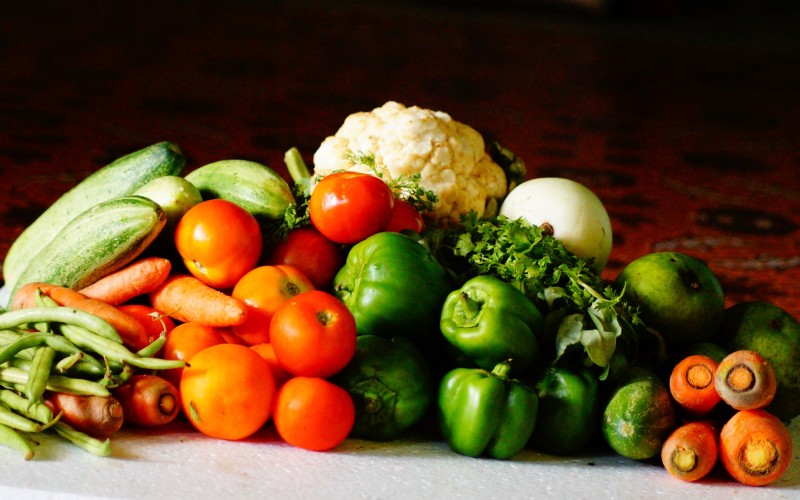
Candace Riegel: Yeah, and I think lots of stores, and hopefully more of them, start doing it as you put those fruits and vegetables kind of visible first, right? All that color, all the fruits and vegetables, so that's the first thing you see, and that would benefit consumers, right? And if you want to make it a habit or make this resolution that you're trying to do of changing your eating behavior a habit instead, which will be easier to continue and easier to get into your routine, you just want to pick a simple behavior, whether that's putting that bowl of fruit together, right, and having that every day, walking into your kitchen in the morning, and making sure you do that first thing. So you pick a simple behavior, pick a time and place, right when you walk in the kitchen in the morning, and then repeat the heck out of that behavior, right?
Paul Szmal: Yeah.
Candace Riegel: Try to do it as many times as you can every day, get that in your routine, make it a habit, and make it easy to do, and then enjoy like a simple reward after, because things tend to like stick a little bit longer if they have like some reward attached to it, whether that's just like having a couple minutes to enjoy your tea and listen to music or read a little bit before you have to start your other day stuff, right? But gradually, gradually those things will be and seem easier to do, right? And then it's just another habit that's a healthy habit that then can last you, right, and continue your health journey instead of just a resolution that we might start and then fail on.
Paul Szmal: Wow, this is great stuff. The website is fruitsandveggies.org. The article is by PhD Dr. Jason Rees, and it just talks about shifting focus to doing and feeling, and again you can influence what people know, what they feel, or directly influence what they do. So let's all get healthy together in the new year. Candice, thanks so much. Appreciate the time as always.
Candace Riegel: Yeah, you're welcome. Have a good day.