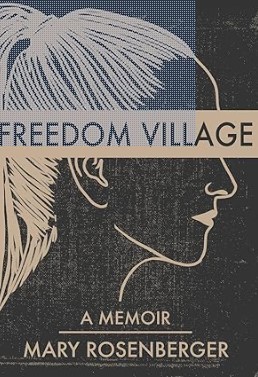
Paul Szmal: Good morning, it's 8.39 FLX Morning and we're Zooming with Mary Rosenberger who's just written a new book called Freedom Village, a memoir. Our listeners are familiar, we carried Pastor Brothers daily messages for years on this station. We covered the story of the eventual demise of Freedom Village, the attempted move to South Carolina. Good morning, Mary.
Mary Rosenberger: Good morning, thank you for having me. This is terrific to have you here.
Paul Szmal: So your story is a little bit unique among people who went to Freedom Village because your family worked there. So tell us about your family being on staff and how you came to be at Freedom Village.
Mary Rosenberger: Right. So my parents were some of the very first staff people to be recruited to work there and that was in the early 80s. So they actually began working at Freedom Village before I was even born and continued until I was 24, which is when my entire family left with most of the staff in 2011. So I was born and raised as a very, very inner circle staff kid, an eventual staff member of Freedom Village and my family was extremely close with Pastor Brothers, which I believe is why we received some of the worst abuse.
Paul Szmal: So we'll get to that in a moment. So most of the kids there didn't have their parents also there. So did that make it different? Did you have a family life separate from Freedom Village or were they, they must have been pretty fundamentalist themselves?
Mary Rosenberger: Yes. Everybody kind of conformed into what Pastor Brothers wanted them to be while being there. I would say that was pretty universal in everyone's experience. In order to survive, you sort of became what he wanted. My parents are two very free-spirited people with pure hearts to serve others, which in my research and experience of talking to people involved in cults, those are some of the people that are most preyed upon. So I believe, you know, even though I had a home and a family and I was a staff kid, I was not a program kid at Freedom Village, there's very little known about the culture of the staff there. And I'm pretty convinced that if any parents who had troubled teenagers that wanted to send them into that program, if they could have had a behind-the-curtain look into the culture and the atmosphere of the staff, there would not have been a program at Freedom Village because it was so unhealthy.
Paul Szmal: So were you treated worse by the kids there being a staff kid? Is it like being the principal's daughter?
Mary Rosenberger: It was interesting because I was born and raised, I never knew anything but that. As a small child, I was told over and over that I had a perfect life, that everyone wished they were me, because I had two parents at home who loved each other, and once I became a peer of the program kids, once I was a teenager myself, it seemed to change from I wish I was you to you think you're better than all of us, which was kind of true. I do identify a lot more with a missionary kid than a pastor's kid or a church kid, because when you're raised to see the world as lost souls and it's your job to save them, you do, in a way, feel better than other people because you have the answers that they need. And I believe that's why I never quite connected authentically with program kids, because they were souls to save, not friends to make.
Paul Szmal: Were you educated at Freedom Village or attended outside school?
Mary Rosenberger: Yes, staff kids all went to school. It was mandatory that we went to school on the campus. It was basically supervised homeschooling in a Christian curriculum, K-12. And of course, one of the things about any kind of, let's call it a cult, is that everything is focused inward. Outside contact is limited. So I mean, did you have any sort of family life outside of Freedom Village? Did your family go on Sunday drives, or is that kind of thing discouraged?
Mary Rosenberger: No, we were present in the community. So what makes it kind of tricky is that we were very, very secluded and contained, but also sent out. And that's what makes it even more of a spiritual cult, is that the work was done within the atmosphere of Freedom Village, so that when we did leave, I mean, I toured singing on the road on behalf of Freedom Village for 11 years. I was all up and down the East Coast. But everything was in the context of evangelism. So it sort of made a failsafe in my mind, at least, that I didn't want to be part of the outside world unless it was in use to Freedom Village, a.k.a. Pastor Brothers, a.k.a. God.
Paul Szmal: How did kids come to be at Freedom Village? How did they become labeled, troubled, and what was the process of kids becoming residents there?
Mary Rosenberger: They were usually sent by their parents. However, it was a freewill decision. We would say that our success was because kids chose to be there. You had to voluntarily come. So a lot of kids were sent by their parents. However, there was an agreement between them that they would complete a one-year program. Sometimes the court system would provide Freedom Village as an option, along with probation sometimes. So it really depended on the kid's circumstance. But they had to say that they wanted to be there in their intake process.
Paul Szmal: Were they coerced to say that?
Mary Rosenberger: I'm not sure. Most likely by their parents. I mean, most kids, this was the end of the road, and the parents were desperate for help for their kids. And so when they decided to stay, they would complete a one-year program, but then the contingency was that they were almost always very, very discouraged from leaving. Even if they had finished their year program, they were heavily influenced to stay.
Paul Szmal: We're talking with Mary Rosenberger this morning. She's written a book called Freedom Village, a memoir, and you can find it on Amazon or wherever you buy your books. There's a Kindle version. You can download it and be reading it two minutes from now. What was a day in the life like for you?
Mary Rosenberger: Growing up, it was not bad. I was unaware of most of what was going on in the staff culture. I had friends. We would play. My parents were very, very musical. I was going to choir rehearsals, going on the road with my parents as they traveled and sang with the teenagers. It wasn't until I kind of got older in my teen years that it always seemed as though Pastor Brothers had put a target on my family, specifically me at most times. It got very difficult to keep up with his standards and expectations and changing rules. As long as I can remember, I've wanted to be good. I've wanted to be right and do the right thing, but when someone is constantly changing the rules of what that means, it's difficult. It became very difficult for me.
Paul Szmal: These have to be very difficult memories, so I don't know how much level of detail you want to go into here, but in what way did his attitude start changing towards you?
Mary Rosenberger: I believe that at some point, he was not satisfied with having control over program kids, much like a headmaster would have at a boarding school. Over the years, as I got older, and my sibling, I have two siblings as well, it became our reality that he was reaching past the program kids into the staff families to have control. He ended up taking control of our discipline. He would discipline staff kids with program kids' punishments. He would override parents and their spiritual authority over their families. Because of his preaching and teaching and how everything was scripture-based, it made it very difficult for the staff, I believe, to understand what he was doing, that he was reaching beyond a healthy level of leadership. And of course, that's another classic cult situation, is complete control. You must have complete control and complete rule, and you must be the law.
Paul Szmal: Yes, yep.
Mary Rosenberger: At what point in your life did you say, okay, wait, something isn't right here, and this is no good?
Mary Rosenberger: When I was 24 in 2011, we had a situation happen where our pastor's wife had essentially disappeared, and we were not allowed to really ask questions. We were told that she was many, many things and that divorce was justified by him. And he had a girlfriend about half his age, not long after that. And I think at that point, it had gotten so absurd that most of the staff were able to see that this was not right, but you wouldn't believe the amount of brainwashing, at least that I had in my life, that I could not see him in a bad light, no matter what he did. I believed he was a man of God, so I just didn't question. And as that happened, many staff began to resign, particularly people that I looked up to and respected as well. And we eventually ended up leaving with about 90% of the staff at that point.
Paul Szmal: So you were still, I'm sorry, go ahead.
Mary Rosenberger: Oh no, go ahead.
Paul Szmal: I was going to say, you were still there at age 24, so when you finished your regular schooling, did you say to your parents, I'd like to go to college or anything like that?
Mary Rosenberger: No, I, the only thing I thought of perhaps doing was becoming a professional ballet dancer in a Christian ministry in Mississippi. But I never considered leaving without Pastor Brothers' blessing until I was 24. Everything revolved around if he would say that it was okay.
Paul Szmal: So did there come a point when you went to your parents and said, we got to get out of this place?
Mary Rosenberger: No. They were really the ones that began to wake up to it sooner than me. I think I was taking my cues along with my husband at the time we were married and had two children when we resigned. And it really was about a six-month process of the staff starting to realize what was really going on and deciding to leave, even if we had a lot of fear for the future. I believed that if everyone else was doing it, it must be right. And it wasn't until many years later that I started to realize how toxic and unhealthy his leadership was.
Paul Szmal: What was the process of deprogramming yourself like? How did you, I mean, you had to relate to a husband, you know, and at what point did you get out in the bright sunlight and go, oh, this is what the real world's like. And that must have been just very difficult to leave behind all these things that were such a part of you and say, no, this isn't the way it was supposed to be.
Mary Rosenberger: Yeah, it was difficult. And like I said, it took years of debilitating anxiety. I had a lot of mental issues from growing up there that I didn't even know were not my fault. And I kind of came to the end of myself around the year 2019 where I didn't know what to make of my faith. I didn't know what was true or what was up or down spiritually. And I ended up deconstructing my faith after writing my blog, which the book is adapted from my blog, Out from the Inside. I took about a year to write about my life, mostly because I was in the real world at that point. And anytime I would get into conversations about how I grew up, people wanted to know more. So I started writing my story basically for that, so that people could read it, because I didn't have time to talk about it all the time. And I discovered my life at the same time as my readers, and came to the end of that year and realized I was fundamentally wrong about who God was. And that was good news, and I began to deconstruct.
Paul Szmal: In 2019, Freedom Village finally closed down. There was talk of moving the whole operation to South Carolina. It appears that didn't really happen. Have you followed? I mean, Pastor Brothers kind of dropped off the radar at that point, and I haven't heard very much since. What became of him? Do you know?
Mary Rosenberger: He lives in Mississippi. He's still doing his radio show, Victory Today, and he's still collecting support from donors.
Paul Szmal: So are you still religious to this day, or did that experience turn you off of religion at all?
Mary Rosenberger: Yes, to both. I believe that I did find the true God through my experience of releasing everything I believe to be true, and my deconstruction is pretty well documented in my book. And I came out the other side knowing what God was not like, which was Pastor Brothers, and that was good news. And I now believe that God is pretty much exactly like the person of Jesus Christ, which is very good news for all of us.
Paul Szmal: Well, I'm happy that you were able to make it out intact, because there are so many stories of these types of situations where the ending wasn't happy. The book is called Freedom Village, a memoir out from the inside. Look for it on Amazon or wherever you buy books. There's hardcover. You can get the Kindle version. You can be reading it immediately. I'm going to look it up immediately and read it cover to cover myself. We've been communicating back and forth for a while to make this happen. I'm glad we did. Mary, thanks so much.
Mary Rosenberger: Thank you so much for having me. Have a great day.