Paul Szmal: Good morning 837, it's time to get healthy with UR Medicine Finger Lakes Health and we'll meet our providers here in a moment. We begin with Kimberly Alacua as we get deeper into the 100th anniversary of Soldiers and Sailors. Good morning, welcome back.
Kimberly Alakwa: Good morning Ted. We heard Dr. Acevedo in the news just a few minutes ago, so tell us about the event coming up at the Mansion on Keuka Lake.
Yes, so next Thursday we're having a night in the 20s at the Mansion on Keuka Lake. It's a fundraiser for Soldiers and Sailors Memorial Hospital. All proceeds are going to benefit the new x-ray equipment and digital room at Soldiers and Sailors. Tickets are available online at flhealth.org, $70 a person. It includes a drink ticket, we're going to have a photo booth, music. We're also going to have a drawing there where we have four different prizes that you can buy a ticket for. One of the prizes is an overnight stay at the Hampton Inn, plus a $200 gift card to Keuka Breeze. Another prize is a staving artist side table and that also comes with a $200 gift card to Folk Bottle in Penny Inn. The third prize is a Hornings Gardener's Gift Bundle and a Weaver View Farm Children's Quilt, plus a $50 gift card to Spotted Duck. And the fourth prize is a Just Bluff in 16x20 print and also a case of wine from Keuka Wine Trail. So those tickets can be purchased at Village Drug, purchased next Thursday night at the Mansion at Keuka, and also by contacting Lori McKercher at 315-536-7379.
And something that is still continuing is our Centennial Circle and this is where people can go online, flhealth.org. You'll see a big banner on our homepage that directs you to all the information about the Centennial event. And if you make a gift of $100 or more to Soldiers and Sailors, you're part of the Centennial Circle. And that will be continuing through the end of the year.
Paul Szmal: So do I understand now that flapper dresses are getting hard to find with the... I think that's the rumor that I'm hearing. The Fair Lakes is all sold out, I guess, right? I'm sure we're going to see a lot of them on Thursday, next Thursday.
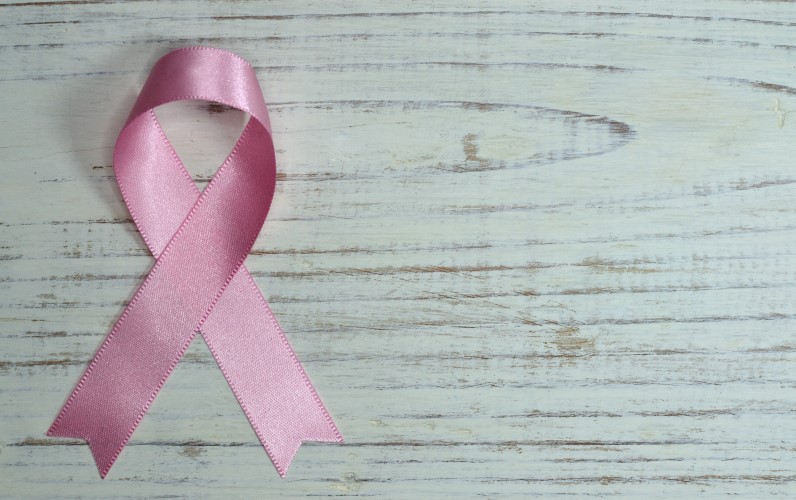
So it's Breast Cancer Awareness Month. I believe, I hope I have this right. If I don't, I'm going to get whacked when I get home. I believe it's 15 years for my wife this week that she was diagnosed. Found the lump with self-examination and 15 years cancer-free. And I know we have some of the best providers here to talk about treatment and prevention and then overall women's health. So let's meet our providers.
Alright, well that's great news for your wife. I'm so happy about the 15 years and so grateful that she did the self-breast exam. So I'm very excited today that we have Dr. Kristen Baltazar Ford. She is with Geneva General Surgical Associates. Ford's certified in general surgery and she specializes in breast surgery. We also have Lisa Davis with us. Lisa oversees diagnostics at Soldiers and Sailors Memorial Hospital and also is the supervisor for women's health at Geneva General. So we have Lisa and Dr. Baltazar.
Alright, Dr. Baltazar Ford, I'll ask you to step up first. First off, show me your shirt there. It says, I wear pink for my patients. There we go. And then Lisa, I love your top with the pink ribbons and love and hope. Very, very appropriate. Thank you. Thank you for both being here.
So let's start with, we've had this heavy awareness campaign. Are we seeing more people doing the self-exams, getting the mammograms, and hopefully catching any tumors early?
Kristen Botasar Ford, Lisa Davis, Kimberly Alakwa: Yes, definitely. I think particularly in October, we've seen an increase in number of diagnostic mammograms and biopsies being done and as well as breast cancer diagnosis, unfortunately. But for every breast cancer diagnosis we have, there's a lot of women with normal mammograms who are reassured that they don't have cancer. But it seems to be in this area that once October hits and those pink ribbons go out, women make their appointment for their mammograms. So we just want to remind everybody that you don't have to wait until October to get your mammogram. And I'm sure Lisa will speak to women's health availability, but we don't have to wait until October.
Paul Szmal: Yeah, Lisa reminded us because there are a lot of options. You have a walk-in mammography at Finger Lakes Health Facilities. I know UR Medicine has their mobile mammogram unit that goes around, so there's really no reason to wait. There's no reason to say, oh, I can't get this done. You can fit this into your time and your busy lifestyle and get it done.
Kristen Botasar Ford, Lisa Davis, Kimberly Alakwa: That's correct. Step up right close there if you could. That's correct. There is no reason not to have it done. You can call us. We can get you in in a fairly quick time frame. We just had two walk-in days last week. One last week at Soldiers and Sailors and one yesterday at Women's Health. We're hoping to get those into our schedule on a more regular basis going forward. Women should get their mammograms every year. It's so important. And it's so important to do your self-exams. A lot of places aren't providing clinical exams for patients. So, you know, pick a day of the month. Do it in your shower. It's easy. You're the only one that knows your body best. To do your self-exam is an easy, quick thing to help yourself.
Paul Szmal: Remind us how the digital 3D mammography machines work and how much more accurate that's made diagnosis in these last several years.
Kristen Botasar Ford, Lisa Davis, Kimberly Alakwa: So the traditional mammogram is four views. And when we would take a traditional mammogram, that's all we get. With the 3D digital mammogram, there is a sweep of the X-ray equipment. It takes 15 images through one projection. From that projection, we get the breast reconstructed in one millimeter slices. So the radiologist goes through layers of tissue, not just seeing everything lopped on top of each other. So it's easier to see small lesions. We're seeing lesions that are four millimeters, Dr. Baltazar. Wow. And finding very small breast cancers. It's the standard of care. If you're not going someplace that provides 3D mammogram, you need to be.
Paul Szmal: Now, Geneva General Hospital was recently given accreditation for breast ultrasound. Where does that fit into the arsenal of diagnosis?
Kristen Botasar Ford, Lisa Davis, Kimberly Alakwa: So breast ultrasound is an addition to a screening mammogram. It's not a replacement. If you have dense breast tissue, it's a good thing to have a breast ultrasound. The caveat to that is, as of 2024, Medicare is no longer paying for screening breast ultrasounds for women that have Medicare. Some supplemental insurances are. So we're kind of caught in that hard place between the federal government who's letting us know you have to tell patients what their breast density is. It's important for them to know that. And Medicare is saying, we're not going to pay for it even if they are. Other insurances do pay for them. So we find that breast ultrasound is an important addition to mammography for women with dense breast tissue.
Paul Szmal: Dr. Baltazar-Ford, if a tumor is found, run us through the treatment options, whether it be lumpectomy, mastectomy, double mastectomy in some cases, and how you help the patient make that tough choice.
Kristen Botasar Ford, Lisa Davis, Kimberly Alakwa: So as you know from your wife's experience, the treatment of breast cancer is very multi-modality. We use a combination of surgery predominantly for early stage breast cancer, which can potentially be accompanied by chemotherapy or radiation therapy or now newer medications, immunotherapy, anti-hormone therapy. All of those things are in our arsenal of things we treat breast cancer with. And I always remind my patients that everybody's treatment path is different. So some patients may have none of those things. Some patients may have all of those things. There may be a combination in between based on their specific tumor. So there's certainly a lot coming down the pipeline in terms of treatments after surgery. So in my mind, we use surgery to treat the breast cancer that you have in the here and now and everything else is sort of, and chemotherapy sometimes, everything else is sort of designed to prevent the cancer from coming back. So there's multiple, even within the last year or two, new drugs and medications on the market with multiple year studies that show increased effectiveness in treating certain types of breast cancer. Certainly we've gotten actually less aggressive in our surgical interventions. Some new studies coming out saying that sentinel lymph node biopsy, which is sampling of the lymph nodes to see if the cancer has spread, can be omitted in some patients with certain characteristics of their tumor. We're now doing a lot of genomic mapping of tumors to kind of predict or calculate how likely that tumor is to recur, and so that can help guide treatment afterwards. The mainstay of surgery is typically lumpectomy or mastectomy. That has not changed much, but with some of our newer technology, we're able to do things through smaller incisions, more cosmetically pleasing results, less invasive surgery for our patients. So everything is moving toward a less is more from a surgical standpoint, which I think is great.
Paul Szmal: I know we talked about, beginning a few years ago, there were a couple of high-profile women who chose double mastectomies, just abundance of caution, just take it all off. But are you seeing less of that now with these other options?
Kristen Botasar Ford, Lisa Davis, Kimberly Alakwa: I think as a breast cancer community, the enthusiasm for bilateral mastectomy goes in waves, and so certainly the celebrity publicity associated with that tends to get people asking about it. But there are so many studies that demonstrate no survival benefit, meaning that those women do not live longer. And so in very select cases, I recommend it. I certainly always give it as an option if patients ask me about it. I will never tell someone no if there's a medically or surgically appropriate reason to do it, but it's certainly not the be-all, end-all. It eliminates the risk of developing localized disease, so disease in the breast, but it doesn't necessarily prevent the cancer from coming back somewhere else.
Paul Szmal: Some women choose reconstruction. Others do not. Talk about that decision and how you go about doing a reconstruction.
Kristen Botasar Ford, Lisa Davis, Kimberly Alakwa: So I don't do reconstruction. I work with a plastic surgeon that does it. That is a whole separate specialty, but we do have a plastic surgeon credentialed in Geneva to do those cases with us. Reconstruction is a very personal decision. Patients, again, I always offer them the option if they're candidates, there are certain medical conditions, or particularly if you're like a heavy smoker that sort of precludes reconstruction, sometimes patients just don't want to go through another surgery. So it can be a much more invasive surgery, longer recovery. And a lot of these women have already been through a lot, and so many women choose not to do reconstruction, which is a very personal choice. Nowadays there's wonderful options for prosthetics and bras and clothing lines that offer implants within their dresses and bathing suits, so a lot of women are aware of those options coming in and choose not to do reconstruction. But for the right person, reconstruction is a wonderful option for them to maintain their figure and have essentially no change in their appearance after their surgery.
Paul Szmal: So remind us, there's HR and there's HER, what those mean and what the implications are.
Kristen Botasar Ford, Lisa Davis, Kimberly Alakwa: So when you're diagnosed with a breast cancer, we look for certain receptors or proteins that live on the cancer. So hormone positive, which means that it carries a receptor for estrogen or progesterone, and then HER2 is a protein. And so those testing that's done on your biopsy sort of helps guide treatment afterwards. So for patients who have hormone positive breast cancer, we have targeted therapy in the form of a pill that can decrease the risk of a recurrence if taken for 10 to 15 years after surgery. We have targeted drugs that target HER2 positive breast cancer. That's an infusion but not like traditional chemotherapy where you have all the negative side effects and lose your hair. So all this technology and there's been a big push within the pharmaceutical industry to sort of improve our medical management of breast cancer, and that is very evident in 2024. And I know there's multiple things in the works that we'll probably see over the next 5 to 10 years.
Paul Szmal: As we mentioned, in my wife's case she found her lump with a self-examination, was diagnosed early, everything's been great. So for whichever one of you wants to answer, what is the proper way to do a self-exam?
Kristen Botasar Ford, Lisa Davis, Kimberly Alakwa: The proper way to do a self-exam is to do it. Okay. Yeah. There's no, as Lisa alluded to earlier, you know your body better than anyone. So you're just essentially feeling for anything different. Wait, that's not right. That's not what I'm used to. Right. You know, certainly arm up above your head, arm down behind your back in the shower where you're kind of wet and slippery makes it easier. But there's no wrong way to do a self-exam.
Paul Szmal: All right. Lisa, we focus on breast cancer awareness here, but of course you're responsible for the whole broad spectrum of women's health. So just give us an overview of some of the services offered at UR Medicine Finger Lakes Health.
Kristen Botasar Ford, Lisa Davis, Kimberly Alakwa: So at Women's Health, we're in the medical office building, we offer bone density exams, we offer ultrasound, we offer mammogram. We do ultrasound guided biopsies, we do stereotactic breast biopsies. The stereotactic are done like a mammogram. There's a mammogram machine under the table, so that's a little different. That's what we offer at Women's Health. At Soldiers and Sailors, we offer bone density, breast ultrasound, and mammogram also. So you can get your services at either place. The radiologists read from both places. And again, we've talked about the new x-ray machine we're going to be putting in down at Soldiers. We're very excited about that. That'll be the latest in digital technology. That's fantastic. Yes, through Finger Lakes Radiology, we have breast MRI that we offer. Oh, right, right. Which is a very important part of staging after a breast cancer diagnosis.
Paul Szmal: All right. Well, thank you both for being here. This is always very personal to me in October, so I love the answer about the self-exam. Just do it. Do the self-exam. Do the mammogram. Go on our website, fingerlakesdailynews.com. Go on the Finger Lakes Health UR Medicine website. You'll see all the places that you can go. There's the walk-ins. There's the mobile. I know Senator Helming that we had on is a big supporter of getting that word out. She talked to us a little while ago. So again, thank you for what you do, and thanks for having more women staying around with us. That's what we want.
Kristen Botasar Ford, Lisa Davis, Kimberly Alakwa: Can we just mention that we do recommend having your mammograms yearly? Okay. Still having them yearly.
Paul Szmal: Very good. I know the guidance kind of there was a while where people were saying different things, and that kind of got shot down for the good, I think. So are we still looking at 40 and above and then younger if there's a history?
Kristen Botasar Ford, Lisa Davis, Kimberly Alakwa: Correct. Is that correct? For average-risk women, they should be in screening mammography at 40.
Paul Szmal: All right. Thanks again. It's great to see you. Thank you for coming in.
Kristen Botasar Ford, Lisa Davis, Kimberly Alakwa: Thank you. Thank you for having us. And Kim, thank you, and best of luck.
Paul Szmal: So are you going to have a flapper dress? That's a surprise. Oh, all right. Okay. Women never tell. So thanks for being with us. We appreciate it.
Kristen Botasar Ford, Lisa Davis, Kimberly Alakwa: Thanks, Ted. Nice to see you.
Paul Szmal: All right.