Paul Szmal: Good morning, it's 8.37, the Friday extravaganza on FLX Morning. It's the fifth week of the month, so that means no Auburn City Council meeting last night, so no Chuck Mason. He'll be back with us next Friday. But we do have Abe Botter with Cooperative Extension of Seneca County. Good morning.
Abe Botter: Good morning, Ted. And just lift that mic up just a little bit higher. First off, profuse thanks for Mike's crew up yesterday when I had you and somebody else both booked in this time slot. Thank you for graciously agreeing to move to today.
Paul Szmal: Not a problem. And also, being the fifth week of the month, we had a lot of openings on the calendar, so not only did we get some great guests on, but think how many Greg and I conversation segments you were able to prevent from happening.
Abe Botter: That was my goal, Ted. So tell us who you brought with you today.
Paul Szmal: So today we have with us Julie Kikkert, who's the team lead for the Cornell Vegetable Program, and I'm glad we had this fifth week because I realize we've neglected to have Julie on. And so Seneca is a proud member of the program. It's regional ag teams that Julie's going to talk a little bit about, but this is our vegetables and produce team that we get support from.
Abe Botter: All right. Well, this is great because we probably have all the different aspects that we've talked about. We maybe haven't given vegetables as much attention as we should, but we're going to fix that now.
Julie Kikkert: Good morning. Good morning, everybody. And yeah, vegetables, I don't think people realize that New York is a leader in vegetable production, and right here in the Finger Lakes region especially. In the state, there's more than 3,000 farms and 100,000 acres of vegetables that are grown. And we are top in a number of vegetables, in the top 10 for table beets, which we already heard we're number one in. Yeah. Cabbage, we're always in the top one or two of that. Snap beans, which are green and wax beans. All kinds of squash, green peas, pumpkins, sweet corn, dry onions, and bell peppers.
Paul Szmal: It's pretty amazing to me that we're that high in so many vegetables, because I would think we're competing largely with California and that whole big, irrigated San Fernando Valley, where they grow all kinds of stuff.
Julie Kikkert: Absolutely. California, a lot of other states, the Midwest produces a lot of vegetables, even on the East Coast. And we, of course, have the great advantage that we have this whole East Coast market that can consume our wonderful, high-quality vegetables that are produced right here in New York State.
Paul Szmal: So tell us a little bit about how the Cornell Vegetable Program, how do you support growers? How do you introduce them to new opportunities? What's kind of a typical day or week look like for you, going around visiting with these vegetable farmers or potential vegetable farmers?
Julie Kikkert: Right. So as Eve said, we're part of Cornell Cooperative Extension. We're one of 10 regional agriculture teams across the state, and our team specializes in commercial vegetable production. So that's people that are selling their vegetable, as opposed to folks that are doing their own backyard gardening. And we're a partnership with the counties, and so that means that the counties pay a share into our program to deliver this programming to their farms, as well as we get funding from federal dollars that come through Cornell University. And we also do a lot of grants and contracts.
So I like to think of us as kind of a connection between the farms, the vegetable growers, and Cornell University, so the faculty there. So of course we have wonderful Cornell Agritech, which is part of the New York State Agriculture Experiment Station right here in Geneva. We work very closely with the faculty. So we're kind of like the boots on the ground. We work very closely with the farmers to understand what the problems are out in the field that they're facing, and then work along with Cornell and colleagues across the state and multiple states to do research to come up with solutions to those problems.
So it's a lot of managing insects, diseases, weeds, what are the best varieties to grow, fertility treatments, and all kinds of things about the farm that improve the yields for the farmers to make them competitive. Because as you did mention, a lot of other states can grow really good vegetables. We have the great resources of soil and water and climate here that a lot of our vegetables grow. So I think that New York growers can grow just about any vegetable there is, and we do from asparagus to zucchini. It's a lot about what are the markets out there, and what are the changes in the consumer preferences and demands. And believe me, that is really hard for everybody to keep up with, for the grocery stores, the farms, etc. So we're just all trying to keep on the edge of that.
Paul Szmal: So New York vegetable growers, are they selling primarily close to home locally, or are they selling to Del Monte, Jolly Green Giant, etc.?
Julie Kikkert: It's really broad. We do have a lot of vegetables that are grown here and sold at farmer's markets, roadside stands, for wholesale. I like to say those are what we call fresh market vegetables. So they're basically going fresh from the farm to the consumer. And we also have three produce auctions right here in this area. There's one in Seneca County, Yates County, and Ontario County, where the farms can take their produce and sell it in bulk, but anybody can go there. So restaurants, stores, brokers are going there. Farms are buying for their own roadside stands if they're limited on something they produce. And consumers can go and even purchase small lots if they want to do canning, whatnot.
But we also have vegetable processing companies. So Seneca Foods is one. Currently we have a plant right here in Geneva that does sauerkraut, and also is a northeast distribution center. So they have a whole warehouse full of cans of vegetables. When they get orders, they put the labels on and send them out. And they have a plant in Mount Morris area. We also have frozen food production. It's currently under Norterra Foods up in Genesee County. So it's going everywhere.
Paul Szmal: Are vegetables more susceptible to things like weather and pests? We think of New York and we think of corn and beans. I mean, corn is a pretty hardy crop. I mean, it can vary by the season. But are vegetables more variable? Do farmers have to worry more about the weather and pests and things?
Julie Kikkert: I think all farmers have to worry about the weather. If we get too much rain or it's too dry, it affects everything. But vegetables certainly are susceptible. There's a lot of insects and diseases that are influenced by the weather. But they're also, some of them are wimpy in regards if they get too much rain, they'll just rot right out.
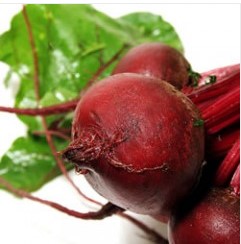
Paul Szmal: So tell us about table beets, how New York got to number one. I understand the big, we have kind of a beet belt that's in Genesee, Livingston, and some of the counties just to our west.
Julie Kikkert: Correct. So New York has always been a leader in table beet production. It's kind of been New York and Wisconsin that have been neck and neck. Part of that is because of the processors. Seneca Foods is in both states. Wisconsin does have Del Monte that some of the beets go to. We don't have that here. So it's kind of been a neck and neck thing. And the USDA does an agriculture census every five years. And a couple times New York has been a little bit above Wisconsin. And so in the 2022 Ag Census, which was done, which the data didn't actually come out until earlier this year, New York edged out Wisconsin by a couple of acres. So hey, I say in the Olympics, we won. And then California is close behind. So each producing about 20, 25% of the total U.S. table beet production.
So I did another talk recently about table beets. And I went back to look in the Ag Census all the way back to 1974. That was the earliest time I could find where table beets were actually listed separately from other vegetables. And back in the 1970s and probably earlier, the U.S. produced about 20,000 acres of table beets. And then that dropped off a lot in the 80s and 90s because, you know, beets were thought of as just kind of older people's vegetable and the younger generation really wasn't introduced to them. And you know, some people just said, ah, beets, they taste like dirt. But along the early 2000s...
Paul Szmal: Not a great marketing slogan.
Julie Kikkert: Yeah, about 2012, the health benefits of beets and other vegetables really started coming to light. And so they're very good for heart health. The nitrates in beets can improve blood flow, lower cholesterol. They've got a lot of fiber, etc. But one of the things that really boosted it was there was shown an athletic endurance. So people that were fed really beet juice, table beet juice, which is just squished up beets and filtered, right? If they consume that, especially before an athletic event, they were shown to have better endurance. They could uptake the oxygen better and just last longer.
Paul Szmal: This sounds really good for me as I go out for a walk. And if I could walk a little bit longer and harder, that would be great.
Julie Kikkert: So all of that came together. There was a 2016 LA Times article that was called Trend Alert, Why Beets Are the Hot New Superfood. And so we're seeing this now, this change of beets taste like dirt to, hey, beets are nice. They have health benefits. And credit to our table beet breeders, which Wisconsin has the only public table beet breeder, but we have the other leading companies are Bejo Seeds, which we do have a location right here in Geneva, and Cicada Seeds. But producing beautiful beet varieties and looking at how can we make the beets taste better, a little less dirt tasting. There's a certain compound that causes them there.
Paul Szmal: I was going to say, we're also on network radio. I hear all these ads now for the extracts and the powders and things as, you know, capsules or like you pour into your drink, you know, in your water bottle. So the word's getting out there. They're very well known as a superfood at this point in time. But again, you know, you can buy beets now. We've got beautiful red varieties everybody's familiar with. They come in golden, yellow beets. There's even a white beet and a candy stripe. So beautiful beets on the fresh market that people can do. And beets are also used as a food coloring or a natural dye. So if you look at your yogurt container, you might see beet juice as a coloring.
Julie Kikkert: Well, we were talking about, I went on the Ag Tour with Cooperative Extension a while back and we wound up having a dinner and the dessert were brownies made with beets. And I mean, they were just fabulous. You'd never know. And I always tell the story about my wife's recipe for zucchini crisps. She takes zucchini, makes it up like apple crisp, you season it, and I've had to argue with people and tell them there were no apples in there. So it's a versatile food as well.
Paul Szmal: Yeah, it is. So there's lots of recipes, drinks, everything with beets in them. And of course, one of the things that farmers like is to be diversified. So here's an opportunity for another crop. And you always like to have kind of spread out your market and your risk in case something should go bad.
Julie Kikkert: Right, right. So actually one thing I did want to mention in our sort of processors, but table beet market, Love Beets USA came into Rochester, New York maybe 10 years ago. And they are producing convenience packs and snack packs of table beets. So you can go and get beets that are already prepared. You can use them in your recipe or you can eat them fresh. They have different marinades like balsamic vinegar and things like that. And they do produce beet juice. There's a regular and one with ginger. So those are available in our stores as well and very local here in Rochester, New York. And we have beet farmers in New York that are growing for that market as well. So that also helped boost table beets in New York.
Paul Szmal: If you want to learn more about New York's number one beets and vegetables in general, it's CVP, Cornell Vegetable Program, cvp.cce.cornell.edu. And you'll see all kinds of food safety information and ways to grow them and ways to use them. Thanks for sharing this information and we're happy New York's number one in another thing.
Julie Kikkert: All right, glad to be here this morning. Thank you.
Abe Botter: All right, Dave, thanks as always again. We had some great conversations this week, so we really appreciate it.
Julie Kikkert: Thanks so much, Ted.
Paul Szmal: All right, it is 8.51 now. It's FLX morning.