Paul Szmal: Good morning, it's 8-16, it's FLX Morning Wednesday, and we're joined by Dawn Wait-Dinehart with Family, Child and Family Resources at FCF, now let me get that right, at CFResources.org. There we go. Good morning.
Dawn Waite-Dinehart: Good morning.
Paul Szmal: It's good to have you here. We're going to talk about child safety seats and some of the mistakes that people make in terms of fitting and installation. So let's start with the services that you offer at Child and Family Resources in terms of matching people up with the proper seats.
Dawn Waite-Dinehart: So yes, we get a grant from GTSC, which is the Governor's Traffic Safety Committee. We have to apply each year. We apply in Ontario and Yates counties, and these programs are available to families who are considered low income. So our low income guidelines can look at either a family being on WIC, any type of DSS such as SNAP or Medicaid, they would be eligible to get a brand new free seat. And of course that, again, is people who are income eligible.
Paul Szmal: Yes, correct. So if somebody isn't, if somebody's just going out to buy a seat for the first time, they're expecting, they're going to have their first child, what do you look for, how do you be a good car safety seat shopper?
Dawn Waite-Dinehart: So yes, so we encourage families to really, you know, look at the reviews. Also, you know, they have the opportunity to not only when they do buy the seat that they could come in and have it installed with us. So we would check it and make sure their installation is done correctly. And we have quite a few families that, you know, don't, you know, come in for our program, but will ask for the installation. Because I know over time we've heard a number of people don't have them installed correctly when they think they do.
Paul Szmal: What are some of the common mistakes you see in installation?
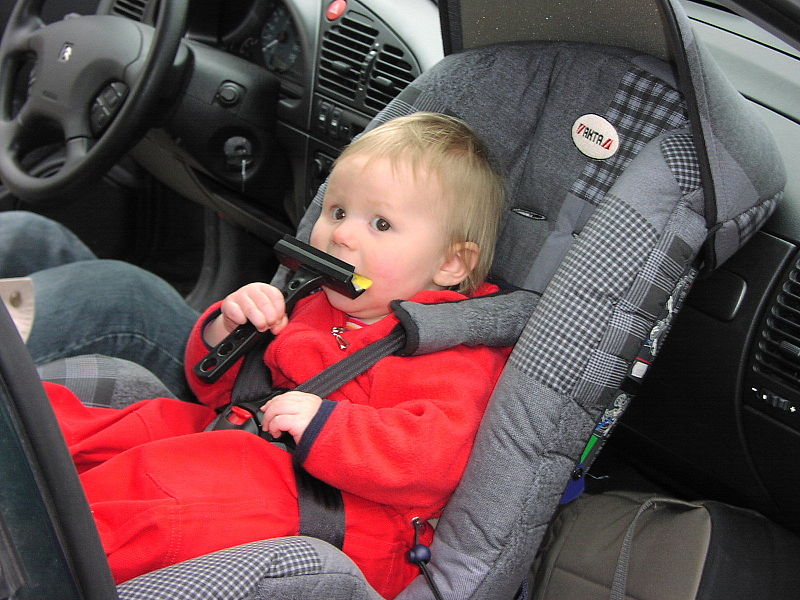
Dawn Waite-Dinehart: Yes, so when we're installing, there's a few different ways to install car seats. So you can install with the seatbelt or seats now come with an anchor system. So any car that's 2002 and newer has anchors within their seats in the cars. And these little hooks go onto those anchors. And a lot of times families use the seatbelt and the anchors, which is incorrect. We know that either or is as safe as one and the other. So if they use the seatbelt, that's going to work. We know it's going to work. It works for us as adults. And the anchor system will work as well, but we do not want to use them both together.
Paul Szmal: And do most people understand now about having the seat rear-facing? We still have quite a few people think that it's one year of age. And it's really two years of age that the child needs to stay rear-facing. And that's the next thing. Let's talk about the progression as kids get bigger, because I think one of the mistakes probably some families make, and it might partly be economic-driven, is staying with a seat too long after the child is too big for it.
Dawn Waite-Dinehart: So obviously we want to follow the guidelines within that seat, which is weight and height. And honestly, the law says that they have to be in a booster until they're eight years of age, but we encourage families to keep them in the seat as long as possible. Because if they don't meet the height or weight requirements, we don't want to remove them from that seat, because it's still too dangerous for them, because they don't meet the height and weight requirements.
Paul Szmal: Let's talk about used child seats. I mean, you see them in thrift stores and stuff. What's the potential problem there?
Dawn Waite-Dinehart: Yeah. So what people don't realize is we don't know the history. It could have been in an accident. And even though it looks like it's okay, a lot of times within an accident, all the damage is done internally. So you're not going to be able to see if it's cracked internally. So we never encourage used seats.
Paul Szmal: If you are shopping for a new one, are there any particular features you want to make sure it has? I don't know if there are discount ones that sort of skimp on safety features, or what do you look for to know you're getting a good seat?
Dawn Waite-Dinehart: So again, you want to look at the reviews, but I've had really good luck with Safety First and Costco. And basically, you don't need all the bells and whistles. You just need to know that it's been tested, it's safe, the reviews are good. And with our grants, they look for American-made within the U.S.
Paul Szmal: So what's the procedure if somebody wants to make an appointment to get a fitting? And of course, obviously, the child needs to be present along with the seat. How do they go about doing that?
Dawn Waite-Dinehart: So they would call our office and ask to make an appointment. There is some education that goes around the appointment. So the appointment takes up to 45 minutes to an hour. There's some paperwork that we need to fill out, and then we watch a video, and then we talk about the seat and how it works, and then we do the installation, and then we have the parent do the installation so we can check it.
Paul Szmal: Oh, that's great. That's a good idea. And you are, by the way, a New York State Certified Car Seat Technician, so you know all your stuff when you do those appointments. We appreciate your telling us about this today. It's an important reminder to have from time to time. So thanks for being with us.
Dawn Waite-Dinehart: Well, thank you.