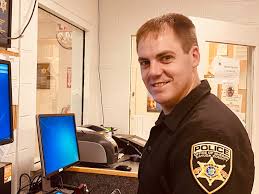
Paul Szmal: Good morning, it's 839 FHELX Morning Thursday. It's our Lawman Thursday segment. We're joined by Cayuga County Sheriff Brian Skank and joining him today is Sergeant Adam Bacon with the Road Patrol. Good morning to you both.
Brian Schenck, Adam Bacon: Good morning, Todd, and Happy New Year. Good to have you here. I'm going to go right to Sergeant Bacon because we need to get the update here. Eastern points in our listing area are the most heavily affected by weather, so Sergeant Bacon, good morning, and what are you hearing from the members of the Road Patrol today?
Adam Bacon: Good morning, thank you for having me. So this morning I came in at 4 a.m. myself. The roads were pretty good then, but in the last hour and a half they have changed dramatically, so please use caution when you're driving right now. Roads are going to be very slick and visibility is rather poor.
Paul Szmal: Is there a point at which the Road Patrol would come off the road? I mean, if things get too bad, do the deputies get called in for their own safety or do they just have to stay out there and make the best of it?
Adam Bacon: Well, we got to be ready to respond if there's accidents and stuff, so how we respond to it might change based on road conditions, but we're still going to have to be out there to answer any calls we get. And what I've noticed here in the western part of the Finger Lakes, we haven't gotten as much snow falling, but what you do have is the wind blowing and road conditions change quickly. You can be on a patch of bare pavement and then suddenly you hit a drifted in patch where it's three or four inches deep and the wind kicks up. On my trip in, zero visibility at times, so best advice is if you can, just stay off completely.
Brian Schenck, Adam Bacon: Yes, I would agree with that. Ted, can I add, I've been on a couple of very difficult crash scenes over the course of my career and I'm glad you brought that up, but you know, I've had incidents where, you know, clear patches of road for a long stretch, you know, people feel comfortable in driving the speed limit, they get their speed up and then they'll come around a bend or over a hill crust and there's a drift and that can be extremely dangerous. And you know, this is prime weather, especially in your western listening area, for that to happen. So that can be extremely dangerous and people do need to use caution on days like today.
Paul Szmal: Well, I live in Yates County and we had an accident there where one of the, you know, box trucks, like you see a delivery truck from a big store, blew over with Augusta wind.
Brian Schenck, Adam Bacon: Absolutely, it's a dangerous situation. So we're going to go back to the Sergeant in a little bit and talk about some of the training that he does, but I wanted to ask you, Sheriff, a story on Finger Lakes Daily News.com this morning about the House GOP plan to make some changes in bail reform and you and a number of sheriffs have signed on and are endorsing that bill. What is in that bill that you like and what would it do?
Brian Schenck, Adam Bacon: I am supporting it. Congresswoman Claudia Tenney's bill that she is co-sponsoring to provide some incentives for states, which includes some funding, if those states are willing to enact laws that provide for dangerousness standards. When we're looking at bail reform, give judges the ability to assess dangerousness of offenders that come before them in court and be able to detain them or hold them in custody if they're repeat offenders or, you know, are dangerous, potentially dangerous to the community. So I'm supporting that bill because I think we do need a dangerousness standard here in New York State. I think we need to do a better job of giving judges the ability to hold offenders that are continually reoffending. And I'm also supportive of the part of the bill that is seeking to incentivize states to hire and retain law enforcement personnel, qualified law enforcement personnel. I think that we need some help in the law enforcement arena in attracting the right personnel, and we need this type of support. So I applaud Congresswoman Tenney for looking to enact this legislation to provide those incentives to not only the state of New York, but nationwide, to make our community safer. And I just think this is a good bill, and I'm strongly supporting it.
Paul Szmal: Do you know, is there any money in that bill to help with hiring more officers?
Brian Schenck, Adam Bacon: I'm not sure exactly how much would go towards that, but I know the legislation seeks to authorize $10 million in anti-recidivism funding. So I'm not sure exactly how the bill would look, seek to break that down, but it looks like $10 million for each state that, you know, is going to promote those particular things that are promoted within the bill. But I just don't know the exact breakdown of the funding.
Paul Szmal: Seems like every month we talk there's another scam. This one is people impersonating members of your office. Tell us what's happening.
Brian Schenck, Adam Bacon: We did have that recently. A few days ago we had a number of people that reached out to us and indicated that someone had reached out to them posing as a member of our sheriff's office, telling them that they owed a debt, that there in some cases were warrants for their arrest, or that they had missed a court date, and that they needed to pay that debt immediately. And in some cases they wanted them to pay that debt through Venmo. So we just want to remind folks in the listening area, not just in Cuyahoga County but beyond, this is a scam that we see all over central New York and beyond, that members of our sheriff's office and law enforcement agencies are not going to reach out and seek payment for any types of debts or warrants over the phone. And we're certainly not going to refer you to Venmo to pay a debt. It's clearly a scam. So again, like we've said many times, if somebody reaches out to you and, you know, it doesn't sound right, if they're trying to get you to act immediately to pay a debt or send money or provide information, and you're just not familiar with the situation, it's likely a scam. So be careful.
Paul Szmal: It's not often that we get to talk about good news on the overdose front. We've been talking about this for a long time, but the tide appears to be turning. You had a significant decrease over the last few years in Cuyahoga County.
Brian Schenck, Adam Bacon: We did. When it comes to overdoses last year in 24, these are drug overdoses, our law enforcement agencies responded to 136, which does still sound like a large number. But if you go back to 2021, we had more than double that at 278 overdoses. So looks like about six fatalities last year as a result of overdoses. In 2021, we had 16. So the numbers are coming down. That's very encouraging. And we'll continue to work, you know, every day until, you know, we get that number to zero. I wish we could do that. We probably never will. But that will keep working and until we get to that point. But one thing I want to caution folks with is while that's great to see those numbers drop, those are typically opiate overdoses. Those numbers are dropping, but we are seeing individuals in our community shifting to other types of drugs. So while those numbers of heroin and fentanyl users are dropping, we are seeing increases in people using methamphetamine, stimulants, cocaine and those types of things. So unfortunately, we've got some good news, but we've got some bad news with it. We just need to shift our our focus on some other drugs that people are using today.
Paul Szmal: And it seems like that's how that battle goes when the supply so so it would it would sound like maybe the supply of opiates is being getting off the street. So they switched to something else.
Brian Schenck, Adam Bacon: It is it's always it's always, you know, a different pattern. And it feels like at times that we're always a little bit behind the new trend, but we're constantly trying to, to reevaluate and work to, you know, to address those issues that are going on in our community in the drug arena.
Paul Szmal: I learn new things all the time. I didn't know you have a dedicated snowmobile patrol team and they'll be out to make sure because what happens is we get a little bit of snow and then people go crazy and they're out there running into fences and things. So you're going to patrol and make sure all the trails are safe in the area.
Brian Schenck, Adam Bacon: We do this weekend, we're going to put out a dedicated patrol and last few years we haven't been able to get that out just due to the lack of snow, but we're going to have that dedicated team out there. Certainly trying to make sure that our trails, especially to the Northern end of Cuyahoga County are safe to navigate. You know, we're looking for reckless behavior and making sure registrations and those types of things are up to date, but our primary goal is to make sure that everybody can use our trails safely. And we patrol the trails just like we do our roadways. We look for reckless conduct and make sure that people aren't going too fast in certain areas. And it's all about safety. That's the primary goal on our trails, just as it is our roadways in Cuyahoga County.
Paul Szmal: We got the news recently of a change at the Auburn PD. Chief Slayton is retiring on Monday, a week from Monday, and Captain Matt Androsco takes over. I know you know them both.
Brian Schenck, Adam Bacon: I do. I worked very closely with Chief Slayton for a long time in many, many ranks and we've worked together in our roles as Sheriff and Chief and I want to wish him well. He's done a great job and I always, always hate to see these partners go, but I do welcome Captain Androsco. I know he's going to be a great partner to work with and I know that he'll do well. But we work very closely with the Auburn Police Department and all of our law enforcement partners here in Cuyahoga County and Auburn Police Department's been a great, great, great partner with us as well.
Paul Szmal: I want to welcome back Sergeant Adam Bacon. He is in charge of training in the Patrol Division and you just did some active shooter training at Cuyahoga- Ndukaboses. Your department was there. Other departments came in to learn as well. And there's a new model that's called Advanced Law Enforcement Rapid Response Training, or ALERT, with two R's. So tell us about this training you did and what's new or different in this ALERT system.
Adam Bacon: Yep. So ALERT's actually been around since 2002. It was created by the Texas State University. And since then, it's become the national standard for active shooter response training. It was acknowledged by the FBI in 2013. So what's kind of interesting about this is it's predominantly funded through federal and state funding. It's received over $136 million in it. So it's provided to local, state, tribal agencies at little to no cost for members to attend. So what we did is they offer a train-the-trainer course. So basically, you send your officers to this course. It's a week-long course. And you are able to take that material and knowledge that's provided by Texas State University and then be able to teach it to your own people or other agencies that they want to send officers to it. So we currently have seven instructors in the active shooter trainer. So we just hosted it at Kewgan and Agabusis, where we invited a couple other agencies that also had instructors. So we were able to teach this two-day course to 14 deputies and other officers.
Paul Szmal: It's sad that there have been so many of these kinds of incidents around the country. If there's anything good that comes from it, though, it's that researchers have been able to study and look for patterns and can better inform you as you do this training.
Adam Bacon: Yes, and another nice thing about ALERT is they have actually 14 different style courses. And one of them being a civilian response to active shooter events, that's the acronym C.R.A.C.E. So what that is, is basically it's another train-the-trainer, which we currently have three of those, but it allows us to go out to the public and basically teach them how to react in an active killing situation because it doesn't just cover active killing with a firearm, but also different types of active killing events, such as the one that kind of occurred in New Orleans last week. So it offers a lot of stuff and the Sheriff has been generous enough to allow us to get people trained in different aspects that ALERT offers, and we've been extending that out to our own officers and other officers as well.
Paul Szmal: The first thing you have to do in one of these situations is evaluate what the threat is and what you're facing. You can't just roll up and charge in with guns blazing. So how do you do that? How do you evaluate the situation and determine the best response?
Adam Bacon: Well, one thing they really emphasize is when you get there is getting as much information as you can out to officers that are going to be responding. Getting your location, what you're seeing, and what type of resources you need. And one thing that's nice about this specific active shooter trainer is it's really starting to have officers realize that although there is a threat that we need to go in and deal with, we also gotta start thinking about other avenues, such as staging areas for EMS, fire, being able to keep the roadway clear so ambulances can get casualties out. Coming up with relocation areas for other members, which is, in the past, has kind of only been something that higher-level command thinks about. But it's stuff that probably should be maybe at least thought about as the incidents unfolding. And this is just the research from prior active shooter events where agencies have learned from. So it really is good material.
Paul Szmal: Well, I'm on the the alert website, ALERRT.org, and it's interesting. They have what's called the National Integrated Response Conference, where they realize it's not just law enforcement, and they're starting to coordinate law enforcement, fire, EMS, even emergency room physicians to take more of a team approach.
Adam Bacon: Yes. I think, unfortunately, through prior active shooting incidents, they've created more and more and have come to the understanding that it is a joint effort in getting these incidences under control. And you need more than just law enforcement to be able to be successful in recovering from these things as they're occurring.
Paul Szmal: Yes. If you're on the website, though, there is one that is very informative to the public. And if you look up on the tab, it's the Avoid, Deny, Defend. That's actually a very good resource just for anyone in the general public can access it. And it provides a lot of information just for anyone on how to respond to an active shooting incident. There's a lot of information there that's very beneficial.
Adam Bacon: Wow, that's great. It's worth checking out that site. Sergeant Adam Bacon with the Road Patrol, thanks for what you do on the roads, and thanks for what you do with the training. I appreciate getting a chance to learn about it today.
Paul Szmal: Thank you for having me. And Sheriff, thanks for bringing all these great people to us each month. We're enjoying these conversations.
Brian Schenck, Adam Bacon: We appreciate the opportunity, Ted. Thank you.