Paul Szmal: Good morning 837 it's the Friday extravaganza on FLX Morning and it's all things Auburn City Council and City of Auburn City Clerk Chuck Mason's here welcome back.
Chuck Mason: Good morning.
Paul Szmal: At last night's council meeting the city police department renewed its mutual aid agreement with the sheriff's department there's no money changes hands it's just a kind of an informal agreement that the sheriff's department can come into the city if needed and the police department can go out into the county if needed to help each other out.
Chuck Mason: That's right and it's a basically standard operating procedure these days you'll see a lot of crossover when it comes to public safety and so last night's resolution just kind of formalizes things this will be a resolution it's all also voted out by the Cuyahoga County Legislature probably at their next meeting and you know we have a great working relationship Chief Jim Slayton and Sheriff Brian Skank work really well together and the departments work well together and there's sometimes where there's a lot of crossover such as the last year where we've received the New York State give grant that's been a lot of strategic effort which coordinates the offices as well so you know this resolution last night just kind of putting it on the books and probably be passed at the county level as well and business as usual moving forward for those departments that service so well.
Paul Szmal: It's kind of like the same thing fire departments do a lot of the rural fire departments if one goes to cover a fire another will be on standby in case there is a second fire.
Chuck Mason: That's right and you know it's an amazing what does happen behind the scenes and that kind of stuff you know when you're take a look at what does happen with policing and firefighting and that now that we're in the city of Auburn running our own ambulance department you get a real close-up look of as to how everything does work and you know Auburn is a city that expanded pretty greatly over the last couple of decades into the surrounding towns so there's a lot of coverage area that oftentimes it'll end up you'll see the city and you know it's not that we're very far out of the city of Auburn might be just a half mile outside of the of the city but it's when it comes to public safety you want to be able to make sure that you can get a response there as quickly as possible and it happens to be that the Auburn is the closest one and then Auburn will be there.
Paul Szmal: In 2019 the governor signed into law the Climate Leadership and Community Protection Act CLCPA. It's to address climate change and help communities reach zero net emissions and the council got a presentation from Arcadia Energy which is the company that's helping the city come into compliance so tell us about this law and what Arcadia Energy is doing for the city.
Chuck Mason: Yeah so this was all relatively new to me and Jenny Haynes our director of planning and economic development had set up this presentation really because you know with Micron on the scene in the central New York area being about you know three to five years out from now we're really taking a look at the energy needs of what it would take for expansion of not only residential areas in the city of Auburn but commercial and industrial development as well and as you know Ted we've been trying to work with the Alstom owners who own the Bombardier property and you know when you're talking about big projects like that energy is a piece of the puzzle and the supply of energy and being able to expand upon the supply of energy is definitely an issue that all communities across New York State face these days and especially with Micron coming in there's going to be big demand for this over the next decade so the presentation last night was very much focused on the fact that this may be a tool that we could use in the city of Auburn anywhere really in upstate New York over the next few years so it was really the City Council's first look at the at the program of the representatives from Arcadia were on hand and made the presentation to the city but there will it was really just kind of like the introduction presentation a lot more to come on this as we you know work through these projects as we move forward you know hopefully good things to come for Auburn and CUNY County with the Micron project over in Syracuse so you know there's really not much more that I can say about things there's there really wasn't a lot to tell it was just like an introduction to the company and the potential of what they may or may not be able to do to help out some of our businesses in town and it is a company that has the ability to pretty much cover the entire upstate New York area so probably more to come on this as we move forward but last night was kind of like the introduction 101 presentation.
Paul Szmal: Yeah I was reading through the presentation it's very honest talking about some of the obstacles for example it says a lot of the renewal energy benefits wind up going downstate it talks about we all want solar power but when someone tries to build a big solar farm there's almost always opposition and then that gets bogged down so I thought it was interesting that the they really laid out some of the challenges and then what they think they can do differently to help out with those.
Chuck Mason: Yes exactly and you know these are the these you know as we the last couple years as we've taken a closer look and we've had some committees here in CUNY County that have been beginning to strategize mainly because of the micron announcement it's it's really apparent that energy is a top factor for a lot of the expansion that we'll be able to do in the future so this may be this may be a tool that we'll be able to use we'll know more probably in the years to come.
Paul Szmal: At last night's council meeting city manager Jeff Digert and controller Mary Beth Leason did the quarterly budget update and let's start with some good news on the top line sales taxes are four percent ahead of projections and if that keeps up you got extra money to play with.
Chuck Mason: Well yes and the following slides would show you exactly how we probably spend the extra money but it's a kind of a new way that the city manager and the controller are going to rather than doing a monthly budget updates they're going to start doing a quarterly budget updates the monthly budget updates were really just a bunch of graphs that would be submitted to the council there really wouldn't be much discussion so after years of doing it that way the manager and our new controller she's still relatively new it's been just over a year now I think that she's been on board she wants to just be able to take a chance at a council meeting every quarter just to kind of show the council what is going on what she sees happening with some of the bigger factors of the budget and as you said Ted some of the good news is you know sales tax has been trending in the right direction for us you know knock out wood there's still a long way to go in the budget year but it's always helpful to start out the year with a with seeing your sales tax revenues coming in above where you project them to be but then she also discussed some of the other variables such as some of the retiree payments that have had to have been made have come in over budget and we're also anticipating our our health insurance contracts run on a calendar year basis January 1 till December 1 our city budget years run on the July 1 to June 30th but we are anticipating that there's going to be a big increase in the employee health insurance costs it'll probably take effect as soon as January 1st so we don't know yet exactly what the increase is going to be we always budget for a for an increase we do do a budget that'll anticipate an increase but uh the increase that we are anticipating may be a lot more than what we had budgeted for so while there is some good news on the revenue side there's also some necessary budget adjustments that'll need to be made on the expense side but the good the good news is is our new controller it's got got a close eye on this and she's been working hard to try to run the city government as efficiently as possible and make sure that we're going to be in good financial standing so that was her first official quarterly presentation last night and I like this new format I think it'll be helpful for the mayor and the council moving forward.
Paul Szmal: So I would think that one of the things about monthly reports are a lot more volatile I mean numbers jump around and it's a I think much less meaningful I think the quarterly approach makes a lot of sense.
Chuck Mason: It does and it gives the you know there's a lot of stuff that does happen that we don't necessarily stop at a council meeting and and always take the time to discuss it so well you know the council might get an occasional email or something with an update on how sales tax is doing it'll I think it'll be good for that information to be out at a council meeting on a quarterly basis and bring some transparency to everything it is that we have going on as as part of leading up to that annual budget process which is always the most important thing I think that the City Council does is take a walk annually through that budget process and once they adopt that document it's really the the number one thing that sets the parameters for how city local city government services are delivered so being able to be transparent with the public about the fiscal situation that we're in I think will be a positive thing.
Paul Szmal: When I started doing this show about 15 years ago we were talking a lot about these retirement expenses and in health insurance and we haven't so much lately is there a particular reason in this case for the increase in the police and fire retirement was unexpected retirements or or what changed?
Chuck Mason: There's a whole bunch of factors that that go in I mean the number of employees that are in the system at that particular year is definitely a factor you know how the stock market is doing and the stock market has been doing very well but when we go up to Nikon each year Comptroller DiNapoli is usually there to try to explain how the stock market impacts the state retirement system it's just a lot of variables some years the payments are a little bit lower other years the payments are a little bit higher but it's you know we budget based on what we project to be an accurate number and sometimes it comes in a little lower sometimes it comes in a little higher what we know this year is that it's definitely come in a little bit higher so that's just one budget variable that will have to be adjusted here before we get to June 30th.
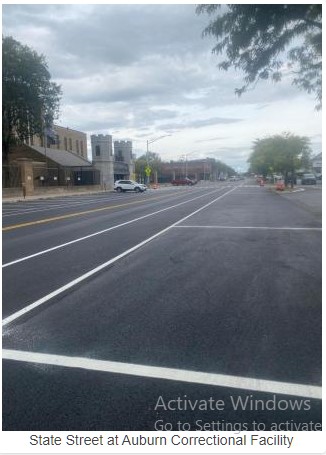
Paul Szmal: We got an update from the mayor this week a State Street repaving is finished.
Chuck Mason: That's right and we had Senator May in town on Wednesday Senator Rachel May and this is really we used the state New York State touring route program funding for this repaving of State Street it's a four-year-old program that was put into the state budget by the New York State Legislature you know and I think it's really important when the state of New York government does something that's that's done really well they deserve credit and this program they really did well it opens the money up immediately to cities like Auburn and we've been able to get so much great road work done under the last over the last four years with this program but that stretch of State Street down in front of the Auburn Correctional Facility was long overdue so Mayor Genitino, Councilor Kent was down there with us and Senator Rachel May and we talked about the program and Senator May has been such an advocate for getting this money into the state budget for us and we like to bring her over each year to show her exactly what it is that we're doing and what what we were able to do with that funding between last year's allocation and now this year's allocation is we were able to get the entire stretch of State Street from the State Street Bridge all the way down to the west city or to the northern city line completely repaved we had done the northernmost section of that last at the end of last year's construction season so this is a great program New York State Touring Road funding and we really hope the state of New York understands that they've done something right here and we'll keep this funding coming in the years to come.
Paul Szmal: All right we have the senator with us Monday morning at 735 so we'll talk more about that touring route funding and of course the nice weather helped that program get done in a month for a big paving.
Chuck Mason: That's right, we've actually struggled with the literally the last 10% of road striping that needs to be put down there was rained out every day this week so we hope the contract will get it done today but uh it was just kind of funny we got everything done up until about just a little bit of the road striping left and then every time the guy showed up to do it it was raining this week.
Paul Szmal: All right Auburn City Clerk Chuck Mason thanks for the update as always appreciate it. Have a great weekend everybody.