


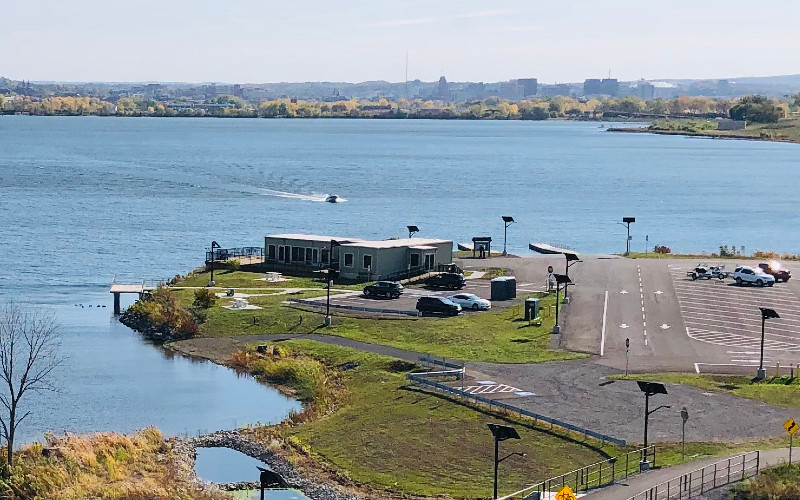
Join SUNY College of Environmental Science and Forestry (ESF) pollinator ecologist Molly Jacobson on Sunday, September 21 from 12 PM to 2 PM to learn about the diverse and fascinating world of native bees. We will begin at the NYSDEC Onondaga Lake Visitors Center, 280 Restoration Way, Syracuse, NY 13209, with an indoor presentation about the ecology of our wild bee pollinators, plus what we can do to help them thrive in our own yards. We will spend the remainder of the program outside, exploring the West Shore Trail and the new pollinator garden to look for bees. Molly will share identification tips for common species and showcase important plant-pollinator relationships in action that we can encourage in our own gardens. Fee: $10/person. Space is limited and registration is required at https://act.audubon.org/a/onondaga-lake-conservation-corps-ecology-wild-bees-sept-21-2025-12pm
Call 315-365-3588 or email [email protected] with questions. This program is sponsored by Honeywell, National Grid, Parsons, and Anchor QEA.
Molly Jacobson is a pollinator ecologist at the SUNY ESF Bee Lab. Her work with native bees includes academic research into plant-pollinator interactions and the distributions of rare species, as well as pollinator surveys, identification, and citizen science. She co-runs ESF’s chapter of the Bee Campus USA program, which creates native habitat through ecological landscaping and propagating a variety of native plants from seed. Molly also enjoys performing outreach of many kinds to bring others closer to nature and inspire them to take up conservation in their own communities.
“Planting native vegetation for birds also attracts and supports insect pollinators like bees and butterflies,” said Chris Lajewski, Director of the Onondaga Lake Conservation Corps and Montezuma Audubon Center. “Over 90% of native insects can only feed on the native plants with which they’ve evolved over millions of years. Planting for pollinators will not only support pollinating insects, it will also provide the protein-rich insect food that baby birds need to grow and thrive.”